Detailed Explanation of Cultivation Techniques and Management Methods for Symplocos paniculata
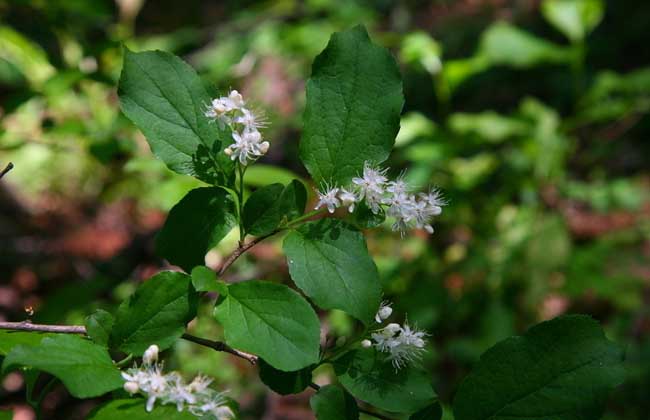
Symplocos paniculata, also known as grey wood, seed-broken tree, Wuyu, Zimu, fence firewood, etc., is a deciduous shrub or small tree of the genus Symplocos in the family Symplocaceae. It is widely distributed in northeastern China and areas south of the Yellow River, and is especially common in the provinces south of the Yangtze River basin. It has the advantages of tolerance to drought and barren soil, a well-developed root system, strong sprouting ability, and easy propagation. Let us take a look at the cultivation techniques for Symplocos paniculata below!
Growth Habits of Symplocos paniculata
Symplocos paniculata grows on hillsides, roadsides, open forests, or dense forests at altitudes of 760-2500 m. It prefers a warm and humid climate and deep, fertile sandy loam, and likes light but is also slightly shade-tolerant. It is a deep-rooted tree species with strong adaptability, cold resistance, drought tolerance, and barren tolerance, and grows best along riverbanks and at village edges and field borders. It is more common in the south, and this species is suitable in both north and south. Its white flowers and blue fruits make it good as a flower hedge or at forest edges and roadsides.
Seed Collection of Symplocos paniculata
Select mature Symplocos paniculata trees as mother trees for seed collection. The seed collection time is from late September to early October, and premature picking of green seeds must be avoided. After collection, the fruits need to be piled and fermented for 3-5 days. After the fruit skin becomes soft and ripe, put them into a cloth bag and rub and wash repeatedly to remove the fruit skin and impurities and obtain the seeds. The 1000-seed mass is about 140 g, and the moisture content should be kept at about 30%. Dehydration should be avoided, and sun-drying or dry storage is not suitable.
Seed Treatment of Symplocos paniculata
Symplocos paniculata seeds should absorb enough water before sowing or treatment. The seeds have good water permeability. After soaking for 24 hours, the water absorption of the seeds can reach 30-40%. For forced dormancy, acid scarification can be used. Generally, concentrated sulfuric acid with a specific gravity of 1.84 is used for 5.5 hours, then placed in running water to rinse for 18 hours, reducing the restriction of the seed shell on the embryo and increasing the permeability of the seed coat. Treatment with gibberellin can regulate and break the physiological dormancy of the seeds.
Nursery Site Selection for Symplocos paniculata
Choose a nursery site that is sheltered from wind, shaded and cool, flat and not waterlogged, and convenient for drainage and irrigation. The soil should be loose, moist, sandy loam. Deeply plow the soil 20-30 cm, remove stones and weeds, and apply 45 tons/ha of high-quality decomposed organic fertilizer in combination with plowing. At the same time, the nursery site should be deeply dug and turned for sun exposure in combination with the soil to kill insects and sterilize. For insect killing, use 50% zinc-phosphorus 2 g/sq m, mix with an appropriate amount of fine soil, spread it on the soil, and cover the surface with soil. For sterilization, use 3 g/sq m of zineb, mix with an appropriate amount of fine soil, and spread it on the soil. Then level the seedbed. The seedbed should run east-west, be slightly compacted, and then screened with a 10 cm layer of substrate. The bed surface width is 1 m, the bed height is 20 cm, and the path width is 35 cm. If seeds are sown in beds in a sunny and open place, a shade shed needs to be built, about 1.5 m high, and double-layer shade nets are required to reduce the light intensity in the nursery.
Timely Sowing of Symplocos paniculata
The sowing time for Symplocos paniculata is mid-to-late April. The sowing method is manual broadcasting or drilling. 12-24 g per sq m can be sown, and the covering soil should be shallow. For drilling, the row spacing is 20 cm, and the sowing furrow depth is 8 cm. First apply decomposed base fertilizer at the bottom of the furrow, cover the base fertilizer with 6 cm of garden soil, and then sow. If seedling transplanting is carried out, the sowing density can be increased, and the sowing rate is 75-100 kg/mu. After sowing, cover with soil 1.5 cm thick, preferably with rice straw, which can play a role in moisture retention and weed suppression. The thickness of the straw cover should be such that the seedbed is neither too dry nor too wet.
Management and Care of Symplocos paniculata
1. Generally, seedlings begin to emerge in early May. At this time, weeds in the nursery should be pulled out in time. After weeding, combine with loosening the soil and apply 0.11% dilute nitrogen fertilizer water to promote seedling growth. If cutworms harm the seedlings during the seedling stage, trichlorfon and pyrethroid pesticides can be sprayed for control. In severely affected plots, spray 2.5% trichlorfon powder at 2-3 kg/mu before the larvae reach the 3rd instar.
2. Usually June to September is the peak growth season for Symplocos paniculata seedlings. Frequent weeding and more fertilization must be carried out, with nitrogen fertilizer as the main fertilizer. During the rainy season, deep ditches should be dug around the seedbed to facilitate drainage and prevent root damage from waterlogging on rainy days. In July and August, potassium fertilizer should be added to the fertilizer water to promote lignification of the seedlings and enhance their resistance. No more fertilization after September.
3. Around September each year is the flower bud formation period. At this time, watering should be consciously controlled to make the stems and branches slightly wilted, so as to facilitate flower bud formation. Perhaps maintaining dryness at this time will cause red spider mite infestation, but after slight damage by red spider mites, it will promote flower bud formation and differentiation. This phenomenon is even more obvious in its variegated cultivar Shanchui.