What are the cultivation methods for potted Euphorbia antiquorum?
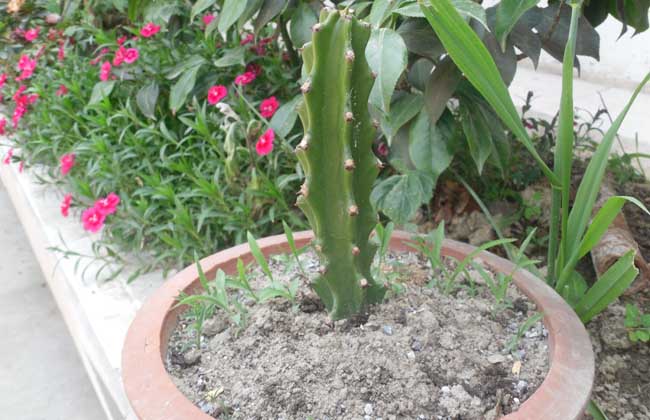
Euphorbia antiquorum is an evergreen succulent plant of the genus Euphorbia in the family Euphorbiaceae. Its branches are light green and arranged in spiral whorls, later turning gray, with black spines. The leaves are succulent, leathery, and obovate, tapering at the light green base. The stems and leaves contain white toxic latex. It originates from the Malay Archipelago and is not a desert plant. In the tropics it is often cultivated as a hedge. Let's take a look at the cultivation methods for potted Euphorbia antiquorum!
Growth Habits of Euphorbia antiquorum
Euphorbia antiquorum prefers a warm, dry environment with plenty of sunlight. It likes light and a warm climate, is very drought-tolerant, fears cold, and often drops its leaves when the temperature is on the low side. It does well in well-drained, loose sandy loam. It likes environments with strong sunlight and high temperatures. With good cultivation, the main stem can reach up to 3 m tall. For potted plants or ground planting in the south, it is best to choose well-drained, loose sandy loam, and to prune the whole plant to maintain a beautiful plant shape.
Propagation Methods for Euphorbia antiquorum
Euphorbia antiquorum is easy to propagate. From May to June, cut well-developed stem segments for cuttings. White latex will flow from the cut. You can apply plant ash and let it dry in the shade for several days. After the cut has dried slightly, insert it into plain sandy soil. After insertion, place it in semi-shade, do not water, spray lightly, and keep the potting soil moist. At 20-25°C, it can take root in 40-50 days.
Cultivation Methods for Euphorbia antiquorum
1. Light: Euphorbia antiquorum prefers a warm, dry environment with plenty of sunlight. In winter, it should be placed in a sunny room so it receives sufficient light. In addition, if the room temperature is too low, the leaves will fall off and the main stem will rot, so the room temperature in winter should be kept no lower than 10°C. In summer, it needs appropriate shading to avoid direct strong sunlight. When the autumn temperature drops below 15°C, it should be moved indoors. When the weather is clear and the temperature is relatively high, windows and doors can be opened for ventilation. Only after the temperature stabilizes after Qingming in spring can it be moved out from indoors.
2. Drainage: Euphorbia antiquorum is a fleshy, succulent plant that is tolerant of high temperatures and drought. In hot summer weather, it can be watered a little more appropriately to keep the potting soil moist, but on rainy days, accumulated water in the pot should be poured out promptly to avoid root rot and death. In spring and autumn, water according to the principle of watering when dry and stopping when wet.
3. Fertilizing: Euphorbia antiquorum grows quickly. If the pot and soil are changed every year, a 4-5 year old plant can grow to about 2 m. When cultivating at home, in order to control its growth, use a small pot. The potting soil should preferably be dry rather than wet. Do not apply additional fertilizer. As long as the roots have not burst the flower pot, do not repot or change the soil. Generally apply fertilizer 1-2 times. In late autumn and cold winter, generally do not apply fertilizer.
4. Disease prevention: The main diseases of Euphorbia antiquorum are stem rot, black mold, and so on, which can be prevented with specialized insecticides. When chlorotic yellow spots of varying sizes appear on the leaves, cultivation management should be strengthened. It is best to choose well-drained sandy loam and avoid poorly drained clay-heavy soil. Pay attention to fertilizing, and avoid water accumulation.