How to Propagate String of Hearts? Introduction to Common Propagation Methods
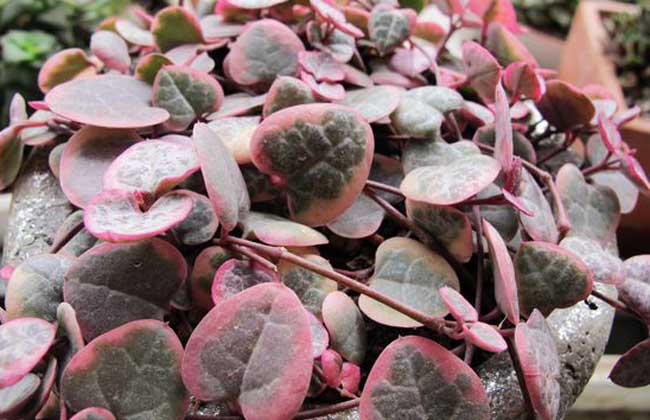
String of hearts (Ceropegia woodii) is a succulent plant of the genus Ceropegia in the family Apocynaceae. It is commonly planted in plastic hanging pots and suspended beside doors or in front of windows, where its stems and vines sway in the wind, looking quite delightful. When planted in ceramic pots and placed in indoor corners, on tall flower stands, or on top of bookcases, its stems and vines hang down and can reach about 150 cm in length, draping freely and gracefully, making it very popular. Now let us take a look at how to propagate string of hearts!
Cuttage Propagation
Cuttage is the most commonly used propagation method for string of hearts. Generally, a stem segment with more than 2 nodes is cut from the plant as a cutting. The cutting is placed in a ventilated spot for about 10 minutes until the exuded liquid dries, then inserted into the prepared growing medium. It is then covered with plastic film to increase air humidity and speed up rooting. Under suitable temperature conditions, it will root in 2 to 3 weeks. When the roots grow to 2 to 3 cm, repot and transplant it.
Tuber Propagation
Tuber propagation is similar to cuttage propagation, except that the cutting carries a tuber. This method roots more easily than cuttage propagation and has a higher survival rate, but the production of tubers requires a certain plant age and sufficient nutrients, so tubers are rarely produced in home cultivation.
Air Layering Propagation
For air layering propagation, generally a robustly growing branch is selected and laid flat on the growing substrate. A small wound is made at the node with a needle, then the node is fixed in the substrate with a thin wire bent into a "u" shape, covered with a small amount of substrate, and kept moist. After about 3 weeks, the node will visibly swell and grow new roots. When the roots grow to 2 to 3 cm long, cut off this rooted stem segment and transplant it.
Note: String of hearts can also be propagated by seed, but because seeds are not easily obtained in cultivation, this method is generally not used. In cultivation, attention should also be paid to the growing environment. String of hearts prefers diffused light and avoids direct strong light. It does not like fertilizer, and especially avoids high-phosphorus and high-potassium fertilizer. Because its roots have large tubers that can store nutrients and water, it is very drought-tolerant.