What are the cultivation methods for String of Hearts?
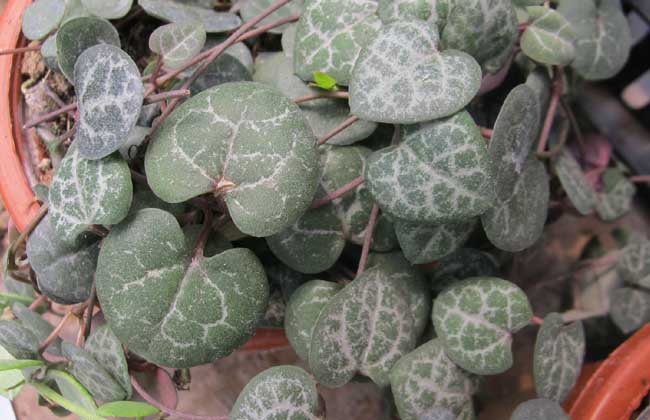
String of Hearts, also known as Rosary Vine, Chain of Hearts, Wax Flower, and One-Inch Heart, is a succulent plant in the genus Ceropegia of the family Apocynaceae. It is native to South Africa and Zimbabwe. Its leaf shape and color are quite beautiful, giving it a certain ornamental value. Potted plants can be placed beside televisions and computers, and they can also be planted indoors to absorb substances such as formaldehyde and purify the air. Now let us take a look at the cultivation methods for String of Hearts!
Growth Habits of String of Hearts
String of Hearts is a very drought-tolerant plant. Its suitable growth temperature is 15-25°C, but it can also tolerate high temperatures of 35°C in summer and low temperatures of around 10°C in winter, showing strong adaptability to temperature. It prefers scattered light and avoids direct strong light. It does not like fertilizer, and especially avoids high-phosphorus and high-potassium fertilizers. Because its roots have large tubers, it can store nutrients and water.
Propagation Methods for String of Hearts
1. Cuttings propagation: Cuttings are the most commonly used propagation method for String of Hearts. Generally, stem segments with more than 2 nodes are cut from the plant as cuttings. The cuttings are placed in a ventilated area for about 10 minutes until the exuded liquid dries, then the cuttings are inserted into the prepared growing medium. Then they are covered with plastic film to increase air humidity and speed up rooting. Under suitable temperature conditions, they can root in 2-3 weeks. When the roots grow to 2-3 cm, repot and transplant.
2. Bulbil propagation: Bulbil propagation is similar to cuttings propagation, except that the cuttings carry bulbils. This method roots more easily than cuttings propagation and has a higher survival rate. However, the production of bulbils requires a certain plant age and sufficient nutrients, so bulbils are rarely produced in home cultivation.
3. Air layering propagation: For air layering propagation, generally select robustly growing branches and lay them flat on the growing medium. Pierce a small wound at the node with a needle, then fix the node in the medium with a thin wire bent into a "u" shape. Cover with a small amount of medium and maintain humidity. After about 3 weeks, the node will swell and grow new roots. When the roots grow to 2-3 cm long, cut off this rooted stem segment and transplant it.
Cultivation Methods for String of Hearts
1. Flower pot: For cultivating String of Hearts, it is recommended to use ceramic pots. Ceramic pots have a certain breathability. Clay pots lose water too quickly, while plastic pots retain water too strongly and have poor breathability.
2. Soil mix: Choose a growing medium with good drainage. You can use 7 parts succulent-specific soil that is easily available at flower markets, 2 parts coarse sand, and 1 part perlite. Such a growing medium contains a certain amount of nutrients and can ensure good water permeability and breathability.
3. Environment: The growth temperature for String of Hearts is 15-25°C. Spring and summer are the peak growing seasons. In winter, the temperature must not be lower than 10°C, as the leaves and tubers are easily frostbitten, causing the plant to die. If conditions permit, place the plant outdoors in a ventilated area and move it indoors in winter. Of course, it can also be cultivated year-round on an indoor balcony; just open the windows regularly for ventilation.
4. Light: Cultivate String of Hearts in a location with scattered light, avoiding direct strong light. Especially in summer, strong light can easily scorch the leaf surface, thus affecting plant growth. During spring, autumn, and winter, about two hours of morning light per day is fine, while in summer scattered light is sufficient. If the cultivation environment is too shady for a long time with insufficient light, the internodes will easily become leggy, losing ornamental value.
5. Fertilizing: String of Hearts does not need much fertilizer. Apply compound fertilizer three to four times a year (apply thin fertilizer frequently). When repotting, add some base fertilizer as appropriate depending on the pot size. Repot once every two years.
6. Watering: Each watering must wait until the potting soil is dry before watering again. Use the pot-weighing method: if the pot feels light, it is time to water. String of Hearts has strong drought resistance and water storage capacity. If you notice the plant stops growing in winter, it indicates it has entered dormancy; at this time, do not water or water only sparingly.
7. Diseases: String of Hearts has strong disease resistance. In general cultivation, if there is no external infection from pests and diseases, problems rarely occur. Just pay attention to regulating the environment during daily cultivation and avoid external infection from pests and diseases.
Precautions for Cultivating String of Hearts
1. During daily care of String of Hearts, pay attention to controlling temperature well. Take cooling measures in summer and protect against cold in winter. When cultivating String of Hearts in northern regions, it must be moved indoors for overwintering in winter.
2. String of Hearts has large tubers that can store a large amount of water. When watering String of Hearts normally, follow the principle of "water when dry, stop when wet." Never let the soil remain excessively wet for a long time, otherwise the tubers are prone to rot and the String of Hearts plant may die.