What are the cultivation methods and precautions for Japanese aralia?
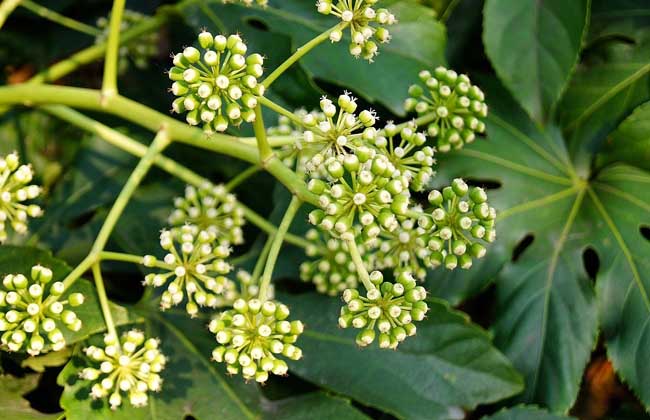
Japanese aralia, also known as eight-gold plate, eight-hand, and diamond kudzu, is an evergreen shrub or small tree of the genus Fatsia in the Araliaceae family. It is named for its palmate leaves, which have about 8 lobes and appear to have 8 corners. In gardens it is often planted beside rockeries or large trees, and it can also be used as a foliage plant for indoor display in halls and meeting rooms. Let us take a look below at the cultivation methods and precautions for Japanese aralia!
Is Japanese aralia toxic?
The stem of Japanese aralia is toxic and can cause immune system poisoning, mental poisoning, and organ-damaging poisoning, among others. Basically no one eats the stem of this plant raw, so it can be safely placed in the home. Many families like to display this Japanese aralia. In feng shui, placing it in the entrance hall can block disasters from entering the home, and placing it in the bathroom can prevent loss of wealth and strengthen the female owner's health. Moreover, this plant can absorb large amounts of harmful gases, and its roots can also be used as a medicinal material.
Propagation methods for Japanese aralia
1. Cuttings: Best done in March to April in conjunction with repotting. Select robust 2- to 3-year-old side branches with terminal buds, cut 15 cm-long cuttings from the upper part, insert them with 2 to 3 leaves into a sand bed, and pay attention to shading and keeping the soil moist. When the weather is hot and dry, spray the leaves several times a day to maintain air humidity. At 20 to 25°C, roots generally form in 1 month, and the plants can be potted up in 2 months.
2. Division: Can be done in conjunction with spring repotting. Tip the plant that has filled the pot out of the pot, trim poor-growing roots, then divide the original plant clump into several clumps or individual plants, plant them into pots of appropriate size, and place them in a ventilated, shady spot for care. After 2 to 3 weeks they can be returned to normal management. For division propagation, divide and plant immediately to increase the survival rate.
3. Sowing: Sowing propagation is carried out after the seeds are collected in late January. First allow the seeds to fully after-ripen, then sow them in a seedbed. Pay attention to shading and keep the seedbed soil moist. One month after sowing, they will germinate and emerge.
Cultivation methods for Japanese aralia
1. Soil: Japanese aralia is best planted in well-drained, fertile, slightly acidic soil, and it can also adapt to neutral soil.
2. Watering: During the new leaf growth period, Japanese aralia should be watered somewhat more to keep the soil moist. Afterward, watering should follow the principle of alternating dry and wet. When the climate is dry, water should also be sprayed on the plant and around it to increase humidity.
3. Sunlight: Japanese aralia is a strongly shade-loving tree species and can be grown year-round indoors in a spot with bright, indirect sunlight.
4. Temperature: The most suitable growing temperature for Japanese aralia is 15 to 20°C. It must not be lower than 5°C. It can grow normally above 10°C. The temperature also must not be too high; when it exceeds 30°C, the leaves easily turn yellow, growth vigor declines, and it often suffers from diseases.
5. Fertilizing: During the peak growing season, Japanese aralia needs 1-2 applications per month of dilute liquid fertilizer or compound flower fertilizer.
The cultivation value of Japanese aralia
1. Japanese aralia can be used as a Chinese herbal medicine. It can resolve phlegm and relieve cough, dispel wind and remove dampness, and dissolve blood stasis and relieve pain. It mainly treats cough with profuse phlegm, rheumatic arthralgia, gout, and traumatic injuries. Its leaves, roots, and bark can also each be used alone as a Chinese medicine.
2. As a medicinal plant, Japanese aralia also has a good effect in the medical field. In recent years, the medical field has often used Japanese aralia together with the roots and stems of other plants as medicine to treat liver cancer, kidney stones, and other diseases, and has achieved good therapeutic results.
3. Japanese aralia can be planted in many places for ornamental purposes. It is suitable for planting in courtyards, beside gates, at wall corners, and in the shaded areas of buildings to embellish the home's scenery. It can also be planted beside streams, where the scenery will be even more pleasant. It can also be planted in groups at the edges of lawns and in woodland areas.
The feng shui role of Japanese aralia
1. Japanese aralia is a strongly shade-loving plant, and its Five Elements attribute is water. If the owner's Five Elements lack water, it is very suitable to place such a plant at home. It can bring you wealth and is a very good wealth-attracting plant. Place it in any position in your home, and it can attract wealth and draw in money for you, making money “run” to the owner's home.
2. Placing Japanese aralia in the home's entrance hall can block disasters from entering the home and keep everything in the family safe. Placing Japanese aralia in the entrance hall can not only block disasters, but when people walk into the house, they can also see the vibrant Japanese aralia, which can also make people full of energy and face life with a smile.
3. Placing Japanese aralia in the bathroom means that when the owners are in the bathroom and see it, they also feel that life is everywhere, full of vitality and vigor. And when a person is energetic, illness will relatively stay away, and the owner's health will also get better and better.
Reasons for Japanese aralia leaves drooping
1. The potting soil is too dry, causing drooping. Because Japanese aralia is not drought-tolerant, keeping the potting soil moist is key. But you should also follow the rule of not watering until the surface soil is dry, and it is best to water when the surface soil just begins to appear white.
2. The potting soil is too wet, causing root rot. You can remove the plant from the pot, remove the soil, cut off the rotted root system, replace with new soil and replant, water thoroughly, and place it in a shady spot.
3. Fertilizer is too concentrated, causing root burn. Remove the plant from the pot, wash the roots with clean water, rinse continuously several times, then soak the roots in clean water. After the leaves recover, replace with new soil and replant.
Precautions for cultivating Japanese aralia
1. For sooty mold on Japanese aralia, promptly wipe away the sooty blotch with a clean cotton cloth, and spray fungicides such as chlorothalonil for prevention and control.
2. Leaf spot disease on Japanese aralia occurs mostly in summer and can be prevented and controlled with agents such as thiophanate-methyl or carbendazim.
3. Chlorosis in Japanese aralia can be prevented and controlled by spraying the leaves with ferrous sulfate water.
4. The main pests of Japanese aralia are aphids, scale insects, and red spider mites. If they occur, speed-kill can be used to control scale insects, aphid-eliminator can be used to control aphids, and dicofol can be used to control red spider mites.