How to Make a Murraya paniculata Bonsai and Care Tips
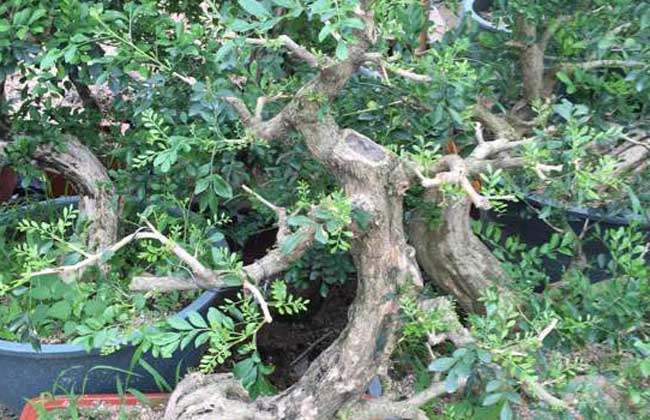
Murraya paniculata (orange jasmine) is an evergreen shrub of the genus Murraya in the family Rutaceae, sometimes able to grow into a small tree form, with graceful stature, elegant branches and leaves, and intensely fragrant flowers; it prefers growing in sandy soil and sunny spots. In southern regions it is often used as hedge material, or as an ornamental accent for flower gardens and hotels, and is also used as bonsai material. Let's take a look together at how to make and care for a Murraya paniculata bonsai!
Making a Murraya paniculata Bonsai
1. Plant source: To make a Murraya paniculata bonsai, you can use artificial propagation methods such as sowing and cuttings to obtain bonsai material, or you can collect tree stumps with antique-looking tree forms from the wild hills.
2. Potting: Making a Murraya paniculata bonsai usually involves transplanting in March to April of spring. The potting soil is made from garden soil with good air permeability, mixed with a small amount of sand and chaff ash; the pots used are commonly glazed ceramic pots in pale yellow, gray-brown and blue.
3. Styling: Murraya paniculata is suitable for making into large natural-style bonsai such as the straight-trunk style and slanting-trunk style. It is suitable to use the pruning method for styling; the trunk can be slightly wired and bent and then pruned, and the pruning period is preferably April to May in spring. Generally, the "grow branches and truncate trunk method" is used, that is, when the main branches of the trunk have been grown to a suitable thickness, a section is cut off from each branch and trunk.
Caring for a Murraya paniculata Bonsai
1. Placement: A Murraya paniculata bonsai should not be kept indoors in insufficient light for a long time; it is best placed in a semi-shaded spot. In summer, care must be taken to prevent sunscald, and in winter it must be put in a greenhouse, where the temperature must not be lower than 5°C. The place where the Murraya paniculata bonsai is kept should be sprayed with water frequently to maintain air humidity.
2. Watering: Murraya paniculata likes a humid environment, but because the potting soil of a Murraya paniculata bonsai is limited, it dries out very easily; if not watered in time, it will die of water deficiency. Although it needs constant watering, it should not be watered too much either; too much water will cause Murraya paniculata to grow leggy, and long-term overly wet potting soil causes poor root respiration and easily leads to root rot and death. Therefore, watering a Murraya paniculata bonsai should follow the principle of "do not water until dry, and water thoroughly when you do."
3. Fertilizing: The nutrients in the potting soil are limited. In order to supply the nutrients needed for the growth of Murraya paniculata, care should be taken to supplement appropriate fertilizer. However, a Murraya paniculata bonsai grows slowly, so too much fertilizer should not be applied, which would cause leggy growth and affect its beauty. Fertilizing should be moderate, and the type of fertilizer and its nutrient content should be controlled.
Pest and Disease Control for Murraya paniculata
1. Powdery mildew: Powdery mildew occurs on the leaves and can be prevented and treated by spraying agents such as azoxystrobin, triadimefon and thiophanate-methyl.
2. Rust disease: Rust disease is a common disease of branches and trunks, causing the heartwood of branches and trunks to rot; it can be prevented and treated by spraying triadimefon.
3. Red spider mite: Red spider mites occur when the temperature is relatively high. They suck the sap of branches and leaves; after the leaves are damaged they show gray spots, and in severe cases turn yellow, wither and fall off. They can be prevented and treated by spraying propargite, hexythiazox and pyridaben.
4. Scale insects: Scale insects suck the sap of the tree and can also cause sooty mold, making the tree grow poorly, with branches and leaves turning yellow and withering and leaves falling early. Besides being removed and eliminated by hand, they can be killed by spraying dimethoate, trichlorfon and dichlorvos.
5. Longhorn beetles: Longhorn beetles are quite harmful to the plants. The adults can be removed by hand, or lime-sulfur mixture can be applied for prevention and control.
6. Scarab beetles: During the period of new leaf growth, an 800-fold aqueous solution of trichlorfon, or a 1000-fold aqueous solution of Yibianjing, can be sprayed once for prevention and control. For household potted Murraya paniculata, manual catching can be used for prevention and control, and the caught pests can be killed by scalding them with hot water.
7. Leaf roller moths: During the period of new leaf growth, a 1500-fold aqueous solution of Yashijing, or a 1500-fold aqueous solution of Dagongchen, or a 1500-fold aqueous solution of Anlübao can be sprayed once for prevention and control, killing the larvae.
Precautions for Murraya paniculata Bonsai
1. Organic fertilizer and cake fertilizer applied to Murraya paniculata must be fully decomposed before use, otherwise fermentation in the potting soil can easily burn the roots.
2. Liquid fertilizer applied to Murraya paniculata should not be too concentrated; it must be diluted before use, otherwise fertilizer damage can easily occur.
3. For a Murraya paniculata tree that has just been potted, fertilizer should not be applied while new roots have not yet grown.
4. When the potting soil of Murraya paniculata is dry, water after fertilizing; fertilizing before rain is better, and fertilizing on rainy days is not advisable.
5. The liquid fertilizer water applied to Murraya paniculata should not be sprinkled on the leaf surfaces.
6. During the growing season, topdressing for Murraya paniculata should use quick-acting fertilizer; during the dormant period, slow-release fertilizer should be applied; generally no fertilizer is applied during the plum rain season and in autumn.