How to make homemade flower fertilizer? The complete guide to home flower growing methods
Using household waste to make excellent flower fertilizer saves money and is environmentally friendly, and it is all organic fertilizer, containing various nutrient elements needed by flowers and rich organic matter, with mild and lasting fertilizer effect. It can also improve the soil, helping the soil form a granular structure and balancing air and water in the soil, which is extremely beneficial to the growth and development of flowers. Let us take a look below at the complete guide to homemade flower fertilizer methods!
Making nitrogen fertilizer
Nitrogen fertilizer is the main fertilizer that promotes the growth of flower roots, stems, and leaves. Take moldy or insect-damaged beans, peanuts, melon seeds, and castor beans that cannot be eaten, plus leftover vegetable leaves, bean shells, melon and fruit peels, pigeon droppings, and expired spoiled milk powder, crush them and boil them soft, put them in a small jar, fill it with water, then seal it to ferment and decompose (if conditions allow, sprinkle some insecticide). To make it decompose faster, place it in a sunny spot to increase the temperature. When all these materials in the jar sink, the water turns black, and there is no bad smell (about 3 to 6 months), it means fermentation and decomposition are complete. In summer, after 10 days the upper fertilizer water can be taken out and diluted with water for use. It can be used as a top dressing or directly as a base fertilizer. After use, immediately fill the jar with water again to continue decomposing. The residue of the raw materials can be mixed into the flower soil.
Making potassium fertilizer
Rice-washing water (best applied after fermentation), leftover tea water, and water from rinsing milk bottles are excellent potassium fertilizers and can be used directly to water flowers. Plant ash also contains potassium fertilizer and can be used as a base fertilizer. Potassium fertilizer has a significant effect on improving flowers' resistance to lodging and resistance to pests and diseases.
Making phosphorus fertilizer
1. Fish intestines, meat bones, fish bones, fish scales, crab shells, shrimp shells, hair, nails, livestock hooves and horns, etc. are rich in phosphorus-containing waste materials. After crushing these waste materials, evenly stir them into the flower soil, or put them in a container to ferment, and they become an ideal phosphorus fertilizer. Used diluted with water to water flowers, it will make flowers brightly colored and glossy and fruits plump, and the fertilizer effect can last for more than 2 years.
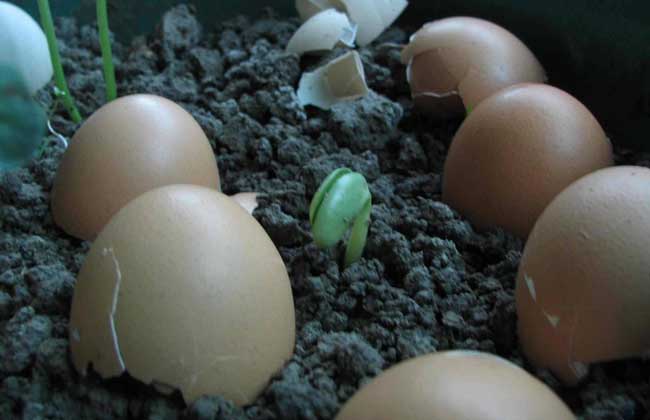
2. Wash the egg white from inside eggshells clean, dry them in the sun, crush them, then grind them into powder in a mortar. They can be mixed and stirred evenly with pot soil at a ratio of 1 part eggshell powder to 3 parts pot soil. When used for potting and cultivating flowers, it is also a long-acting phosphorus fertilizer. After eggshell powder is used in planting flowers, the flowers bloom large and brightly colored, and the fruits are large and plump. It is a completely organic phosphorus fertilizer.
Making compound fertilizer
1. Complete compound fertilizer: Put the bones left after eating pork ribs, lamb ribs, beef ribs, etc. into a pressure cooker and steam them over heat for 30 minutes, then crush them into powder. Mix them evenly with river sand at a ratio of 1 part bone powder to 3 parts river sand. Use this as a base fertilizer for flowers, placing a 3 cm layer at the bottom of the flower pot, covering it with a layer of soil, and then planting the flowers.
2. Nitrogen-phosphorus compound fertilizer: Take 0.5 kg ammonium bicarbonate, 0.15 kg potassium chloride, 0.025 kg zinc sulfate, 2.5 kg human feces and urine, 1 kg cow manure and urine (or 5 kg pig manure and urine), and 20 kg red stone bone fine powder, divide each into 5 equal parts, then spread a layer of red stone bone fine powder (4 kg), sprinkle the other fertilizers on top, pat firmly with a wooden board, and finally cover and seal with straw or plastic film. After 20 to 25 days, it becomes nitrogen-phosphorus compound fertilizer.
3. Humic acid ammonium phosphate: Take 1 kg decomposed biogas residue, add 0.05 kg phosphate rock powder, mix and stir evenly, then pile it up, coat the outside with a 3 to 5 cm thick layer of thin mud mixed with cow manure, then sprinkle a layer of fine soil on top, and seal it for 40 days to make humic acid phosphorus fertilizer. Then turn the humic acid phosphorus fertilizer pile, break it up finely, pile it up again and coat it with thin mud, then make holes from the top and around the pile into the inside of the pile, then pour in ammonia water at a ratio of 0.05 kg ammonia water per 1 kg humic acid phosphorus fertilizer, and at the same time seal the holes tightly with mud. After 8 to 10 days, when there is no smell outside the holes, it is successful. This compound fertilizer used as a base fertilizer has an obvious effect.
Summary: When using homemade flower fertilizer, master the principle of “thin fertilizer, light application”, dilute it appropriately, apply it in the right amount, and never apply it in excess. When decomposing fertilizer, be sure to wait until the fertilizer water soaked out from inside turns black and is completely decomposed before pouring it out and mixing it with water (about 9 parts water to 1 part fertilizer water). Do not use raw fertilizer.