How to Make an Acorus calamus Bonsai and Care Tips
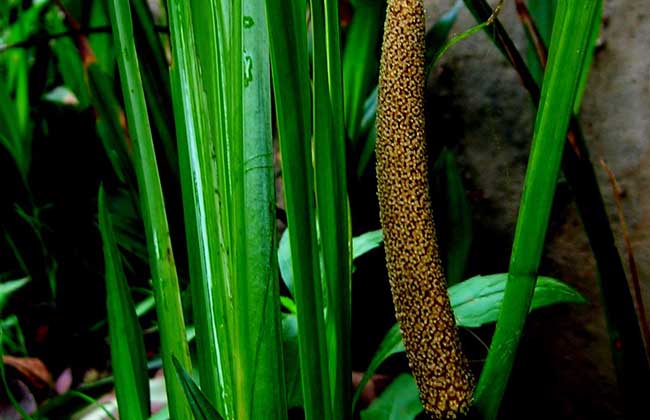
Acorus calamus is a perennial herbaceous plant of the genus Acorus in the family Araceae, also known as white calamus, Tibetan calamus, wild calamus, stinking calamus, etc. It is a sacred herb in traditional Chinese culture that can ward off epidemics and evil spirits. During the Dragon Boat Festival, there is a custom of tying Acorus calamus leaves together with mugwort and hanging them under the eaves. It is a toxic plant listed in the Chinese Plant Atlas Database, with the whole plant being toxic and the rhizome being more toxic. Now let us take a look at how to make and care for an Acorus calamus bonsai!
The Growing Environment of Acorus calamus
Acorus calamus grows by water, in marshy wetlands or on floating lake islands below 1500-1750 m in altitude. The most suitable growing temperature is 20-25°C, and growth stops below 10°C. In winter, it overwinters by having its underground stem burrow into the mud. It likes a cool and humid climate and a shady, moist environment, is cold-resistant, and avoids drought.
Propagation Methods of Acorus calamus
1. Sowing: Clean the collected ripe red berries, sow them indoors in autumn, keep the soil moist or in shallow water, and under conditions of around 20°C they will germinate one after another in early spring, then be separated and cultivated, and when the seedlings grow strong they can be transplanted and planted out.
2. Division: In early spring or during the growing season, dig out the underground stems with a shovel, wash them clean, remove old roots, stems and dead leaves and stems, then use a sharp knife to cut the underground stems into several blocks, each retaining 3-4 new buds, for propagation.
Making an Acorus calamus Bonsai
1. Soil mixing: For cultivating Acorus calamus, loam rich in humus is best, and sandy soil also grows well. The growing medium needs to be kept moist at all times. For small pots, a water tray can be placed under the pot to retain moisture.
2. Planting: The planting depth for Acorus calamus is generally such that the main bud stays close to the mud surface, while watering 1-3 cm. For potted Acorus calamus, choose a pot that does not leak water, with an inner diameter of about 40-50 cm, and sufficient base fertilizer should be applied at the bottom of the pot. Dig a hole in the middle to plant the rhizome, the growing point should be exposed above the soil surface, and add 1-3 cm of water.
Bonsai Care of Acorus calamus
1. Watering: Acorus calamus likes moisture and avoids drought. Daily watering should keep the pot soil moist, but too much watering can also easily cause yellow leaves.
2. Temperature: Acorus calamus likes warmth to high temperatures, with an optimum growing temperature of about 18-28°C.
3. Light: The cultivation site for Acorus calamus should be chosen in semi-shade, avoiding direct strong sunlight. If it can receive 50-60% light, it will naturally grow vigorously and have soft, beautiful leaf color. For indoor display, choose a spot by a window where light shines in. If growth weakens, it should be moved outdoors promptly, and receiving soft sunlight can restore its vitality.
4. Fertilizing: Acorus calamus has strong adaptability during the growing season and can be managed extensively. During the growing period, maintain the water level or moisture, apply topdressing 2-3 times, and combine fertilizing with weeding. In the early stage, mainly use nitrogen fertilizer, and before heading and flowering, mainly apply phosphate and potassium fertilizers. Each time you fertilize, be sure to put the fertilizer into the mud (more than 5 cm below the mud surface).
5. Division and replanting: Before overwintering, clean up the dead branches and fallen leaves on the aboveground part of Acorus calamus, burn them in a centralized manner or compost them. Open-field cultivation should be renewed every 2-3 years. When planted for a long time and too crowded, forced division should be carried out, and after changing the soil, replant. Potted plants should be replaced and divided once every 2 years.
6. Pruning: It is a common consensus that the more Acorus calamus is pruned, the finer its leaves become, but pruning should not be too frequent. Regularly remove rotten leaves and yellow leaves to maintain the best ornamental effect.