Detailed Explanation of Soil-less Cultivation Methods and Steps for Bowl Lotus
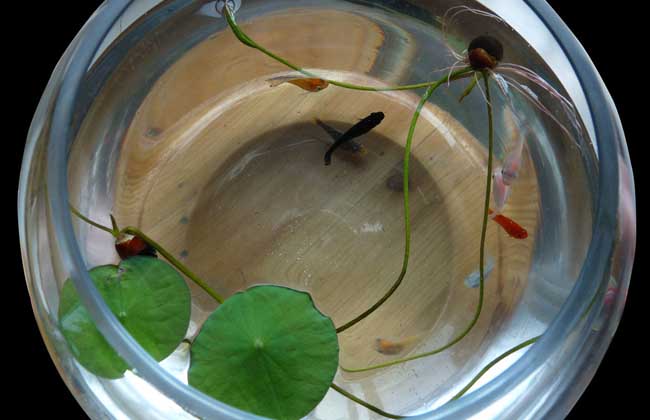
Bowl lotus, also known as white lotus, hibiscus, lotus, etc., is a perennial aquatic herbaceous flower of the genus Nelumbo in the family Nymphaeaceae. It not only has large, brilliantly colored flowers with a far-reaching delicate fragrance and emerald-green leaves floating over the water, but also has extremely strong adaptability. Since ancient times, it has been a precious aquatic flower for palace gardens and private courtyards, and in today's modern landscape architecture it is increasingly favored by people. Let's take a look at the soil-less cultivation methods for bowl lotus!
Cultivation Advantages
Soil-less cultivation of bowl lotus can avoid soil-borne pests and diseases, and the application of inorganic fertilizers is odorless and does not breed mosquitoes or flies, making it clean and hygienic. Moreover, bowl lotus grown soil-lessly has deep green leaves, abundant and large flowers, vivid colors, and a long flowering period, while also offering the advantages of simple operation and easy mastery, making it most popular among home gardening enthusiasts.
Sowing Time
Bowl lotus seeds have no dormancy period. As long as the water temperature can be maintained above 16°C, they can be sown in all four seasons. Under suitable conditions of temperature and light, it takes 50-60 days from sowing to flowering in spring, and 60-80 days in autumn.
Seed Treatment
The outer shell of lotus seeds is hard and dense, so before soaking the seeds, the shell must be manually nicked. One end of the lotus seed has a small pointed tip, and the other end has a small concave dot. Grind the end with the small concave dot on rough cement ground until a layer of skin is worn through. Be careful not to damage the kernel inside, and do not remove the shell. The purpose of grinding the skin is to allow water to seep in through this opening, causing the seed to absorb water and swell.
Seed Soaking and Germination
Soak the shelled seeds in warm water at about 20-40°C. When the water temperature is below 20°C, the seeds germinate and grow too slowly. For small-scale home soaking, a thermos bottle can be used to keep them warm. The speed of germination is also related to temperature. At a temperature of 30°C, soaking for germination generally takes only 3-5 days for sprouting, with the germinating bud extending from the opening. During this period, change the water once every 1-2 days. Under normal circumstances, as long as the seed coat can absorb water and swell, it will germinate.
Container Selection
For soil-less cultivation of bowl lotus, a round goldfish glass tank can be chosen, wrapped externally with black cloth or black paper and then wrapped with a layer of white paper to prevent various algae in the solution from multiplying in the sunlight and to prevent the underground rhizomes of the bowl lotus from turning green, which would affect flowering. Opaque glazed pots, porcelain pots, purple clay pots, etc. can also be used.
Sowing Method
The key to sowing bowl lotus by seed in soil-less cultivation is to use a suitable substrate to secure the seeds so they do not float up in the water (for example, fine sand around the seeds, which is soft and does not damage the root system, with pebbles elsewhere). The cultivation substrate is sterile water, furnace slag, sand and gravel (clean coarse sand or rain flower stones), etc.
Timely Fertilization
Prepare inorganic fertilizers into a suitable aqueous solution, and apply a nutrient solution containing elements such as nitrogen, phosphorus, potassium, calcium, magnesium, and zinc once a week. Plant nutrients formulated by the Beijing Botanical Garden of the Chinese Academy of Sciences can be used, or universal compound fertilizer tablets for potted flowers can be used, placing 1-2 tablets per pot each week. A ternary compound fertilizer can also be used, once every half month, 3-5 granules each time.
Reasonable Pruning
When the leaves of the bowl lotus grow too many and too dense, some leaves can be appropriately removed to facilitate the plant's respiration and ventilation, and also to help with flower formation. When multiple plants are grown in the same container, if the leaves are found to be competing for sunlight, they should be divided into separate pots in a timely manner.