Detailed tutorial on how to grow dendrobium in pots
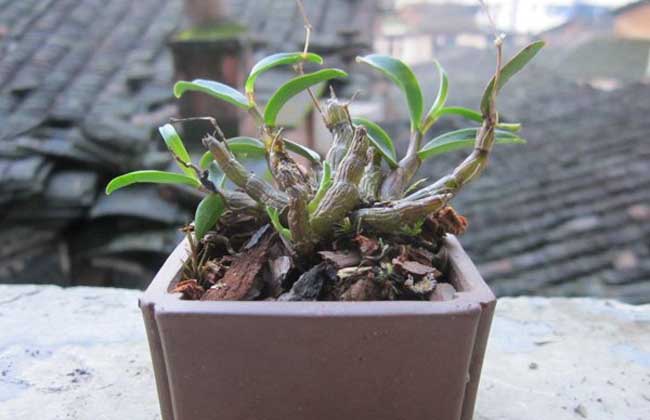
Dendrobium, also known as Linlan, Jinsheng, Dulan and so on, is a perennial herbaceous plant of the genus Dendrobium in the orchid family. Its flowers are elegant, delicate and lovely, brightly colored and fragrant, and it has extremely high medicinal and ornamental value. It is known as one of the "four great ornamental foreign flowers". Home cultivation mainly uses the potting method. Let us take a look at how to grow dendrobium in pots!
Flower pot selection
For potting dendrobium, choose a flower pot with a slightly larger diameter and holes at the bottom or around the sides. Good air permeability and good drainage are required. You can also skip the flower pot and directly fix the dendrobium onto rotten wood, because dendrobium is an epiphytic plant and under natural conditions mainly grows on the shady, moist trunks of tall trees or on limestone.
Medium mix
The potting medium for dendrobium is different from that of ordinary flowers, because dendrobium cannot be grown in soil. It is best to use media with good water retention and air permeability, such as sphagnum moss, crushed stone, peanut shells, moss, coconut husk, pine bark, wood shavings, charcoal and wood chunks.
Division propagation
Dendrobium is mainly propagated by division. When dividing, select 1-year-old or 2-year-old plants with tender green color, robustness, many shoots, well-developed roots and no pests or diseases as stock plants. Cut off dead branches, broken branches, old branches and overly long fibrous roots, cut the clump apart and divide it into small clumps, each with 5 to 7 leafy stems, and then they can be planted.
Care environment
Dendrobium likes to grow in a warm, humid, semi-shaded and semi-sunny environment. Therefore, potted dendrobium should be grown in a cool, moist and well-ventilated environment. It needs to be placed in a place with relatively sufficient light, but direct sunlight should be avoided. For example, it can be placed under a windowsill or on a living room coffee table.
Planting techniques
For stone-attached planting, chisel concave holes on the selected stones at a spacing of 30 cm, apply a thin layer of cow dung mixed with thin mud to the base of the plant, and insert it into the stone holes or stone grooves. Just make sure it is firm and does not fall off; small stones can be inserted to secure it. For tree-attached planting, on the selected tree, at intervals of 30 to 40 cm, cut away part of the bark, apply a thin layer of a mixture of cow dung and mud slurry to the base of the plant, then insert it into the cut bark or the vertical cracks of the tree and press it tightly against the bark, then cover it with a layer of rice straw and tie it well with bamboo strips.
Reasonable watering
Potted dendrobium is suited to a relatively high-humidity environment. The most suitable humidity is 60 to 80%, and the lower limit of humidity is 30%. Water only when the moisture is at 30 to 40%. Generally, in summer, water once every 2 to 3 days, thoroughly each time. In spring and autumn, water once every 1 week, thoroughly each time. In winter, water once every 10 days, half-thoroughly each time.
Timely fertilizing
The growing areas of dendrobium are poor, so attention should be paid to topdressing. The first time is around Qingming, mainly with nitrogen fertilizer mixed with pig and cow dung and river mud. The second time is around Lidong, using peanut cake, rapeseed cake, superphosphate and so on mixed evenly with river mud and pasted on the roots. In addition, foliar topdressing can also be used.
Care methods
1. Light: It needs to be placed in a place with relatively sufficient light, but direct sunlight should be avoided.
2. Temperature: The most suitable temperature for dendrobium growth is 15 to 30°C. The maximum should not exceed 35°C, and the minimum should not be lower than 5°C.
3. Moisture: In the high-temperature season (May to October), water daily, and each time thoroughly water the medium. In other seasons, depending on humidity, water again when the medium moisture is at 30 to 40%.
4. Humidity: Dendrobium is suited to a relatively high-humidity environment. The most suitable humidity is 60 to 75%, and the lower limit of humidity is 30%.
5. Medium: All potted plants should be prepared with medium, and caregivers must not add sand or soil on their own.
6. Fertilizer: Fertilize according to growth conditions. When the growth of stems and leaves appears weak (color becomes lighter, stems are weak, etc.), nutrient solution needs to be added. The fertilizer-to-water ratio is 1:1000, that is, every 0.5 grams is mixed with half a liter of water, then just moisten the leaf surface; there is no need to wet the medium.
7. Ventilation: It should be in a well-ventilated environment to ensure the oxygen content in the air.
8. Weeding: Weeds, moss, fungi and other plants competing with dendrobium should be removed from the pot.
9. Pest removal: Attention should be paid to the effects of various insects, mice and other pests and diseases.
Note: When the environment for potted dendrobium is an open environment, the dendrobium should always be placed below large-leaved plants on the balcony. The large-leaved plants block excessive light for the dendrobium. The grower usually only needs to water. In rainy weather, new buds of dendrobium grow rapidly.