When to Plant Chrysanthemums? A Detailed Guide to the Best Planting Time
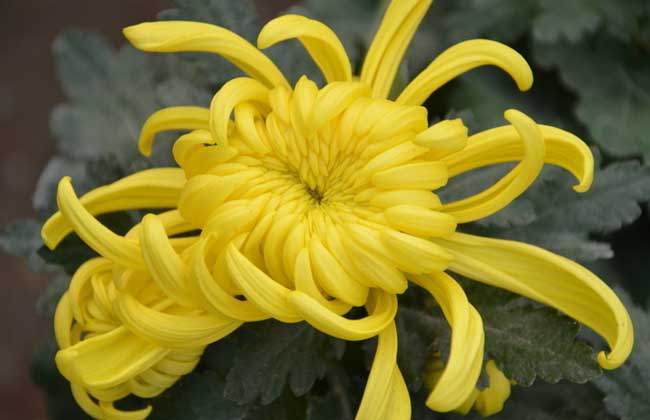
The chrysanthemum ranks third among China's ten most famous flowers and is one of the Four Gentlemen of flowers (plum blossom, orchid, bamboo, and chrysanthemum). In plant taxonomy, it is a perennial herbaceous plant of the genus Chrysanthemum in the Asteraceae family, also known as Shouke, Jinying, Huanghua, Qiuju, and other names. In ancient myths and legends, the chrysanthemum was also endowed with meanings of auspiciousness and longevity, giving it extremely high cultivation value. Let's take a look below at when chrysanthemums should be planted!
Planting Time for Chrysanthemums
Chrysanthemums can be propagated in two ways: vegetative propagation and seed propagation. Vegetative propagation includes cuttings, division, grafting, layering, and tissue culture, with cutting propagation usually being the primary method. If you choose to sow chrysanthemum seeds, it is best to do so in spring. Chrysanthemum cuttings are best taken in spring and summer or in late autumn after flowering. Division is best done in late autumn after flowering. Root division and transplanting of chrysanthemums should be done before May 15, while cutting and transplanting of chrysanthemums should be done before June 16.
Propagation Methods for Chrysanthemums
1. Bud cuttings: In autumn and winter, cut off the outer shoots from the base of the plant for cuttings. The criteria for selecting buds are those farther from the plant with plump bud heads. After selecting the buds, strip off the lower leaves and insert them in flower pots or coarse sand in cutting beds inside a greenhouse or polytunnel at a spacing of 3-4 cm between plants and 4-5 cm between rows. Maintain a room temperature of 7-8°C, and plant outdoors after spring warms up.
2. Field cuttings: The medium for field cuttings can be garden soil mixed with 1/3 of rice husk ash. Build a reed curtain shed on a raised bed for shade. Fully exposed cutting beds with automatic misting equipment do not need shading.
3. Division: Chrysanthemum division propagation is generally done around Qingming (early April). Dig up the plant, separate it along the natural form of the roots while keeping the roots intact, and plant separately in pots.
4. Grafting: Chrysanthemums can be grafted using Artemisia annua or Artemisia carvifolia as rootstock. Collect Artemisia seeds in late autumn, sow in a greenhouse in winter, or raise seedlings in a hotbed in March. In late April, when seedlings are 3-4 cm tall, transplant them into pots or the field, and perform cleft grafting on a sunny day.
5. Seeds: Chrysanthemum seeds germinate slowly above 10°C, with an optimal temperature of 25°C. Sow thinly between February and April. Under normal conditions, most can bloom in the same year.
Cultivation Techniques for Chrysanthemums
1. Potting soil: For chrysanthemum cultivation, fertile sandy soil should be used. Start with a small pot and then move to a larger one, repotting 2-3 times, and by July the final pot can be set. For the final potting, a mixed soil of 6 parts leaf mold, 3 parts sandy soil, and 1 part cake fertilizer residue can be used. Water thoroughly and place in a cool spot. After the plant grows normally, move it to a sunny location.
2. Watering: In spring, chrysanthemum seedlings are small, so water sparingly. In summer, as the seedlings grow, water once in the early morning and supplement with another watering in the evening. Also use a spray bottle to mist the chrysanthemum leaves, branches, and surrounding ground to increase environmental humidity. Before the Start of Autumn (around August 7), appropriately control water and fertilizer to prevent the plant from growing too tall and leggy. After the Start of Autumn and before flowering, increase watering and begin fertilizing, gradually increasing the concentration of fertilizer solution. In winter, when flower branches basically stop growing, the plant's water consumption decreases significantly and evaporation is also low, so watering must be strictly controlled.
3. Fertilizing: When planting chrysanthemum plants, apply sufficient base fertilizer in the pot. Afterwards, apply nitrogen fertilizer once every 10 days. After the Start of Autumn, from bud formation to visible buds, apply a slightly more concentrated fertilizer solution once a week. When the buds are about to open, apply one more round of concentrated fertilizer solution and then pause fertilizing. If at this time you can apply superphosphate or a 0.1% potassium dihydrogen phosphate solution once, the flowers will bloom more vibrantly.
4. Pinching: When chrysanthemum plants grow to over 10 cm tall, begin pinching. When pinching, leave only 4-5 leaves at the base of the plant and remove all upper leaves. After 5-6 new leaves grow, pinch again, keeping 4-7 main branches on the plant, and promptly remove any subsequently growing branches and buds. Pinching can cause the plant to branch, effectively controlling plant height and shape. At the final pinching, perform shaping pruning on the chrysanthemum plant, removing excess branches and overly vigorous or weak branches, keeping 3-5 branches.
5. Bud thinning: When chrysanthemums form buds in September, remove the buds at the lower part of the plant, keeping only one bud at the top of each branch.
Pest and Disease Control for Chrysanthemums
1. Leaf spot disease: Leaf spot disease, also known as leaf blight, begins in mid-to-late April and damages leaves. After harvesting flowers, cut off the above-ground parts of the plant and burn them in a centralized manner. In the early stages of the disease, remove diseased leaves and alternately spray with 1:1:100 Bordeaux mixture and 50% Thiophanate 1000x solution.
2. Fusarium wilt: Fusarium wilt begins from early June to early July, with severe incidence after flowering, damaging the entire plant and causing root rot. Select disease-free old roots for seed stock, practice crop rotation, make raised beds, dig deep furrows, reduce humidity, pull out diseased plants, and scatter lime powder in the diseased holes or drench with 50% Carbendazim 1000x solution.
3. Pests: Chrysanthemums are planted year-round, providing abundant food and habitat for pests and mites. Whether cultivated in net houses or open fields, they cannot escape damage from pests or mites. Important pests on chrysanthemums include aphids, thrips, Spodoptera litura, beet armyworm, tomato fruitworm, and two-spotted spider mites. Minor pests include cutworms, geometrid larvae, leafminers, whiteflies, tussock moths, mealybugs, and flat mites, among others. The variety can be said to be quite numerous.
4. Weeds: Chrysanthemum cultivation is mostly done in open fields and rotated with paddy fields. Generally, dryland weeds commonly found in paddy-upland rotation fields will all occur in chrysanthemum fields. The competitive damage of weeds is related to the cultivation method of chrysanthemums, weed species, density, competition period, and environmental factors. Weeds competing for water, nutrients, and light can directly cause poor growth and reduced quality of chrysanthemums, and are detrimental to field management operations.