How to Grow Hemerocallis 'Stella de Oro'? A Detailed Guide to Cultivation Methods
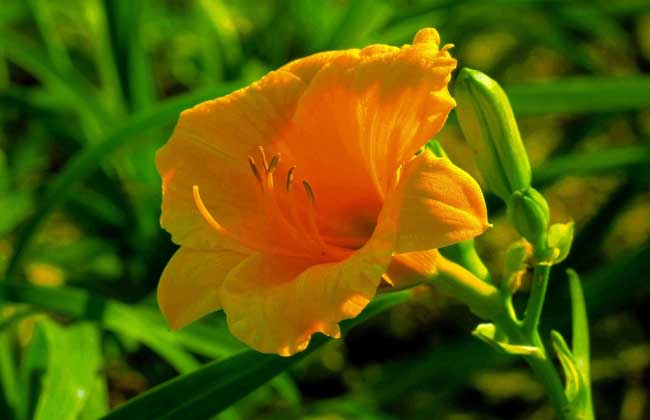
Hemerocallis 'Stella de Oro' is a horticultural cultivar of daylily (Hemerocallis) developed through artificial cultivation, also known as yellow lily. It is native to North America and was introduced to Beijing by the Chinese Academy of Sciences last century. It is now distributed in Jiangsu, Henan, Shandong, Zhejiang, Hebei, Beijing and other places. Its cultivation and management are simple, making it suitable for clump planting as accents in urban parks, plazas and other green spaces. Let's take a look at the cultivation methods for Hemerocallis 'Stella de Oro'!
Propagation Methods
Hemerocallis 'Stella de Oro' can be propagated by tissue culture or division. The annual propagation coefficient is generally 1:6, and can reach 1:10 in fertile soil. Division can be carried out during the dormant period. In spring from February to March, dig up plants that are over 2 years old, divide them so that each bud becomes one plant, and each plant must have a complete bud head. Then plant them at a row spacing of 40 cm and a plant spacing of 25 cm, with planting holes 10-12 cm deep. First apply base fertilizer into the hole, cover with a little fine soil, then plant, cover with 4-5 cm of soil after planting, firm it down, and then water thoroughly. Division can also be done in March. In the Jiangsu-Zhejiang area, before early February, cut apart dense clumps, keeping two or three buds per clump, and replant; they can bloom the same year.
Soil Selection
Hemerocallis 'Stella de Oro' prefers warmth and ample sunlight, is cold-hardy, and requires deep, fertile soil. For pot cultivation, the soil should be loose and well-draining, and it should be fertilized regularly during the growing season. In the north, the underground tubers need to be dug up before frost and stored in an environment at about 5°C. Because of its large, brightly colored and richly varied flowers, good plant form, and easy cultivation. The optimum temperature for open-field cultivation is 13-17°C. It is not demanding about soil and grows best in loose, fertile, well-draining sandy loam, and also adapts to fertile clay soil. In the Jiangnan region, it can overwinter outdoors in a wind-sheltered spot.
Planting Spacing
Hemerocallis 'Stella de Oro' is a dwarf variety and a perennial flower with a relatively high propagation coefficient. Sparse planting gives a poor ornamental effect, while dense planting affects ventilation and tillering. Generally, a plant spacing of 20×20 cm or 15×25 cm is suitable. Divide and replant once every one to two years. The growing soil should be moist, fertile, well-draining sandy loam. After planting, spray with Xin Gao Zhi Mo (new high-fat film), which can effectively prevent aboveground moisture from evaporating and seedling moisture from transpiring, isolate pests and diseases, and shorten the seedling recovery period.
Fertilizer and Water Management
Hemerocallis 'Stella de Oro' has a long flowering period. Spraying with Huaduo Zhuangdiling can promote strong buds, plump petals, vivid flower color, and a longer flowering period. Its green period is also long. In terms of fertilizer and water management, it requires sufficient base fertilizer, and after the peak flowering period, organic fertilizer and compound fertilizer should be applied as topdressing. During the cultivation period, loosen the soil and weed 1-2 times in spring and summer, and apply decomposed human manure liquid diluted 3-5 times with water once a month from March to June. If phosphate fertilizer is applied once before flowering, it can improve flower quality. Daylily prefers moisture, so water timely, and spray with Xin Gao Zhi Mo to retain fertilizer and moisture.
Disease Control
For the prevention of rust, leaf spot and leaf blight in Hemerocallis 'Stella de Oro', on the basis of strengthening cultivation management, weeds, old leaves and dry flower scapes should be cleaned up in time. In the early stage of disease onset, spray 15% triadimefon 1-2 times to control rust, and spray 50% mancozeb or similar to control leaf blight and leaf spot.