Vitex Bonsai: Production Methods and Care Techniques
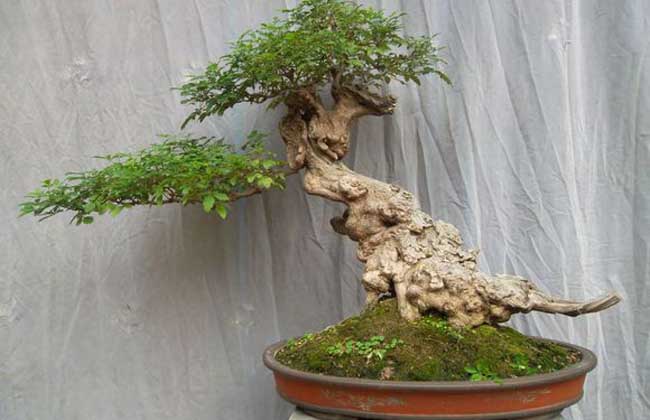
Vitex, also known as five-finger citrus, five-finger wind, and cloth vitex, is a perennial deciduous shrub or small tree of the genus Vitex in the Verbenaceae family. It is mainly produced in the provinces south of the Yangtze River in China, reaching the Qinling Mountains and Huaihe River to the north. It grows on hillsides, roadsides, or in thickets, and has extremely high ornamental value. It is often cultivated as a garden bonsai and is relatively easy to manage, making it very suitable for household potted viewing. Let's take a look at vitex bonsai production and care below!
How to source materials for vitex bonsai?
1. Artificial propagation: Vitex can be propagated by sowing, division, layering, and other methods. However, because artificially propagated vitex saplings have thin roots and stems, large leaves, and sparse branches, their form is not good, so they are generally not suitable for making bonsai. At present, vitex bonsai materials are all selected from old root stumps collected in the mountains and fields, which are then cultivated and processed.
2. Collection in the mountains and fields: Vitex grows mostly in low hills and near ditches and forest edges. Old stumps that have sprouted after years of cutting, with aged, gnarled, and twisting postures full of wild charm, can be selected and dug up in spring from February to March. Take care to protect the root system, cut off overly long main roots, and prune the branches and trunk according to the needs of the styling. After pruning, the tree stump should be planted in the ground in time for "cultivating the embryo."
Vitex Bonsai Production Methods
1. Pot selection: For vitex stump bonsai, purple clay pottery pots are generally preferred, but relatively attractive glazed pottery pots can also be used. The shape of the pot can be determined according to the tree shape, with rectangular pots being the most common. For pot color, deeper cinnabar purple or dark green is best.
2. Soil: Vitex has strong adaptability and is not picky about soil. For potted growing soil, loose, fertile, well-aerated, and well-draining garden mature soil is best. It is best to also mix in an appropriate amount of rice husk ash and sand, which is beneficial for root growth and development, making the stump bonsai lush with leaves and branches and improving its ornamental effect.
3. Planting: Usually planted in spring from February to March before sprouting. When planting, first cut off overly long main roots, keep more lateral roots and fibrous roots, mound with fertile and loose soil, and leave the bottom of the pot empty to facilitate drainage.
Vitex Bonsai Care Techniques
1. Management: Vitex is easy to keep alive. Some old stumps sprout relatively late, but as long as the bark is green, watering and management should continue as usual, and in the plum rain season they will sprout tender green new buds. After surviving, the vitex stump is best placed in a shaded area for about half a month, then moved to a ventilated sunny place, with plenty of water, fertilizer, and light to let it grow vigorously.
2. Processing: For vitex processing and styling, the method of coarse wiring and fine pruning is suitable. Shape should be taken according to the material. The main branches and trunk are bent and wired, while the small branches and leaves are carefully pruned. To make the proportion of the main trunk and side branches coordinated, collected old vitex stumps can be appropriately carved and processed, trying not to leave artificial traces. Metal wire is best for wiring, as it can be used freely.
3. Styling: Old vitex stumps are very aged and ancient, with natural shari trunks and hard ossified surfaces that are especially eye-catching. However, their shortcoming is long internodes and large leaves. To make the most of their strengths and avoid their weaknesses, it is necessary to start from the following aspects.
① Wiring and pruning: The styling principle for vitex bonsai is coarse wiring and fine pruning. Before wiring and pruning, decide on the concept according to the different forms of the stumps, cut off all useless branches (overlapping branches, crossing branches, front-facing branches, whorled branches, etc.), and bend and wire the remaining branches according to their different growth directions.
② Leaf removal: Leaf removal is generally carried out in early summer, early autumn, or before exhibition. When removing leaves, leave not a single leaf (be careful not to remove the leaf buds at the base of the leaf stalks). After leaf removal, appropriately strengthen fertilizer and water management. There is no need to shade, and in about half a month, new leaves will emerge, with the new leaves only half the size of the original leaves.
③ Pinching: Pinching means removing the new buds on the main branches and trunk. During the growing season of vitex bonsai, pinching and tip removal should be done frequently.
④ Fertilizer control: So-called fertilizer control means that once the vitex bonsai has reached its finished form, before exhibition or during the viewing period, only give it water, not "soup," and also control watering, letting the pot soil be half wet and half dry, preferably on the drier side.