What are the cultivation methods for the Air Plant (Kalanchoe)?
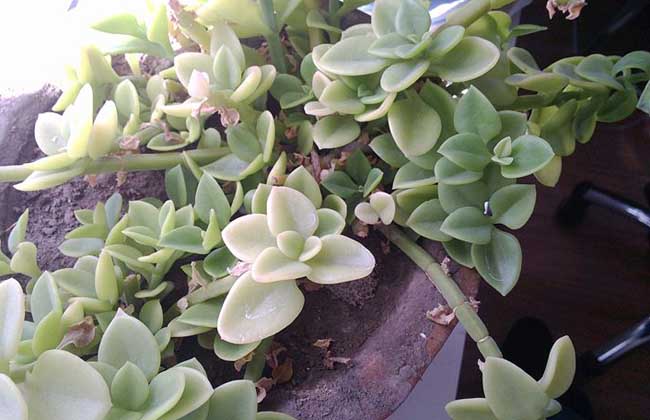
The Air Plant (Kalanchoe) is an evergreen small shrub in the Crassulaceae family, Bryophyllum genus, also known as Tusangi, Leaf-born Root, Undying, etc. It originated in South Africa. Its name is not elegant, coming from its morphological characteristics, but its ornamental value is very high. As a home ornamental plant, certain techniques need to be mastered during cultivation. Let's take a look below at how to grow the Air Plant (Kalanchoe)!
Growth habits of the Air Plant (Kalanchoe)
The Air Plant (Kalanchoe) originated in South Africa. It is relatively drought-tolerant but not cold-tolerant. It is very fond of warm, sunny environments, and it can also survive in semi-shaded environments. In winter, the survival temperature and environment must not be lower than 6°C. It often grows on hillsides, ditch-side roadsides, and moist grasslands. It is often cultivated in greenhouses and courtyards in various places. In China, it is mainly distributed in Fujian, Taiwan, China, southern Zhejiang, Guangdong, Guangxi, Yunnan, and other places.
Cultivation value of the Air Plant (Kalanchoe)
The Air Plant (Kalanchoe) is the most common succulent plant, cultivated for ornamental use. Its leaves are thick and juicy, and neat, beautiful adventitious buds grow from the edges, shaped like a group of small butterflies. They fly down to the ground and immediately take root to breed offspring, which is quite fascinating. Used as a potted plant, it is a good material for windowsill greening, and decorating a study and guest room also has elegant charm. Moreover, the whole plant of the Air Plant (Kalanchoe) is used as medicine, with the effects of cooling blood and stopping bleeding, clearing heat and detoxifying. It mainly treats traumatic bleeding, bruises and injuries, boils and carbuncles, breast abscess, breast cancer, erysipelas, ulcers, scalds, stomach pain, joint pain, sore throat, lung-heat cough, and other conditions.
Propagation methods of the Air Plant (Kalanchoe)
The Air Plant (Kalanchoe) is commonly propagated by cuttings, adventitious buds, and sowing. Cuttings are best taken in May to June. Place healthy leaves flat on a sand bed so they cling tightly to the sand, maintain humidity, and within 1 week after insertion, small plantlets can grow from the tooth gaps at the leaf edges. After they grow, cut them off and move them into pots. For stem cuttings, cut 8-10 cm long top branches, let them dry slightly, then insert them into a sand bed. Roots begin to form after 1 week, and they can be potted after 2 weeks. Propagation by adventitious buds is even simpler. Peel off the larger adventitious buds growing on the leaf edges and directly pot them. The seeds of the Air Plant (Kalanchoe) are very small. After sowing, do not cover with soil. They sprout about 12-15 days after sowing, with a high germination rate.
Cultivation methods of the Air Plant (Kalanchoe)
1. Soil: The Air Plant (Kalanchoe) has strong adaptability and extensive cultivation management. When potting, a mixture of 3 parts leaf mold and 1 part sandy soil can be used as the substrate.
2. Watering: During the growing period, water the Air Plant (Kalanchoe) a little more to keep the potting soil moist, but do not let water accumulate. When temperatures drop in autumn and winter, watering should be reduced. It blooms in winter, so strictly control watering, but do not forget to water.
3. Light: Because the Air Plant (Kalanchoe) relatively likes sufficient sunlight, when there is sunlight, everyone should try to place the Air Plant (Kalanchoe) on the balcony for photosynthesis. However, it must not be fully exposed to harsh sun or direct sunlight, as this will also cause the branches and leaves of the Air Plant (Kalanchoe) to be scorched.
4. Fertilizing: Fertilize once a month during the growing period of the Air Plant (Kalanchoe). When stems and leaves grow too tall, pinch off the growing tips to lower the plant shape and encourage more branching. Replace the pot every spring to maintain a graceful plant form.
5. Pests and diseases: The Air Plant (Kalanchoe) is mainly harmed by gray mold and powdery mildew, which can be sprayed with a 1000-fold dilution of 70% thiophanate-methyl wettable powder. Pests include scale insects and aphids, which can be killed by spraying with a 1000-fold dilution of 40% dimethoate emulsifiable concentrate.
6. Pruning: In order for the Air Plant (Kalanchoe) to have luxuriant branches and leaves and to grow more healthily, when pruning, it is best to maintain the original shape and only prune old and yellow branches and leaves. Do not prune too much at one time, as this will damage the Air Plant (Kalanchoe) plant.
Precautions for cultivating the Air Plant (Kalanchoe)
1. Pinching: For newly potted small Air Plant (Kalanchoe) seedlings, pinch off the growing tips in time to promote branching. For older plants whose stems are semi-lignified, bare at the base, and mostly curved rather than upright, reducing ornamental value, they should be cut back to stimulate new branch growth.
2. Light: In summer, the Air Plant (Kalanchoe) needs shading. In other seasons, there should be sufficient light; otherwise, the color at the leaf edges will disappear.
3. Repotting: When repotting the Air Plant (Kalanchoe) bonsai, leave some old soil and then add some fresh soil. When fertilizing, not too much is needed. During the growing period, watering about 2 times a week is enough, not too much. However, in a high-temperature and humid environment, the frequency of watering needs to be increased, and spraying a little water mist on the branches and leaves to keep the living environment moist is enough.