What are the methods for making and caring for a black pine bonsai?
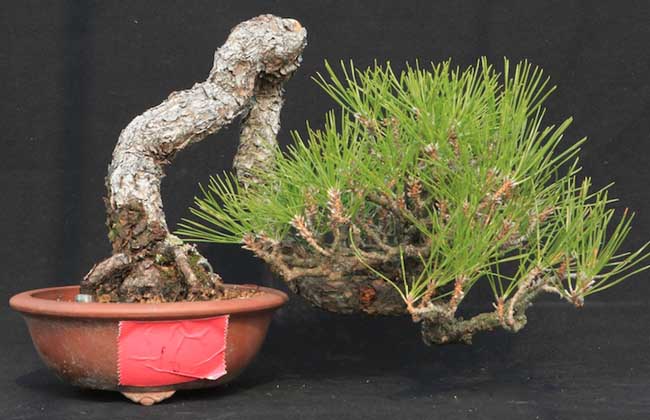
The black pine (Pinus thunbergii) is an evergreen tree of the genus Pinus in the family Pinaceae, native to Japan and the southern coastal areas of Korea. It thrives in warm, humid maritime climates and grows best in deep, loose, sandy soil rich in humus. It is not only an excellent plant for bonsai but also a widely used, outstanding sapling in landscaping. Let us take a look below at how to make and care for a black pine bonsai!
Uses of the black pine bonsai
The black pine bonsai adapts strongly to its environment and can be grown in courtyards and on balconies. Its branches spread horizontally, its crown is like a canopy, its needles are deep green, it stays evergreen through all four seasons, and its form is ancient and elegant, so it can be enjoyed all year round. During the growing period, it is best placed outdoors in a spot with ample sunlight and good air circulation, and it should not be kept indoors for long periods. A black pine bonsai cultivated for many years has an old trunk that is vigorous and gnarled, with twisted, interlocking roots, displaying a wondrous, dragon-coiling posture and tenacious vitality; it is a fine specimen for home cultivation and appreciation.
Habits of the black pine bonsai
The black pine is mostly propagated by seed. Its germination rate is high, reaching 85%, and the seedlings grow vigorously. Collect the cones in mid-to-late October, sun-dry them to extract the seeds, winnow to clean the seeds, and store them in bags over winter. Spring sowing should be done early. A nursery site with loose soil and good drainage, slightly acidic soil, is best. When preparing the land, apply plenty of base fertilizer and disinfect the soil. Before sowing, soak the seeds in a 0.5% potassium permanganate solution for 2 hours, then soak them in 60°C warm water for a day and a night (allowing it to cool naturally). After removing them, spread them in a warm place, sprinkle water 1 to 2 times a day, and they can be sown after a week. They begin to sprout and emerge in mid-to-late April, and emerge completely within 10 days. In the same year, the seedlings can reach 10 to 15 cm in height. For potting, select sturdy 2-to-3-year-old saplings, then process and shape them.
Making a black pine bonsai
1. When digging them up, enlarge the digging area and be sure to keep as much soil as possible. Because black pines grow in sandy, stony soil on hillsides, there is little soil, and in winter the weather is dry, the soil contains little water and has poor stickiness, so when digging, protect the soil around the roots as much as possible. This is because the soil around the roots is rich in root fungi, which are symbiotic fungi of the black pine and are extremely beneficial to root growth. After digging, promptly wrap them simply in plastic bags to prevent the soil from being lost during transport, so as to facilitate transplanting.
2. When digging, be careful to protect the root system of the black pine. Start digging at a place somewhat farther from the pine tree. First dig out the soil around it, keep as much of the main root as possible, make the cut where the root is severed smooth, cut away rotten roots, and try to avoid damaging the root system. This is especially true of the lateral roots and fibrous roots that the black pine has driven into the sandy, stony soil; these roots are relatively weak, so keep them as long as possible and protect them especially well when digging.
3. The black pines dug up should be planted in soil promptly, the sooner the better, because over time the roots will lose water and dry out, affecting survival. To prevent the roots from being buried too deep, you can use high planting and shallow planting, then add soil on top and ridge it up to cover them. If conditions do not allow cultivation in the ground, pot them promptly.
4. Potting a black pine is very important. Before planting, first lay a layer of crushed stone and tile pieces at the bottom of the pot to facilitate aeration and drainage, then fill the surrounding area firmly with soil. If the gaps in the soil are too large, the roots are prone to freezing, so cover the pot with a straw curtain to prevent freezing. The best soil is the original mountain soil; you can also use a mixed soil made of coarse yellow sand, coal ash, and yellow clay in a ratio of 0.5:0.25:0.25. After potting, prune heavily in time; too many branches and leaves will cause an insufficient water supply to the roots and consume a large amount of water and nutrients.
Caring for a black pine bonsai
1. Environment: The black pine is cold-resistant and drought-resistant and can be placed year-round on courtyard terraces and balconies and platforms, in spots with ample sunlight and good air circulation. However, small bonsai should not be exposed to strong sunlight in midsummer. In winter they can overwinter in the open ground; it is best to bury the whole pot in a sunny, wind-sheltered spot. If overwintering indoors, the room temperature should not be too high, and they can be moved outdoors at Qingming Festival.
2. Watering: The black pine likes dryness and dislikes waterlogging, so do not water excessively; water only when the soil is dry, and water thoroughly when you do. Appropriately controlling water during the growing period can make the trunk thick and short and the needles short and small, adding ornamental value. In high summer temperatures, you can frequently spray water on the leaves, which benefits growth.
3. Fertilizing: The black pine tolerates poor soil and can grow normally even when the soil lacks fertilizer, and this also encourages a short trunk, dense branches, and short leaves. However, during the growing period, appropriately applying 1 to 2 times a dilute, fully decomposed cake fertilizer solution is beneficial for healthy growth and increases resistance to pests and diseases.
4. Pruning: To maintain its beautiful, ancient, and elegant tree shape, the black pine bonsai needs appropriate pruning. During the growing period, pruning is mainly bud pinching. From March to April each year, when the new buds have extended but have not yet produced needles, you can pinch off about 1/2 of each terminal bud; if the bonsai does not need to grow more branches, you can pinch off all the terminal buds. Branches that affect the beauty of the tree shape can be pruned during the dormant period.
5. Repotting: A black pine bonsai is generally repotted once every 3 to 5 years, preferably in February to March. When repotting, keep the original pot soil intact and tip it out, remove 1/2 of the old soil, cut off overly long roots as well as dead and rotten roots, and at the same time prune some unnecessary branches and leaves to maintain the balance between the upper and lower parts of the pot soil. If the original pot is not large enough, you can switch to a slightly larger new pot, and the planting method is the same as for potting.