Detailed Guide to Making Succulent Bonsai, Beginners Can Easily Learn
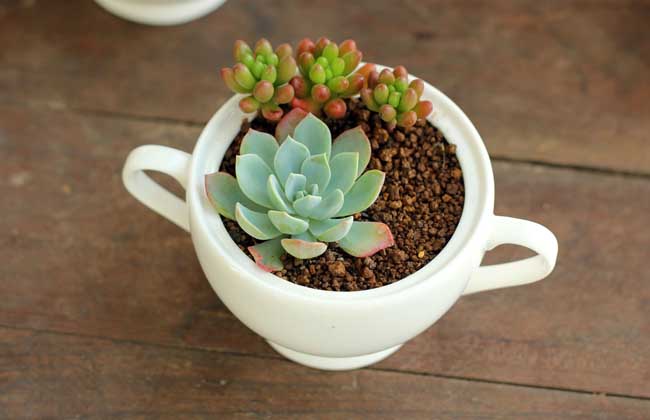
Succulent plants refer to a category of plants in which a certain part of the vegetative organ, such as the stem, leaf, or root (a few species have two or more parts), has well-developed parenchyma tissue for storing water, giving them a thick, fleshy, or powdery appearance. Common ones include Haworthia cooperi, cactus, Hylocereus undatus, Echeveria 'Yulong Guanyin', Aeonium arboreum 'Zwartkop', Euphorbia milii, and more. Let's take a look at how to make succulent bonsai below!
Selection of Succulent Varieties
The types of succulents suitable for making small potted novelty plants require a compact plant shape, strong constitution, easy cultivation and survival, and easy management. They can be planted as a single plant or several plants together in one pot as a combined planting. However, some rare and precious types that grow weakly, have high environmental requirements, and are difficult to maintain are not suitable for making such small potted plants. Besides seedlings you propagate yourself, you can also buy the succulents you need at flower markets or production greenhouses, which is convenient and simple and also offers a greater range of choices.
Succulent Bonsai Styles
1. Natural style: The form mostly imitates bonsai modeling, and the layout mostly adopts a natural style without deliberately making a certain geometric pattern. Ornamental stones or other accessories can be added as needed to highlight the wild charm of nature. For the pot, you can choose rectangular, oval, round, square, or other shapes, with ceramic, purple clay pots, porcelain pots, or stone being preferable. The color and shape should not be too flashy and should be suitable for expressing the natural and elegant characteristics of the potted plant.
2. Novelty style: Focus on highlighting the plant's own characteristics and showcasing its peculiar form and color. When making a combined planting, pay attention to the staggered heights of the plants and the harmony of colors. For the pot, it is advisable to choose small pots with cartoon shapes. You can also choose glass vessels or flower pots with more unique and interesting shapes such as shell-shaped, heart-shaped, bamboo basket-shaped, peanut-shaped, watermelon-shaped, cartoon animals, or figures to highlight the fun.
Making Succulent Bonsai
1. Spread a layer of volcanic rock at the bottom of a clean, transparent glass container to absorb water and increase the space for air. Spread a relatively thick layer. It is best to add a filter screen to protect the plant's roots.
2. Carefully transplant the succulents into the container. Succulents are relatively fragile, so do not use too much force.
3. Finally, spread a layer of beautiful small gravel or colored small stones on the surface of the small potted plant. This can not only fix the small plants but also protect the leaves.
4. A simple small succulent potted plant is ready like this. You can make more and place them together, and it becomes your own succulent garden.
Succulent Bonsai Care
1. Temperature: The indoor temperature for growing succulents is best controlled at around 15-28 degrees. Generally, indoor temperatures are suitable. At the maximum limit, the lowest should not go below 5 degrees, and the highest should not exceed 35 degrees.
2. Light: Try to choose the place with the longest light duration to place succulents. If there is insufficient light, do not easily move the succulents outdoors.
3. Watering: For succulents, spray watering has a relatively ideal effect. The best time to water is when there is plenty of sunlight. You can adjust the watering frequency yourself. In dry places, pay attention to watering more.
4. Fertilizing: Succulents do not need fertilizing in summer. In winter, if conditions permit, you can fertilize the succulents once a month. For fertilizer, you can choose decomposed dilute liquid fertilizer or compound fertilizer.
5. Pest control: There are generally not many succulents kept at home. You can often check whether there are insects on them. Common insects on succulents include red spiders, scale insects, whiteflies, and others. These can all be removed manually by yourself.
6. Rot prevention: Overwatering, air that is too humid, and failure to remove pests can all cause succulents to rot. Rotten succulents appear faded and soft. If you find a rotten succulent, you need to cut it off as soon as possible. It is best to disinfect the tools used to avoid infecting other plants.
Note: The sap of many succulents is toxic. If accidentally touched, it can cause itching, redness, and swelling, and in severe cases may even endanger life. Among these, some families and genera, especially Euphorbiaceae, Apocynaceae, and the genus Chi Feng Jin, are concentrated sources of “toxic plants.” However, there is no need to be afraid of growing these plants because of concerns about toxins. Just be careful not to break them or taste them, and keep children in the home at a distance from them.