How to Grow and Care for Hibiscus rosa-sinensis: Cultivation Methods and Daily Care Tips
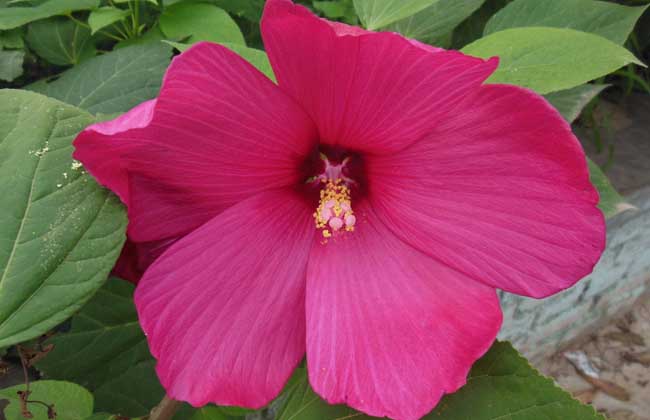
Hibiscus rosa-sinensis is a famous flower in China, also known as fusang, fojin, and zhujin. It is an evergreen shrub of the genus Hibiscus in the mallow family. Although its flowers open in the morning and fall at dusk, they bloom continuously with a long flowering period, with the most abundant blooms in summer and autumn. Cuttings taken in the current year can bloom the following year. Combined with its easy management, it has become an important indoor flower. Let us take a look at how to grow Hibiscus rosa-sinensis!
Growth Habits of Hibiscus rosa-sinensis
Hibiscus rosa-sinensis is a strongly sun-loving plant. It prefers warmth and humidity, requires ample sunlight, and is not tolerant of shade, cold, or drought. In the Yangtze River basin and areas to the north, it can only be grown in pots, and must overwinter in a greenhouse or other protected area at 12-15°C. If the room temperature drops below 5°C, the leaves turn yellow and fall off. Below 0°C, it suffers frost damage. It tolerates pruning well and has strong branching ability. It adapts to a wide range of soils, but grows best in slightly acidic loam rich in organic matter with a pH of 6.5-7.
Propagation Methods for Hibiscus rosa-sinensis
1. Cutting propagation: Cuttings are the most commonly used method for propagating Hibiscus rosa-sinensis. They can be taken anytime from early spring to late autumn, with the highest survival rate during the plum rain season. In winter, cuttings can only be taken in a greenhouse. The best cuttings are one-year-old semi-lignified ones, about 10 cm long. Remove the lower leaves, keep the top leaves, make a flat cut, and insert into a sand bed. Mist daily to maintain high air humidity. Roots form three weeks after insertion, and after 45 days of growth, they can be potted. Generally, Hibiscus rosa-sinensis propagated from cuttings in the current year will bloom the following year.
2. Air layering: Air layering is mainly used for lignified branches and is more commonly used for woody plants. Hibiscus rosa-sinensis can also be tried with this method. Compared to cuttings, air layering is safer, at least the branch will not die.
3. Ground layering: Ground layering involves bending the branches of Hibiscus rosa-sinensis down to the soil to let them root, then cutting them off once rooted. The principle is similar to air layering, with only slight differences depending on the actual situation. All three methods are simple and easy to carry out, and gardeners can try all of them.
4. Seed propagation: Hibiscus rosa-sinensis can also be propagated from seeds, but due to the special structure of the flower, especially when grown indoors, the natural pollination and seed-setting rate is almost zero, requiring hand pollination. The hand pollination seed-setting rate is 2-5%. Seeds are difficult to germinate because the seed coat is very thick and hard, making germination very difficult. Soaking seeds at a temperature range of 20-25°C with sufficient oxygen takes about 30 days for germination.
How to Grow Hibiscus rosa-sinensis
1. Soil selection and repotting: For potted Hibiscus rosa-sinensis, use loose, fertile sandy loam. Before moving the plant outdoors in early spring each April, repotting should be done. When repotting, three things should be done: first, replace with fresh potting soil; second, trim away some of the overly dense and curled fibrous roots; third, apply sufficient base fertilizer, adding a little phosphorus fertilizer at the bottom of the pot.
2. Shaping and pruning: To maintain a beautiful tree shape and abundant flowers, Hibiscus rosa-sinensis can be pruned and shaped in early spring before and after being moved outdoors, based on its strong branching and sprouting ability. Leave 2-3 buds at the base of each branch and cut off the upper portion entirely. Pruning encourages new branch growth, resulting in more vigorous growth and a more attractive plant shape. After pruning, since the aboveground portion consumes less, water and fertilizer should be appropriately reduced.
3. Outdoor management: Hibiscus rosa-sinensis is a sun-loving species. In early May, it should be moved outdoors to a sunny location. This is also the growing season for Hibiscus rosa-sinensis, so management such as fertilizing, watering, loosening the soil, and weeding should be strengthened. Apply dilute liquid fertilizer once every 7-10 days. Water according to the moisture level of the potting soil; both too dry and too wet conditions will affect flowering. Management after autumn should be careful, with reduced fertilizing in the later period to avoid producing autumn shoots. Autumn shoots are tender and have weak cold resistance, and will suffer frost damage in cold weather.
4. Moving indoors in time: Hibiscus rosa-sinensis is not tolerant of frost. It must be moved indoors for warmth after Frost's Descent and before the Beginning of Winter. The overwintering temperature should not be lower than 5°C to avoid frost damage, and not higher than 15°C to avoid affecting dormancy. Poor dormancy will result in weak growth and flowering the following year. Any room facing south with good insulation conditions can be used for overwintering. When the weather is colder, cover with paper or plastic film for warmth. After initially moving indoors, open windows for ventilation every day during the daytime, pay attention to changes in potting soil moisture, and water appropriately. On the coldest days, watering helps prevent frost damage, but fertilizing should be stopped.
5. Humidity management: Both too dry and too wet conditions will affect flowering. During the peak flowering period in summer, water 1-2 times a day depending on temperature and potting soil moisture, but make sure to water thoroughly only when the soil is dry, to prevent root rot from waterlogging in high temperatures. Watering is best done before 9 AM or after 5 PM to minimize the temperature difference between air and water. At midday, spray water on the leaves and around the flower pot to lower leaf temperature and maintain air humidity. The flowers of Hibiscus rosa-sinensis are very delicate, and water should not be sprayed directly on the flowers, as this can easily cause flower scorch.