What is the flower language and meaning of daisies? Read this one article to understand
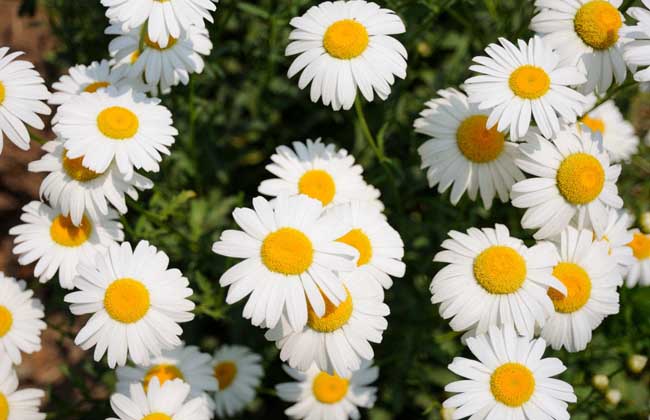
The daisy is also known as daisy flower, horse-head orchid, life-extending chrysanthemum, spring chrysanthemum, sun chrysanthemum, etc. It is a perennial herbaceous plant of the genus Bellis in the Asteraceae family, native to Europe. It blooms in early spring, full of vitality, with the demeanor of a gentleman and a romantic and innocent charm. It is deeply loved by Italians and therefore chosen as the national flower. Now let us take a look at what the flower language of daisies is!
What is the flower language of daisies?
The flower language of daisies is innocence, peace, hope, pure beauty, and love hidden deep in the heart. In Western countries, daisies are often used to divine love. Pluck the petals of a daisy one by one, and with each petal plucked, silently say in your heart "loves me, loves me not," until the last petal, which represents the beloved's feelings. Another method of divining marriage is that if you want to know at what age you will marry, simply pull up a handful of flowers and see how many daisies are among them; the number of daisies is the number of years until your wedding day.
Where is the origin of daisies?
Daisies are native to Europe, and are cultivated in gardens across China as ornamental flowerbed plants. They prefer cool climates, dislike intense heat, like light, and tolerate partial shade, with no strict requirements for soil in the cultivation site. The suitable temperature for seed germination is 22-28°C, and the suitable temperature for growth is 20-25°C. In the southwestern region, medium and small single-petal or semi-double-petal varieties are suitable for planting, while medium and large double-petal varieties grow weakly and produce poor seeds.
The cultivation value of daisies
1. Medicinal value: Daisies have very high medicinal value, containing volatile oils, amino acids and various trace elements, among which the brass content is 32% to 61% higher than other chrysanthemums, and the tin content is eight to fifty times higher than other chrysanthemums. Agronomist Zhang Lüxiang once wrote in his work "Supplementary Agricultural Treatise" “White chrysanthemum is sweet and warm in nature, and taking it for a long time is most beneficial. The ancients ate the sprouts in spring, the flowers in summer, and the roots in winter, and there was a reason for this. Plant one or two in each field ridge, take its flowers, and it can reduce half of the tea; the tea is bitter and cold in nature and can be brewed together with bitter chrysanthemum.”
2. Ornamental value: The leaves of the daisy are spoon-shaped, clustered in a rosette form, dense and low-growing, with an emerald green color. Flower stems are drawn out from between the leaves, one flower per stem, arranged in a scattered manner, with a simple and rustic appearance, delicate and small flowers, and harmonious colors. Flower stems are drawn out from between the leaves, one flower per stem, arranged in a scattered manner, with a simple and rustic appearance, delicate and small flowers, and harmonious colors. It blooms in early spring, full of vitality, with the demeanor of a gentleman and a romantic and innocent charm,
3. Horticultural value: Daisies have strong growth vigor, are easy to cultivate, with flower stalks of moderate height, neat flowers, and bright and plain colors. They can be used as potted plants to beautify courtyards and balconies, and can also be used for garden viewing, potted plants, flower borders, cut flowers, etc. Moreover, daisies have a long flowering period and strong cold resistance, making them the first choice for early spring groundcover flowers. As groundcover flowers for street green spaces, they have strong charm and can be planted together with pot marigold, pansy, azalea, red-leaf barberry, etc.