A detailed guide to eucalyptus cutting propagation techniques, teaching you to grow robust seedlings
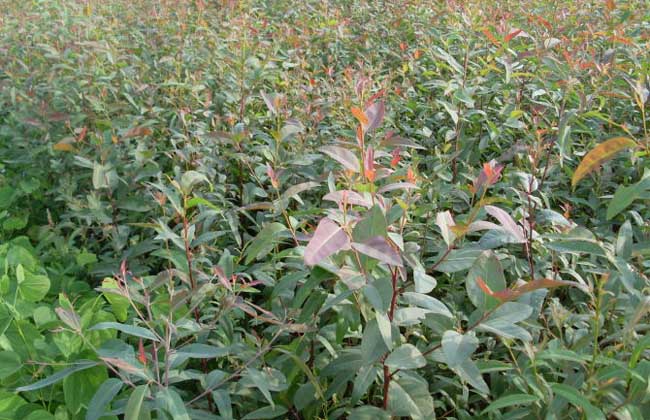
The application of eucalyptus cutting propagation techniques to eucalyptus seedling production is a successful model, because eucalyptus is a difficult-to-root tree species. By using juvenilization treatment, stimulation with growth hormones, and creating an environment favorable for rooting, a relatively high rooting rate is achieved. This also serves as a reference for the mass propagation of other valuable tree species. Let us now take a look at eucalyptus cutting propagation techniques!
Management of eucalyptus mother trees
1. Reasonable sparse planting: For planting mother trees, choose level ground with good ventilation, abundant sunlight, and moderate water and fertilizer conditions, and without waterlogging. Before planting, first make raised beds 1-1.2 m wide with 40 cm walkways, and plant 5-6 plants per bed, with both plant spacing and row spacing of about 25 cm. Do not let it be less than 20 cm, otherwise the plants will become slender due to crowding each other, and insufficient light will cause the quality of the branches to decline
2. Dwarfing treatment: According to the juvenile principle of low-position sprouting in plants, pruning of mother plants should be done as much as possible to achieve dwarfing. Tissue-cultured seedlings can be planted when they grow to 10 cm, and can be pruned when they grow to 15 cm. When pruning, it is advisable to retain 2-3 pairs of old leaves, and the young tender parts can be used for cuttings. After that, each cutting should retain one pair of old leaves for the next sprouting of new buds. Apically dominant plants should be cut off promptly to promote the sprouting of side branches.
3. Fertilizer and water management: Eucalyptus mother trees do not have a high fertilizer requirement. Generally, slow-release farmyard manure plus a small amount of compound fertilizer is sufficient. Be sure to avoid excessive application of nitrogen fertilizer and human excrement and urine, otherwise the sprouts will grow excessively and become too tender, leading to cutting failure. Water is also not needed in too large an amount; generally, maintaining a semi-dry and semi-moist state is sufficient. Never allow waterlogging.
4. Pest and disease control: Because eucalyptus mother trees are planted in the ground and sparsely planted, there are generally few diseases. Usually the main focus is prevention. In rainy seasons, broad-spectrum fungicides such as thiophanate-methyl and carbendazim can be used to prevent diseases. Pests include eucalyptus leaf-roller moths, aphids, termites, and large crickets. Eucalyptus leaf-roller moths and aphids can be sprayed with phoxim, trichlorfon, and similar agents, while termites and crickets can be killed with phorate.
Eucalyptus cutting techniques
1. Cutting collection: For eucalyptus mother trees, once the sprouts grow to 10-15 cm and have two pairs of old leaves, cuttings can be collected. The cuttings should be semi-lignified, have terminal buds, and be free of pests and diseases. For leaf pruning, generally cut off 1/2 of the long leaves.
2. Bag soil treatment: The substrate used for cuttings does not need fertility. Generally, pure yellow subsoil is sufficient. It should be loose in texture and free of impurities such as grass roots and debris. After crushing, bag it for later use. The bag specifications generally use 8*13 honeycomb seedling bags or 8*13 non-woven seedling bags. Before cutting, first soak the bag soil thoroughly, then disinfect it with a 0.3% potassium permanganate solution and set it aside for use.
3. Cutting method: Before cutting, first disinfect the cuttings with a 0.2% thiophanate-methyl aqueous solution for a few minutes, then dip the base in rooting powder and insert vertically into the center of the bag to a depth of 2-3 cm, water thoroughly, and cover with a shade net (not needed if there is a greenhouse). The main component of the rooting powder is indolebutyric acid at a concentration of 800×10-6 to 1000×10-6, with talc powder used as a filler.
Post-cutting management of eucalyptus
1. Timely watering: The main role of watering is to retain moisture and keep the cuttings fresh and alive. The number of waterings depends on weather conditions. Generally, on sunny days, water 2-3 times per day, and on cloudy days, once per day. Water more at the initial cutting stage, then gradually reduce it afterward.
2. Shading treatment: The purpose of shading is to lower temperature, prevent drought, and maintain humidity, while also promoting the formation of plant growth hormones and the process of photosynthesis. In spring, when there are many cloudy and rainy days and temperatures are low, light can be appropriately increased (light transmittance 60-70%). In summer and autumn, when there are many hot and sunny days, light can be appropriately reduced (light transmittance 30-40%). The environmental conditions for cutting rooting also need to be adjusted in a timely manner according to the above principles, so as to effectively improve the rooting survival rate of cuttings.
3. Hardening management: After eucalyptus cuttings are taken, after a period of time (generally 15 days in summer and about 30 days in winter), they grow roots and survive. At this point, they can receive full-light hardening. At the same time, remove diseased and dead plants and grade the seedlings. Due to environmental changes, watering should be increased at this time. When the heart leaves turn red, the mature leaves are deep green, the seedling stems are thick and lignified, and the root system is well developed, they are ready to leave the nursery.
4. Pest and disease control: After eucalyptus cuttings are taken, infection by rot fungi often occurs due to the high-temperature and high-humidity environment, which is the main cause of cutting rot. The most common eucalyptus cutting diseases are gray mold and stem rot. Available agents include thiophanate-methyl, carbendazim, chlorothalonil, Bordeaux mixture, and copper hydroxide. It is best to rotate the agents to avoid developing resistance.