How to Make a Goji Berry Bonsai and Care Tips
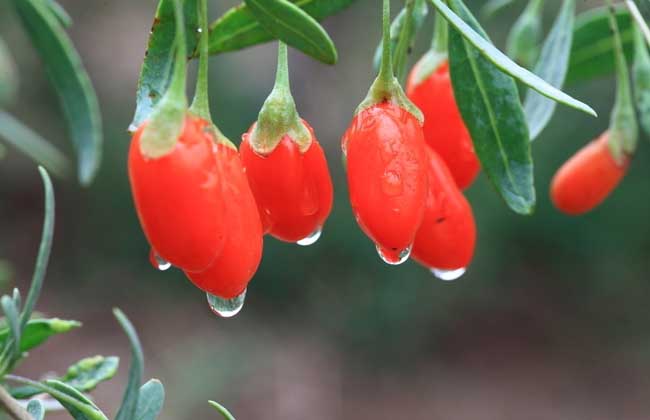
The goji berry (Lycium chinense) was one of the "Eighteen Scholars" of ancient bonsai, and it is also a well-known traditional Chinese medicine that nourishes the liver and kidneys and benefits essence and brightens the eyes. Its bonsai form is elegant and refined, with drooping branches and purple flowers, and in autumn the branches are covered with red berries, giving an excellent ornamental effect. However, because it is cold-tolerant and drought-tolerant but not waterlogging-tolerant, it is very difficult to grow goji berry in the rainy and flood-prone regions south of the Yangtze River. Let's take a look below at how to make and care for a goji berry bonsai!
Collecting from the Wild
Around the time of Awakening of Insects (Jingzhe), when the goji berry has just entered its budding period and before it leafs out, is the most suitable time for digging. In wild wastelands or at the foot of old courtyard walls, thick and vigorous old stumps can be found. After digging them up, they can be potted directly according to the desired shape; those in good condition can be planted in an ornamental position, while those with poor root systems should be mounded with soil to help maintain moisture. If conditions permit, they can also be cultivated in the open ground to build up the trunk until the root system develops well and the branches grow thick and strong, then transplanted into a pot. With proper root exposure, they can be shaped into excellent bonsai with gnarled old roots and weeping branches and trunks.
Artificial Propagation
1. Sowing: Harvest ripe fruit in November, soak in water for 1-2 days, and once softened, rub and wash them clean to obtain the seeds, then dry and store them. Sow between March and April of the following year, either in drills or in beds, covering with about 1-1.5 cm of soil, and water thoroughly; they will sprout and emerge after 10 days. After the seedlings emerge, thin them once and apply ordinary management. Transplant the seedlings in the spring of the second year.
2. Cuttings: For cutting propagation, use one-year-old vigorous branches as cuttings before spring budding, or use current-year softwood cuttings during the plum rain season. The cuttings should be 12-15 cm long, inserted at an angle into the seedbed, watered frequently to keep the soil moist; the survival rate can reach over 95%.
3. Division: Division and transplanting is mostly carried out from March to early April. After digging up clustered plants, cut off most of the branches, divide and replant them, water immediately, and keep the soil moist regularly; they root very easily and can flower and set fruit the same year.
Potting Process
1. Choosing a pot: For goji berry, a slightly deep glazed ceramic pot is suitable, or a purple clay (zisha) pot can be used. The shape depends on the tree form; for a cascade style, a tall cylindrical pot is suitable, while for general curved-trunk and exposed-root styles, medium-deep rectangular, round or oval pots are mostly used.
2. Soil: Goji berry is not demanding about soil, and well-drained sandy loam is suitable. For potting, leaf mold or garden soil mixed with sandy soil can be used.
3. Planting: Spring is the most suitable time, and other seasons are slightly less ideal. Before planting, a shaping and pruning can be done, with smooth cut surfaces, and overly long roots should be shortened. Firm the soil down so there are no hard spots or gaps; no base fertilizer is needed at the bottom of the pot.
4. Management: After potting, place the goji berry in a wind-sheltered spot with indirect light, and mist frequently to maintain moisture, gradually reducing this after it leafs out.
Shaping the Tree
1. Shaping: The main branches and trunk of the goji berry can be appropriately wired and pruned. Large branches are best wired and pruned in winter, while small branches can be wired in summer and autumn. New shoots can be wired at any time with suitable metal wire such as iron, lead or copper. Goji berry wood is relatively brittle, so use gentle force when working and do not be too rough.
2. Tree form: For making an old-stump goji berry bonsai, curved-trunk or cascade styles are generally suitable, and small branches are best trained to droop. Exposed-root shaping can be made into a bridge style. There are also other styles such as figurative, exposed-root, multi-trunk and eccentric styles, but the big-head-small-tail and straight upright forms are the most uninteresting. In short, shape according to the tree and work according to the material, with repeated refinement, and do not rush.
Care and Management
1. Placement: Goji berry should be placed in a spot with plenty of sunlight; if placed in shade, it will not flower and fruit well. Avoid direct sun in summer; it is cold-tolerant in winter and can overwinter outdoors above ~10°C.
2. Timely watering: Normally water according to the principle of "dry then wet", following the rule of not watering when not dry and watering thoroughly when you do. During the flowering and fruiting period, pay attention to watering moderately, preventing it from becoming too dry or too wet.
3. Reasonable fertilizing: Apply light fertilizer frequently. In early summer and early autumn, combined with leaf picking, apply one slightly stronger fertilizing each time to encourage new leaves and flower buds. Fertilize appropriately before budding and after fruiting to make the fruit large and the plant robust. Never fertilize too strongly or fertilize during the flowering period.
4. Timely pruning: Carry out major pruning and shaping every winter and spring. At ordinary times, remove diseased and dense branches at any time to maintain a certain tree form. Remove suckers promptly.
5. Repotting and soil changing: Do this once every 1-2 years, preferably in early spring. When repotting, remove half of the old soil and replace it with loose, humus-rich potting soil; a little base fertilizer can be applied. Cut off dead roots and some overly long old roots. Repotting and soil changing are very important; if repotting is not done for many years, the potting soil will become compacted and drainage poor, seriously affecting the tree's vigor.
6. Pest and disease control: The main diseases of goji berry are powdery mildew and black fruit disease, which can be controlled with 0.3-0.5% lime sulfur solution (Baume scale). In the early stages of disease, fungicides such as carbendazim, thiophanate-methyl, mancozeb and triadimefon can be used alternately for control. The main pests are aphids, psyllids and gall mites, which eat the leaves; 90% crystal trichlorfon solution, 50% phoxim emulsifiable concentrate, 40% omethoate, fenpropathrin and other new insecticides and acaricides can be sprayed for control. The key is to master the timing and concentration well.