What are the uses of bamboo? A comprehensive analysis of common uses
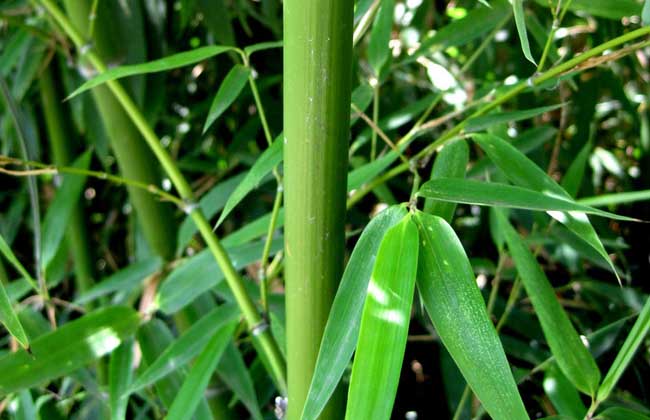
Bamboo is a perennial plant of the grass family, subfamily Bambusoideae, and has been called "the gentleman" since ancient times. It usually grows in patches through underground creeping rhizomes, and can also reproduce by flowering and setting seed; the seeds are called bamboo rice. The bamboo shoots of some species are edible. It is not only ornamental but also has a very wide range of uses. Let us take a look below at what uses bamboo has!
The ornamental value of bamboo
Bamboo is an excellent plant for landscaping and tourism viewing. The Chinese nation has a long history of cultivating, using and aesthetically appreciating bamboo. China has been called by the West "a country of bamboo civilization," while Yunnan has the reputation of being "the hometown of the world's bamboos." Because bamboo has high tourism aesthetic and landscape ornamental value, and because of the richness of Yunnan's bamboo resources and the wondrous ethnic bamboo culture, bamboo culture tourism will occupy a particularly important position in the construction of Yunnan's tourism industry.
The industrial value of bamboo
Bamboo grows quickly. In recent years, for environmental reasons, a large amount of furniture and paper has switched to being made from bamboo. It can also be made into handicrafts, musical instruments and so on. Bamboo fiber, made from bamboo material through engineering methods and physical and chemical processes, is used as a textile, made into towels, clothing and so on. By roasting bamboo material, bamboo charcoal is made, which is used in many situations, including removing environmental odors and in specialty flavored foods. Activated carbon made from bamboo charcoal through crushing and activation has good adsorption and purification effects and is used in automobiles and homes, as well as in sewage treatment and so on. Bamboo is also often used to build trellises (shed building), as building material, and for daily items such as brooms, tables and chairs. Bamboo can also be woven into baskets, back baskets, vegetable baskets, mats and so on, commonly seen in rural areas. Bamboo is now widely used in close-to-body textile fields such as home textiles, socks and underwear.
The medicinal value of bamboo
1. Bamboo leaves: Bamboo leaves have a long history of food and medicinal use in China. They are a natural plant recognized and approved by the state for both medicinal and food use, with the effects of clearing heat, relieving restlessness, promoting fluid production and inducing diuresis. They are used to treat febrile disease with thirst, infantile convulsions, cough with counterflow, vomiting blood and nosebleed, red face, short and difficult urination, and mouth ulcers and tongue sores. Let us take a look below at the effects and functions of bamboo leaves!
2. Bamboo juice: Bamboo juice is obtained by splitting a bamboo culm, roasting it over fire, and collecting the bamboo sap dripping from both ends. The Compendium of Materia Medica records: "Bamboo juice is sweet in flavor, strongly cold, and non-toxic. Indications: sudden windstroke and wind-bi, great heat in the chest, stopping restlessness, wasting-thirst, and relapse from overexertion." Modern pharmaceutical chemical analysis proves that bamboo juice contains more than ten kinds of amino acids, glucose, fructose, sucrose, as well as various chemical components such as guaiacol, cresol, formic acid, acetic acid and benzoic acid. Pharmacological tests confirm that it indeed has antitussive and expectorant effects.
3. Bamboo fruit: After bamboo flowers, it sets fruit like wheat, with a green skin, containing bamboo rice, and a sweet taste. Guangzhi records: "The fruit can be eaten." The Compendium of Materia Medica says, "Bamboo fruit communicates with the spirits, lightens the body and boosts qi." The Supplement to the Compendium of Materia Medica says it "expels accumulations as if by magic." Modern research proves that the nutritional components of bamboo fruit are similar to those of rice, wheat and corn. In addition to being rich in starch, protein and fat, it also contains 18 kinds of amino acids, making it a developable medicinal food resource.
4. Bamboo shavings: This is the material scraped from the second layer of a bamboo culm after the green cortex has been scraped off. It is also called "bamboo second green." The Compendium of Materia Medica says: "Light bamboo shavings are sweet in flavor, slightly cold, and non-toxic. Indications: vomiting, warm qi and cold-heat, vomiting blood, uterine bleeding, stopping lung atrophy, treating five types of hemorrhoids, and fetal movement in women. Bitter bamboo shavings mainly treat heat congestion and blood in the urine."
5. Bamboo fungi: Bamboo fungi refer to fungi growing in bamboo forests, such as bamboo fungus (Dictyophora indusiata). Their medicinal food effects are recorded in medical works such as Materia Medica for Dietary Therapy, Supplement to Materia Medica and the Compendium of Materia Medica. Bamboo fungus has a long history as an edible fungus. In the past it could only be collected in the wild, and the quantity was extremely limited, usually serving only as tribute to emperors. Now artificial cultivation has been carried out, and its yield and quality have both improved significantly.
6. Bamboo roots: Bamboo roots used as medicine have the effect of clearing heat and relieving restlessness. The Compendium of Materia Medica says: "Light bamboo roots are decocted and taken as juice, relieving restlessness and heat, and resolving thirst caused by heat from cinnabar and minerals. Bitter bamboo roots mainly treat toxic heat qi of the heart, lungs and five zang organs. Sweet bamboo roots calm the fetus and stop postpartum restlessness and heat."
7. Bamboo shoots: Bamboo shoots are the young sprouts of bamboo. They are not only fine in texture, crisp and refreshing, and delicious in taste, but also rich in nutrition. As a medicinal food resource, they have a long history in China, recorded in classical works such as the Compendium of Materia Medica, the Classic of Materia Medica, Materia Medica for Dietary Therapy, the Classic of Food, Essential Techniques for the Welfare of the People and the Tang Materia Medica. For example, the Compendium of Materia Medica says bamboo shoots are sweet in flavor, non-toxic, mainly treat wasting-thirst, promote water movement and boost qi, and can be eaten for a long time.