What Plant Is Moso Bamboo? An Article to Introduce You to Moso Bamboo
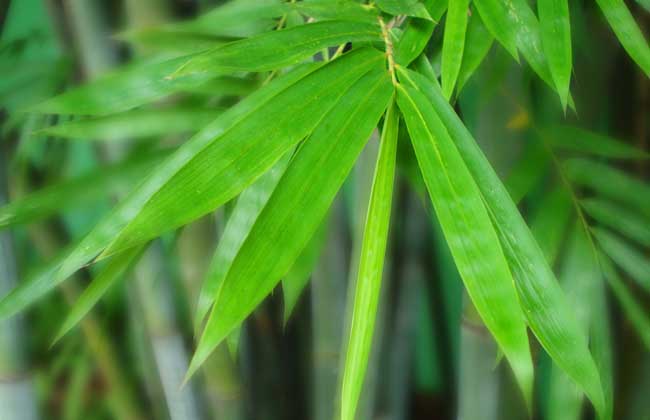
Moso bamboo is also known by the names nanzhu, maozhu, nanzhu, jiangnanzhu, maozhu, maotouzhu, tangzhu, mengzongzhu and others. It is a monopodial, scattered-growing, evergreen, tree-like bamboo plant of the genus Phyllostachys in the grass family Poaceae. It has a long history of cultivation in China, covers the largest area, and has the highest economic value. Its culms are thick and large, suitable for construction uses such as beams, pillars, sheds and scaffolding; its splits are of excellent quality, used for weaving tools and handicrafts of various thicknesses; its branch tips are made into brooms; young bamboo and culm sheaths serve as raw materials for papermaking; and its shoots are delicious, eaten fresh or processed into yulan slices, dried bamboo shoots, and bamboo shoot sheaths.
The culms of moso bamboo can reach more than 20 m in height and more than 20 cm in thickness. Old culms are hairless and gradually change from green to greenish yellow. The wall is about 1 cm thick. The culm nodes are not obvious, and the final-order branchlets bear 2 to 4 leaves. The leaf auricles are not obvious, and the ligule is raised. The leaf blades are relatively small and thin, lanceolate, with downy hairs on the lower surface along the base of the midrib. The flowering branches are spicate, without leaf auricles, and the spikelets bear only 1 floret. The filaments are 4 cm long, and the stigmas are feathery. The caryopsis is long-elliptical, with a persistent style base at the tip. The shoot period is in April, and flowering occurs from May to August.
The root system of moso bamboo is concentrated and dense, and the culms grow quickly and in large amounts, so it requires warm and humid climatic conditions, with an annual average temperature of 15 to 20°C and annual precipitation of 1200 to 1800 mm. Its soil requirements are also higher than those of ordinary tree species: it needs ample moisture and humidity, but does not tolerate waterlogging. It grows poorly in sticky, dry reticulate red soil and in places where the woodland is waterlogged or the groundwater level is too high. When selecting afforestation sites, one should choose leeward valley, piedmont and mid-slope areas facing south, with soil depth above 50 cm, fertile, moist, well-drained and well-aerated acidic sandy soil or sandy loam.
Moso bamboo is the most widely used bamboo species among bamboo plants, and also one of the most versatile tree species among forest trees and bamboos. Its uses are closely related to people's daily life, playing an important role in clothing, food, housing, transportation, viewing, use and decoration. It has many functions such as timber use, food use, medicinal use, ornamental use, feed use and environmental protection, and is a shining pearl in the pollution-free green treasure house and an ideal species for building a green bank.
Moso bamboo stays green all year round. Its culms are tall, upright and magnificent, elegant and graceful in posture, refined and charming, with a unique appeal. In addition, its ornamental value is also shown in the hollowness of the culms. It has noble integrity and lofty character. The culms are strong and upright, unyielding, and do not fear being sealed in ice and wrapped in snow, still keeping their true color. Together with pine and plum, it is listed as one of the Three Friends of Winter. These special values are an inexhaustible source of precious spiritual wealth for people.