Cultivation Methods and Precautions for Broadleaf Lady Palm
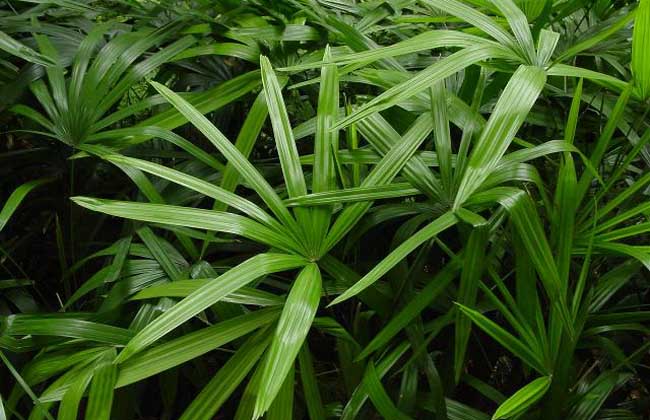
Broadleaf lady palm, also known as Guanyin bamboo, Jintou bamboo, palm bamboo, dwarf broadleaf lady palm, etc., is an evergreen foliage plant of the genus Rhapis in the palm family (Arecaceae). It often grows on hillsides and beside ditches in shaded, moist shrub thickets. Because it is shade-tolerant, moisture-tolerant, and fond of scattered light, it can be placed long-term in bright indoor locations and has extremely high ornamental value. Let's take a look at the cultivation methods for broadleaf lady palm below!
Growing Environment for Broadleaf Lady Palm
Broadleaf lady palm prefers a warm, humid, well-ventilated, semi-shaded environment. It does not tolerate waterlogging, is extremely shade-tolerant, fears blazing sun, and is slightly cold-tolerant, able to withstand low temperatures of around 0°C. In summer, when it is hot and light intensity is high, appropriate shading should be provided. The suitable temperature is 10-30°C. When the temperature is above 34°C, the leaf edges often scorch and growth stalls. The overwintering temperature should not be lower than 5°C, but it can withstand low temperatures of around 0°C. It most fears cold winds, frost, and snow, and can safely overwinter in an ordinary room. The plant is small in form and slow-growing, with no strict requirements for water and fertilizer. It requires loose, fertile, acidic soil, does not tolerate barren or saline-alkaline conditions, and requires relatively high soil moisture and air humidity.
Propagation Methods for Broadleaf Lady Palm
1. Seed propagation: Use loose, well-draining soil as the substrate, generally a mix of leaf mold and river sand, etc. Before sowing, the seeds can be soaked in warm water; sow once the seeds begin to sprout. Because germination is generally uneven, cover the seeds with a somewhat deeper layer of soil after sowing. Generally, germination occurs 1-2 months after sowing, with a germination rate of about 80%. When the cotyledons of the seedlings reach 8-10 cm in length, they can be transplanted. It is worth noting that when transplanting, 3-5 plants must be planted per clump to facilitate survival and growth.
2. Division propagation: Division propagation can be carried out in spring when repotting and changing the soil. Remove the original clump from the old pot, get rid of the old soil, but keep a suitable amount of old soil around the old roots. Use mulberry shears to cut apart the root clump of the broadleaf lady palm, and at the same time cut off poorly growing blackened and rotten roots. The cuts should be flat. Each division should have at least 5-6 stems, or up to 10-20 stems. Then plant them into prepared pots. Place broken pot pieces over the drainage holes at the bottom of the pot to facilitate drainage. Add culture soil, coarse first then fine, until the pot is 80% full. While adding the culture soil, use small bamboo strips to pack the soil tightly around the roots. Do not plant too deep; keep the original root crown level with the culture soil. After watering thoroughly, place the potted plant in semi-shade for about half a month, and it will become established.
Cultivation Methods for Broadleaf Lady Palm
1. Soil preparation: For broadleaf lady palm bonsai, a substrate can be prepared by mixing equal parts of leaf mold, garden soil, and river sand, and an appropriate amount of base fertilizer can be added when planting. For potted plants, sandy loam rich in humus is most suitable. The culture soil can be a mix of 6 parts garden soil and 4 parts leaf mold, planted in a fired clay pot.
2. Light management: Broadleaf lady palm is a southern plant and should be placed in a warm, humid, ventilated, and relatively shaded location. The key to routine care is not to let direct sunlight hit it, otherwise the stems and leaves will turn yellow and wither. The potted plant should be placed under a trellis, under a large tree, on a shaded balcony, or in a corridor. Shading is required during the growing season, especially avoiding blazing sun exposure in summer, otherwise the leaves turn yellow and the plant grows slowly and stays short. Generally, a shading level of about 50% is maintained. Broadleaf lady palm requires a well-ventilated environment for growth; poor ventilation easily leads to scale insects.
3. Temperature management: Broadleaf lady palm likes semi-shaded, slightly humid, and ventilated environments. It has a certain degree of cold tolerance, but it cannot withstand the severe cold and frost of the north; in such regions it can only be grown as a potted plant, moved indoors for overwintering in winter, with room temperature kept no lower than 5°C for safe overwintering. The suitable temperature is 10-30°C. When the temperature is above 34°C, the leaf edges often scorch and growth stalls. The overwintering temperature should not be lower than 5°C. The plant is small in form and slow-growing. Broadleaf lady palm fears cold in winter and is susceptible to freezing damage at minus 3-4°C. It can be moved indoors for the winter, which both protects it from freezing damage and allows it to be used as a display in halls and guest rooms. For overwintering when planted in the open ground, soil can be mounded up for cold protection; in the following spring, cut off the old leaves and new leaves will still sprout.
4. Timely watering: In summer, when temperatures are high and the soil dries easily, water in the morning and evening and spray water on the leaf surfaces. In spring and autumn, watering should not be too frequent; it is enough to keep the potting soil consistently moist (slightly dry). In winter, watering should be controlled. Normally, keep the potting soil moist, but do not let it become waterlogged. Broadleaf lady palm is prone to root rot and most fears waterlogging. In summer, water in the morning and evening and spray water on the leaf surfaces.
5. Reasonable fertilizing: In spring and autumn, every 3-4 weeks, apply 20%-30% decomposed human manure or cake fertilizer solution, which can make the plant grow robustly with green leaves. During the spring and summer growing period, apply light fertilizer frequently, preferably decomposed cake fertilizer solution. A small amount of ferrous sulfate can be added to the fertilizer to make the leaf color emerald green. During the vigorous growth period from May to September, apply liquid fertilizer 1-2 times per month. To control height, in May, one application of 400 ppm paclobutrazol can be watered on, which can effectively control excessive growth.
6. Pruning and repotting: Pruning the broadleaf lady palm is very simple; mainly cut off its withered yellow leaves and diseased leaves. If the layers are too dense, thinning cuts can also be made. Repot every 2 years. For newly produced plants, division planting or rearranging can be carried out. Repotting is best done in spring from March to April. Replace more than 1B2 of the old soil and fill in with loose leaf mold.
7. Pest and disease control: Broadleaf lady palm requires a well-ventilated environment for growth; poor ventilation easily leads to scale insects. If only a small number occur, promptly scrape them off by hand and use an 800-fold omethoate solution for control. At the same time, pay attention to ventilation and air permeability, and promptly prune dead branches and fallen leaves. Broadleaf lady palm has relatively few pests and diseases, mainly scale insects. Regularly applying a small amount of ferrous sulfate solution can prevent leaf yellowing.
Precautions for Cultivating Broadleaf Lady Palm
1. During the growing period, broadleaf lady palm should frequently have water sprayed on its leaves. It is suitable for potting.
2. Although broadleaf lady palm is shade-tolerant, it still needs appropriate light. If there is too little light, the leaves will turn yellow. If poor ventilation is added on top of this, the plant will develop parasites, affecting the plant's growth.
3. Each fertilizing should use a small amount but be done frequently. Organic fertilizer should be the main type, with trace-element fertilizer as a supplement.
4. Broadleaf lady palm needs a large amount of water. When watering, remember to pour from the growing point of the broadleaf lady palm downward, letting clean water flow from top to bottom to the roots and maintaining humidity in the pot.
5. Broadleaf lady palm is susceptible to harm from pests and diseases such as red spider mites, rust mites, leaf spot disease, and scale insects. If pests or diseases are found on the leaves, promptly spray pesticide for treatment.