How to grow bamboo fern (Bambusa multiplex 'Fernleaf')? Detailed growing methods and precautions
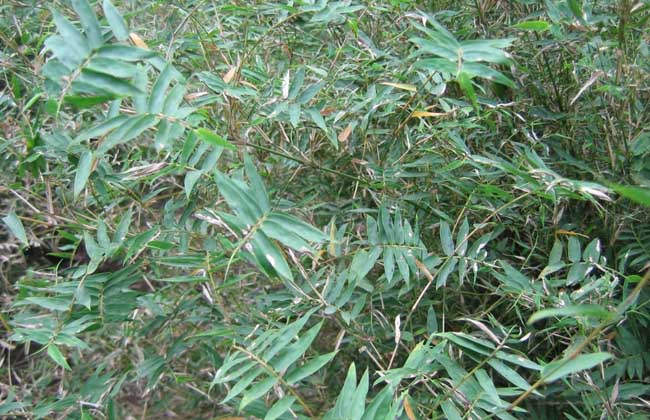
Bamboo fern, also known as Guanyin bamboo, rice bamboo, jintou bamboo, Penglai bamboo, etc., is a variation of hedge bamboo (Bambusa multiplex). Because it is full of spiritual energy, it was named "Guanyin bamboo." As the saying goes, a mountain is spiritual when it has water, and a temple with Guanyin bamboo balls beside it has an immortal air. It has high ornamental value and is suitable for courtyard clump planting, and can also be used as a bonsai plant. Let's take a look at the growing methods for bamboo fern below!
Propagation methods for bamboo fern
1. Division: This can be done in February to March when repotting. When dividing, take the overly dense clumps out of the pot, cut them apart from the rhizome with a knife, and pot them separately. Be careful not to damage the roots. When dividing, each shoot bud should have at least one old bamboo culm, and fibrous roots should be retained as much as possible to ensure survival. The newly divided plants should be planted in pots of moderate size, filled with fertile soil, watered carefully, kept moist, and maintained in a semi-shaded place; the shoot buds will then grow rapidly.
2. Sowing: Bamboo fern sowing is best done in April to May. Before sowing, soak the seeds in warm water for 1 to 2 days. After sowing, they will sprout in about 40 days. The seedlings grow very slowly and can only be transplanted for cultivation after about the first half year.
3. Cuttings: Bamboo fern cutting propagation is carried out in May to June. Cut one-year-old branches into cuttings with 2 to 3 nodes, remove part of the leaves, insert them into a sand bed, and keep them moist. They can take root in the same year.
Growing methods for bamboo fern
1. Temperature: Bamboo fern is an evergreen clumping shrub. It likes warm, humid, and semi-shaded environments. Its cold tolerance is somewhat poor, it is not tolerant of strong sunlight, and it fears waterlogging. It is suitable for fertile, loose, and well-drained loam. In winter, the temperature should not be lower than 0°C.
2. Light: Bamboo fern likes light and is slightly shade-tolerant. It likes a warm and humid climate, likes moisture and warmth, and also likes semi-ventilated and semi-shaded conditions. In winter, it should be moved indoors to a sunny place. Bamboo fern likes sunny, high, and open places. There is a saying that "it flourishes facing the sun and should be planted on a high platform." In spring, summer, and autumn, it only needs to be placed in a ventilated spot by a window; in winter, place it in a sunny spot, and it can grow well. Field-planted bamboo fern grows new leaves after spring, and in warm areas it remains evergreen all year round.
3. Soil: Bamboo fern likes acidic, slightly acidic, or neutral soil, with pH 4.5 to 7.0 being suitable, and it avoids heavy, alkaline soil. Northern soil is strongly alkaline, so 0.2% ferrous sulfate can be added. The soil is best as loose, fertile, well-drained sandy loam, and can be made by mixing farmland soil with red-yellow soil, humus soil, and fine sand. If ordinary potting soil is used to plant dwarf white-striped bamboo, the survival rate is low; vermiculite or peat mixed with perlite can be used as a substrate to achieve a higher survival rate. To maintain a graceful posture, the soil requirements are not high; generally, loose sandy soil is sufficient.
4. Water: Bamboo fern likes moisture and fears water accumulation. After potting, the first watering should be thorough, and afterward keep the potting soil moist. Do not water too much, otherwise the rhizomes and roots are prone to rot. From potting to establishment, also spray water on the leaves frequently. If the potting soil lacks water, the bamboo leaves will curl; at this time, water promptly, and the bamboo leaves will unfold again. In summer, water once every 1 to 2 days on average; in winter, water less, but ensure the potting soil remains moist to prevent "dry freezing."
5. Fertilizer: Bamboo fern fertilizer is mainly organic fertilizer. Decomposed livestock manure, garbage compost, and river mud are all acceptable. Organic fertilizer is mainly used as a base fertilizer, mixed into the potting soil, generally at 10% to 15% of the potting soil amount. During the growing season, bamboo fern only needs 1 to 2 applications of dilute nitrogen fertilizer per month.
Precautions for growing bamboo fern
1. For potted bamboo fern, in summer it should be moved to a cool outdoor place, and attention should be paid to watering more to keep the potting soil moist. Also spray water on the leaf surface and sprinkle water on the ground to keep the air humid, so that the bamboo fern's branches and leaves remain green. Bamboo fern likes moisture and fears water accumulation. After potting, the first watering should be thorough, and afterward keep the potting soil moist. Do not water too much, otherwise the roots are prone to rot.
2. Bamboo fern fears water accumulation. Apart from the first thorough watering, afterward it is enough to keep the potting soil moist, otherwise the rhizomes and roots are prone to rot. Bamboo fern likes moisture. If the potting soil lacks water, the bamboo leaves will curl; then it is time to water, and after watering the bamboo leaves will unfold. Generally, in summer, water once every 1 to 2 days on average; in winter, water less, but ensure the potting soil remains moist to prevent "dry freezing."
3. In high-temperature seasons, potted bamboo should be moved to a cool place to avoid exposure to the scorching sun, and water should be sprayed on the leaves to keep the leaf color emerald green. In winter, potted bamboo must be moved to a wind-sheltered, sunny place or indoors.
4. During the growth period of bamboo fern, liquid fertilizer needs to be applied once about every 20 days. Bamboo fern fertilizer is mainly organic fertilizer. The liquid fertilizer can be decomposed dilute soybean cake water or a compound liquid fertilizer. Fertilization should stop in winter.
5. Bamboo fern does not need to be repotted every year; generally repot once every 2 years. Bamboo fern likes acidic, slightly acidic, or neutral soil. The potting culture soil is made by mixing 1 part leaf mold, 0.5 part garden soil, and a small amount of river sand and rice husk ash, etc. It avoids heavy, alkaline soil.
6. Bamboo fern bonsai emphasizes posture and charm; the branches and culms must be upright or leaning, well-spaced, and varied in height. During vigorous growth, if there are too many culms, it will feel dense and suffocating, affecting the overall ornamental effect of the bonsai. Excessively dense culms should be thinned according to growth conditions, and special attention should be paid to cutting off weak-growing culms.