A Comprehensive Interpretation of the Symbolism and Cultural Meaning of Bamboo
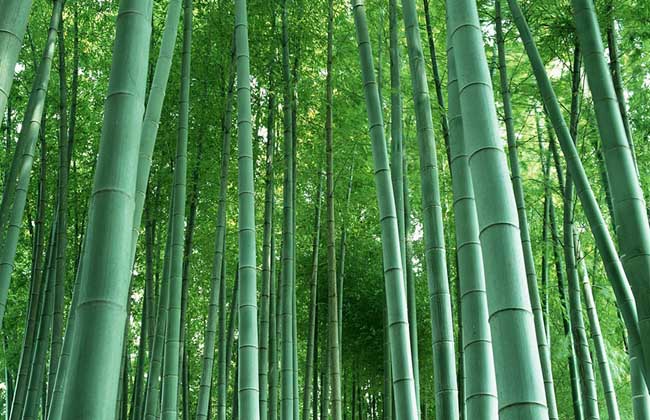
Bamboo is the collective name for perennial plants of the genus Bambusa in the grass family Bambusoideae. Through the ages, countless scholars and writers have loved and praised bamboo. Chinese scholars and writers have endowed bamboo's growth characteristics - its hollow interior, upright stance, and year-round green - with personified spiritual and cultural symbolism such as elegance, purity, humility, integrity, and uprightness. Let us now take a look at the symbolism of bamboo!
The Symbolism of Bamboo
Bamboo carries extraordinary meaning in traditional Chinese culture. Its year-round green symbolizes tenacious vitality and eternal youth; its hollow interior represents a humble and open-minded character; its branches that bend but do not break embody the principle of being gentle yet firm; growing with nodes and always revealing its joints symbolizes noble character and sterling integrity; and bamboo's upright elegance, straightforwardness, and refined grace are also the personality pursuits of Chinese scholars. The earliest Chinese affinity for bamboo can be traced back to the Wei and Jin dynasties, after which bamboo evolved from a cultural symbol into a folk motif - for example, “bamboo reporting peace” is often used to wish for peace and good fortune.
The Spiritual Qualities of Bamboo
Bamboo is the embodiment of the gentleman and is one of the “Four Gentlemen,” and together with plum blossom and pine it forms the “Three Friends of Winter” - pine symbolizes evergreen longevity, bamboo symbolizes the way of the gentleman, and plum symbolizes purity and nobleness. Regarding the spiritual qualities of bamboo, there is the “Ten Virtues of Bamboo”: “Bamboo's form is upright, preferring to break rather than bend - this is called integrity. Though bamboo has nodes, it does not stop growing - this is called striving forward. Bamboo is straight outside and open inside, with a heart as broad as a valley - this is called humility. Bamboo's flowers are deeply hidden, facing the sky with a plain face - this is called simplicity. Bamboo blooms once in its lifetime, with no regret even in death - this is called dedication. Bamboo stands gracefully in the wind, towering between heaven and earth - this is called excellence. Though bamboo is excellent, it is not like the pine - this is called sociability. Bamboo's texture is like stone, only then can it be crafted - this is called firmness of character. Bamboo becomes a tally token, held by Su Wu - this is called moral conduct. Bamboo carries writing that is passed down through generations, bearing hardship without complaint - this is called responsibility.”
The Cultural Meanings of Bamboo
1. Bamboo reporting peace: Bamboo refers to bamboo slips; “bamboo report” was an old term for a family letter, referring to a letter of safe tidings. Tang dynasty, Duan Chengshi, “Youyang Zazu Xuji - Zhi Zhi Xia”: “In the north, only Tongzi Temple had a clump of bamboo, only a few chi tall. It was said that the temple's administrator would daily report the bamboo's safety.”
2. Bamboo clumps and luxuriant pines: roots as firm as bamboo, branches and leaves as luxuriant as pine - used as a congratulatory phrase for longevity or the completion of a palace or house, and also as a metaphor for family prosperity. “Book of Songs - Minor Odes - Si Gan”: “Like bamboo clumps, like luxuriant pines.” Ming dynasty, Fan Shiyan, “Mo Zhong Ji”: “Wishing longevity, may bamboo clumps and pines be luxuriant, and sun and moon endure.”
3. Green plums and bamboo horses: green plums refer to unripe plums; bamboo horse refers to a bamboo pole that children ride as a horse - a metaphor for boys and girls playing together in innocent affection. Tang dynasty, Li Bai, “Changgan Xing”: “My lord came riding on a bamboo horse, circling the bed playing with green plums. Living together in Changgan Lane, two little ones without suspicion.”
4. Dense woods and tall bamboo: “xiu” means tall; dense, tall forests and bamboo groves. Jin dynasty, Wang Xizhi, “Preface to the Orchid Pavilion Gathering”: “This place has high mountains and steep ridges, dense woods and tall bamboo.”
5. Like splitting bamboo: the situation is like splitting bamboo - once the top is split open, the rest follows along the blade. It describes winning victory after victory without obstruction, and also describes an unstoppable momentum. “Book of Jin - Biography of Du Yu”: “The military prestige is already aroused, like splitting bamboo - after several nodes, it yields to the blade.” Ming dynasty, Shi Naian, “Water Margin” Chapter 99: “Guan Sheng and the others, riding the momentum, drove straight ahead, unstoppable like splitting bamboo, and captured Dagu County.”
6. Too numerous to record: “qing” means to exhaust; bamboo refers to bamboo tubes made in ancient times for writing; “shu” means to write. The original meaning is that even using up all the bamboo would be insufficient to write it all down. It originally described crimes being so numerous they could not all be written down, and also refers to there being so many facts that they are difficult to record completely. “Old Book of Tang - Biography of Li Mi”: “Exhausting the bamboo of the southern mountains, the crimes cannot be fully recorded; draining the waves of the eastern sea, the evil cannot be fully washed away.”