Detailed Explanation of Key Points on Cherry Blossom Tree Cutting Propagation Techniques
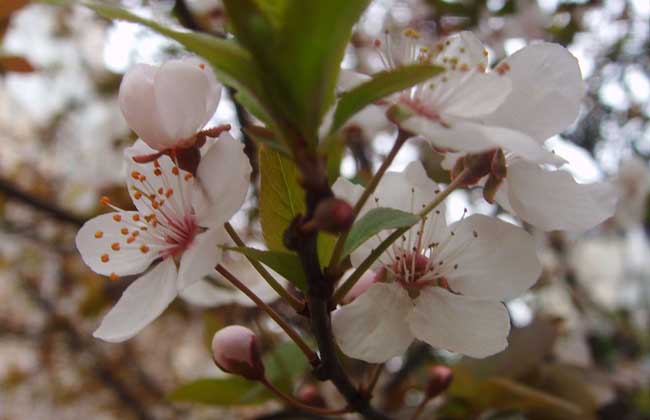
The cherry blossom tree is a deciduous small tree of the genus Cerasus in the rose family (Rosaceae). Varieties such as early cherry, late cherry, weeping cherry, and Yunnan cherry are commonly found in China. Late cherry is relatively widely used in domestic planting and landscape greening, and is widely used for ornamental gardening. In production, it is mainly propagated by sowing, cutting, and grafting. Let us take a look at cherry blossom tree cutting techniques below!
Selection of Cherry Blossom Tree Cuttings
For cherry blossom trees, select young and robust mother trees. From the outer part of the middle-upper crown, cut one-year-old thick branches, keep the top shoot, and cut them into 30-40 cm long cuttings. Cut the lower end into a slanted opening. Cuttings cut on the same day must be inserted completely on the same day to prevent the cuttings from losing water, damaging the cut opening, and tissue necrosis. Be sure to note that thin and weak cuttings will reduce the survival rate, and short cuttings will delay the seedling stage.
Making the Cutting Bed for Cherry Blossom Trees
For the cherry blossom tree cutting bed, choose a leeward, sunny position with good drainage, and make a bed 1 m wide and 30 cm high. The bottom layer of the bed is padded with 15 cm thick sandy loam soil with a certain fertility, and the upper layer is covered with 10 cm of yellow-heart sandy loam soil (prepared with 8 parts yellow-heart loam and 2 parts yellow sand), and sterilization treatment is carried out.
Cutting Time for Cherry Blossom Trees
The best time for cherry blossom tree cuttings is from early to mid-June to early to mid-September, mainly because cherry blossoms are deciduous trees. Cutting of one-year-old large branches should be carried out before the tree buds sprout. When the soil temperature reaches above 16°C, the cuttings begin to root.
Cherry Blossom Tree Cutting Techniques
When cutting cherry blossom trees, use a small stick slightly thicker than the cutting, insert it vertically into the cutting medium to a depth of 5-6 cm, with a spacing of about 10 cm, then insert the cutting, and press it firm with your hand. After insertion, spray water thoroughly with a fine-mesh watering can so that the cutting and soil are closely combined.
Post-Cutting Management for Cherry Blossom Trees
1. Moisture retention and heat preservation: Usually the temperature in early to mid-March is generally unstable, fluctuating high and low. If the temperature drops greatly, emergency measures can be taken by covering with plastic film. If the daily maximum temperature reaches above 15°C, spray once at noon. Later, as the temperature steadily rises, spray 3-4 times a day, so that the surface soil does not turn white. To improve soil conditions and help callus tissue form as early as possible, 15-20 days after cutting, apply 2% concentration potassium dihydrogen phosphate as foliar topdressing. After about one month, they will gradually heal and root.
2. Build a shade shed: After cutting cherry blossom trees, set up a frame and prepare for shading. The height of the frame should be slightly higher than a person for ease of operation. This is conducive to ventilation and creating a microclimate in the cutting bed. When the daily maximum temperature is above 16°C, cover with curtains or use shade netting for shading, with a shading rate of 50-70%, and it is best to cover during the day and uncover at night.
3. Remove tillers and wipe out buds: The thick cuttings of cherry blossoms are themselves very rich in nutrients, and with sufficient sunlight and excessively high temperatures, buds and leaves will begin to sprout in large numbers before rooting. At this time, except for retaining the terminal bud, all the rest should be wiped off to avoid excessive consumption of nutrients.
4. Timely topdressing: To meet the growth requirements of the cuttings, one week after rooting, timely apply a light fertilizer once, and thereafter apply once every 15 days (stop application during severe heat). After three to four fertilizations in this way, the root system of the cuttings is well developed, growth is vigorous, and they can absorb nutrients from lower layers in advance. The height in the same year can reach more than 1 m, and in early spring of the following year they can be moved out of the bed for transplanting to cultivate large seedlings.
5. Disease and pest control: Cherry blossom seedlings are susceptible to damage by diseases and pests, and their leaves are prone to leaf spot disease. A 800-fold dilution of carbendazim can be sprayed once every half month. Their terminal buds and tender shoots are prone to shoot borers and aphids. Once newly hatched larvae are found, spray pesticide promptly for control. This prevents the seedlings from being damaged.