How Many Years of Cultivation Before a Cherry Blossom Tree Blooms? A Detailed Explanation of Blooming Time
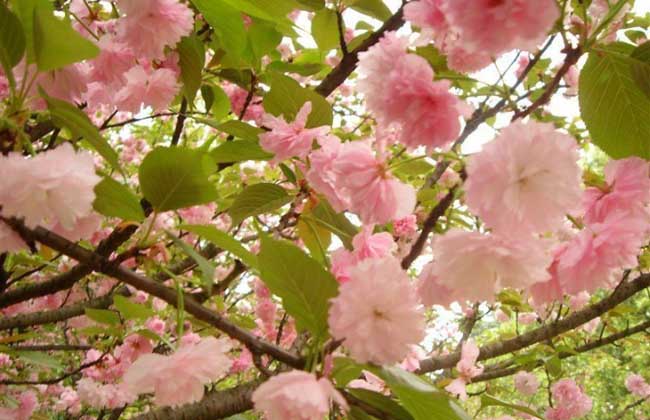
Cherry blossoms are an important flowering tree species of early spring, a collective term for several plants in the genus Cerasus of the family Rosaceae. They are commonly used for garden ornament, with bright and beautiful flower colors and luxuriant, vigorous branches and leaves, symbolizing passion, purity and nobility. They are revered as the national flower of Japan. They have extremely high ornamental value. Let us take a look below at how many years of cultivation a cherry blossom tree needs before it blooms!
How Many Years Before a Cherry Blossom Tree Blooms?
Cherry blossoms are mostly cultivated from seedlings purchased at nurseries or markets, and generally the purchased seedlings can bloom in the same year. If you cultivate them yourself, you need to graft onto rootstock such as mountain cherry (Prunus serrulata var. spontanea), and the grafted branches can bloom the following year. In fact, the cherry blossom tree does not grow particularly fast; it is a medium-speed grower, and its growth over 5 years also depends on the soil and care management. Generally it can grow about 1 m taller, with the trunk diameter increasing by about 2 cm.
When Do Cherry Blossoms Bloom?
Cherry blossoms usually bloom in April, with umbellate racemose inflorescences, and bear fruit in May; the drupe is nearly spherical. The blooming period is very short, usually four to ten days. Their beauty lies in the passion of full bloom, and even more in the lofty, pure and resolute and magnificent scene when the flowers flutter and fall one after another after blooming profusely. Cherry blossom colors include red, pink, vermilion, bright red, white, pinkish white and other colors. Korean cherry blossoms are mostly white, Japanese cherry blossoms are mostly multi-colored, and Chinese cherry blossoms are mostly pink.
Cultivated Varieties of Cherry Blossom
1. Cherry blossom: The cherry blossom is a deciduous tree, about 5-25 m tall. The bark is dark chestnut brown, smooth and glossy, with horizontal stripes. The branchlets are hairless. The leaves are ovate to ovate-elliptic, with awned semi-mature teeth along the margin, hairless on both sides. The inflorescence is corymbose or racemose, the flowers white or pale pink, blooming from April to May.
2. Japanese early cherry: The Japanese early cherry is a small tree, about 5 m tall, with horizontally striped bark, and the old bark is braided. The branchlets are brown, and the leaves are obovate to ovate-lanceolate. The flowers are pink, 2-2.5 cm in diameter, borne 2-5 in umbels, blooming before the leaves in spring.
3. Japanese late cherry: The Japanese late cherry is about 10 m tall, with light gray bark. The leaves are obovate, with long awn-like teeth along the margin. The flowers are single or double, pendulous, pink or nearly white, fragrant, borne 2-5 together, blooming in April.
4. Oshima cherry: The Oshima cherry is 12-20 m tall, with brown bark and purple-brown branchlets, and elliptic-ovate leaves. The flowers are pink, borne 2-4 in clusters, 3-5 cm in diameter, blooming from March to April.
5. Yunnan cherry: The Yunnan cherry is about 10 m tall, with brown bark and purple-brown branchlets, and elliptic-ovate or obovate leaves with double teeth along the margin. The flowers are pink to deep red, borne 2-5 in clusters, blooming from February to March.
6. Ke cherry: The Ke cherry is about 25 m tall, with light brown bark and green branchlets, and long elliptic to lanceolate leaves. The flowers are pink, blooming from January to January of the following year.
7. Kanhizakura: Kanhizakura is also called bell-flowered cherry, Fujian mountain cherry, etc. Bell-flowered cherry is its formal name in mainland China, while both Japan and Taiwan, China call it Kanhizakura. As the name suggests, it is a red cherry that blooms in the cold early spring. Kanhizakura may indeed be considered the earliest cherry blossom to open in a year in China, with the blooming period generally in mid-February.
8. Red-flowered tall pot cherry: The red-flowered tall pot cherry is native to Yunnan and is also distributed in Nepal, Bhutan and Myanmar. As a cultivated variety it is indeed relatively young; it was first widely cultivated in Kunming, Yunnan, and in recent decades has been promoted to major cherry blossom growing areas across the country. The flowers are mostly semi-double, deep pink to red in color, dense as clouds, blooming in late February of early spring, almost in the same blooming period as Kanhizakura.