A Detailed Guide to Cherry Tree Planting Techniques and Care Methods
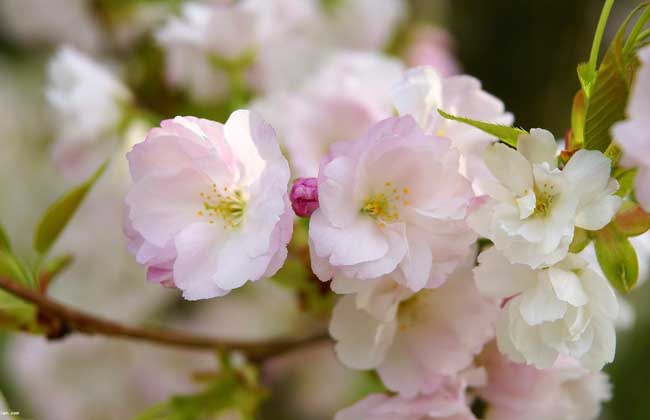
Cherry trees originated in the temperate regions around the Himalayas in the Northern Hemisphere and are now grown all over the world. They can be divided into two categories: single-petaled and double-petaled. Single-petaled varieties can bloom and bear fruit, while double-petaled varieties mostly do not bear fruit. The flowers often open together with the leaves in March or after the leaves have emerged, and their color is subtly fragrant and gorgeous. They are commonly used for garden ornamentation. Let us take a look at cherry tree planting techniques below!
Cherry Tree Growth Habits
Cherry is a temperate and subtropical tree species. It likes sunlight and warm, humid climatic conditions and has a certain degree of cold resistance. It is not strict about soil requirements and is best grown in loose, fertile, well-drained sandy loam, but it is not tolerant of saline-alkaline soil. Its root system is relatively shallow, and it dislikes waterlogged, low-lying land. It has a certain tolerance to cold and drought, but it is weak against smoke and wind, so it is not suitable for planting in coastal areas prone to typhoons.
Cherry Tree Propagation Methods
1. Seed propagation: Viable cherry seeds should be sown immediately after collection. When propagating cherry by sowing, be careful not to let the seed embryos dry out. They should be sown as soon as they are collected, or stratified in moist sand and sown in the following spring, in order to cultivate seedlings for grafting.
2. Cutting propagation: Cherry tree cutting propagation usually uses one-year-old hard branches in spring and current-year soft branches in summer. Cuttings can be treated with NAA, and the seedbed needs shading, moisture retention, and a well-aerated medium to achieve a high survival rate.
3. Grafting propagation: Because most cherry species do not bear fruit, cherry or mountain cherry can be used as rootstock for grafting. Whip grafting in late March or bud grafting in late August are both suitable. After the graft takes, it can be cultivated for 3 to 4 years before being released from the nursery for planting. High-branch top replacement grafting can also be used: insert the trimmed scion into the rootstock using the cleft grafting method, wrap it tightly with plastic bags, and cover it with a plastic bag for insulation and protection. The survival rate is high, and it can be used to replace new varieties.
Cherry Tree Planting Techniques
1. Digging holes and planting: Before planting a cherry tree, level the ground and dig a hole 0.8 m in diameter and 0.6 m deep. First fill the hole with 10 cm of organic fertilizer, then place the seedling in the hole and spread its roots out in all directions. After filling with soil, lift the seedling slightly upward so the roots spread deeply, then firm the soil. The planting depth should be about 5 cm above the upper layer of the seedling roots. After planting, water thoroughly and irrigate fully, then support it with a stick to prevent strong winds from blowing it over.
2. Reasonable watering: After the cherry tree is planted, the seedling is prone to drought damage. In addition to thorough watering at planting, water once every 8 to 10 days thereafter, keeping the soil moist but not waterlogged. Loosen the soil promptly after watering, and preferably cover the soil surface with a thin layer of grass to reduce water evaporation. Within 2 to 3 years after planting, straw can be used to wrap the trunk to prevent it from drying out. However, after 2 to 3 years, when the sapling grows new roots and its adaptability to the environment gradually increases, it no longer needs to be wrapped in straw.
3. Timely fertilization: Cherry trees are fertilized twice a year, preferably with acidic fertilizer. One is winter fertilizer, applied in winter or early spring using organic fertilizers such as bean cake, chicken manure, and decomposed fertilizer. The other is after the flowers fall, applying quick-acting fertilizers such as ammonium sulfate, ferrous sulfate, and superphosphate. For general fertilization of large cherry trees, the hole application method can be used, that is, dig a ring-shaped trench about 10 cm deep along the edge of the tree canopy's direct projection line and apply the fertilizer into it. This is both simple and conducive to root absorption. As the tree grows, the diameter and depth of the fertilization ring trench should also increase accordingly.
4. Reasonable pruning: Pruning mainly involves cutting off withered branches, water sprouts, overlapping branches, and diseased or pest-infested branches. Generally, when many branches grow on the trunk of a large cherry tree, several vigorous branches should be retained and the rest should all be cut off from the base to facilitate ventilation and light penetration. After pruning, disinfect the wounds with medication promptly to prevent pathogens from invading after rain and causing rot. After long periods of exposure to the sun, cherry bark is prone to aging and damage, causing rot. It should be removed promptly and disinfected.
5. Pest and disease control: Cherry trees mainly suffer from gummosis and root rot, both of which require timely treatment, soil improvement, strengthened water and fertilizer management, and reasonable pruning. During a year of growth, cherry trees may be harmed by aphids, red spiders, and scale insects. Generally, pesticide is sprayed 3 to 4 times: the first time before flowering, the second time after flowering, and the third time in July to August. Careful observation and timely control are necessary to achieve better results.