When Does Asparagus Fern Bloom? A Detailed Guide to Its Flowering Period
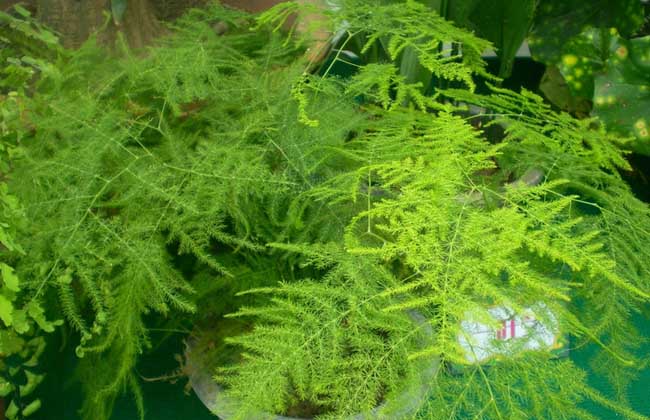
Asparagus fern (Asparagus setaceus) is an evergreen plant of the genus Asparagus in the family Asparagaceae. It prefers warm, humid, semi-shaded and well-ventilated environments, is not tolerant of severe cold in winter or drought, and must be kept out of direct sunlight in summer. It is a highly ornamental plant that can be placed in the living room or study, purifying the air while adding a literary touch. Let us take a look below at when asparagus fern blooms!
When does asparagus fern bloom?
If the growing environment is suitable, asparagus fern may bloom within 3 years; if conditions fall short, it may not bloom for five or six years or even longer. It generally blooms from November or December each year to March or April of the following year. When the berries of the asparagus fern turn blackish-purple, it means the seeds have matured and will drop off on their own into the soil, then grow into new asparagus ferns. The flowers of asparagus fern are very small but borne in great numbers. Do not move the pot during the flowering period, lest the flowers drop. If the pot must be moved, pay attention to its direction so that the side originally facing the light stays the same; if the light exposure changes, flowers will drop and the beauty of the asparagus fern will be affected.
Is asparagus fern blooming an evil omen?
Although asparagus fern blooming is uncommon, like the sago palm blooming, it is not an unusual phenomenon, and the more a spot is exposed to the sun, the more flowers it produces. The claim that asparagus fern blooming is an evil omen is pure nonsense. In fact, the blooming of asparagus fern is closely related to its growing environment, and its flowering cycle is not fixed. Because people usually like to grow asparagus fern in small pots and place them indoors for viewing, where they rarely get sunlight, it is very hard to see asparagus fern bloom and set seed, and so the saying that asparagus fern blooming is an evil omen has spread widely.
How to grow asparagus fern
1. Potting soil: For cultivating asparagus fern, use fertile sandy loam that is warm and moist, rich in leaf mold and well drained. A mix of 4 parts garden soil, 2 parts leaf mold, 2 parts compost soil and 1 part sand can generally be used, and the soil should be changed and fertilizer added regularly. If over-fertilizing causes "root burn," the plant must be repotted to remove the fertilizer, the root ball rinsed with clean water, and then replanted in fresh soil.
2. Watering: Watering is the key point in cultivating asparagus fern. Too much water makes the potting soil too wet and easily causes root rot, while too little water causes the leaf tips to scorch and turn yellow. Therefore, when watering, judge by the weather, the plant's growth and the dryness of the potting soil, following the rule of not watering until dry, and watering thoroughly when you do. In hot, dry weather, misting the leaves can be used to raise humidity and lower temperature, while in winter water less.
3. Fertilizing: Asparagus fern does not like heavy fertilizer, but it cannot go without it either. Restricted by the potting soil of container growing, nutrients must be replenished promptly to meet its growth requirements. When fertilizing, apply small amounts often and never use concentrated fertilizer, or the leaves will turn yellow. Generally, a thin liquid fertilizer that has been fully decomposed can be applied once a month; once the plant has grown and its shape is set, fertilizing can be appropriately reduced. During the growing season, apply 1 to 2 times a month a thin fertilizer containing nitrogen and phosphorus to promote lush branches and leaves; other liquid fertilizers may also be used. Do not fertilize too much during the flowering period; just apply liquid fertilizer twice each in May to June and September to October.
4. Light: Asparagus fern must not be exposed to the scorching sun when grown; in hot seasons it should be placed in a cool, ventilated spot. At the same time, during the flowering period the asparagus fern fears both wind and rain, so good ventilation should be ensured, and in fine weather it can be placed outdoors appropriately to receive sunlight. In winter, the temperature for potted asparagus fern should be kept above 5°C to avoid frost damage.
5. Placement: Asparagus fern loves a clean environment with circulating air. If irritated by harmful gases such as smoke, dust, coal gas or pesticides, its leaves will turn yellow, curl and even die. Therefore, asparagus fern should be placed in a clean, well-ventilated environment, away from marble-type decorative materials that release mercury vapor.