Is watering asparagus fern with white sugar water actually good or not?
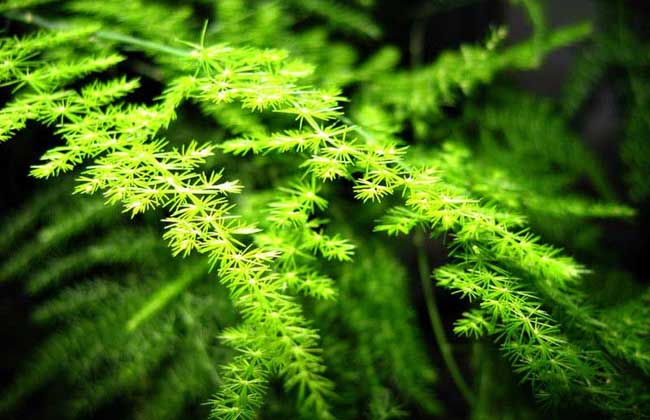
The asparagus fern (Asparagus setaceus) is native to South Africa and is distributed across central China, the northwest, the Yangtze River basin and various parts of the south. It likes warm, humid and semi-shaded, well-ventilated environments. In winter it does not tolerate severe cold, and it does not tolerate drought. In summer it should be kept out of direct sunlight. It is a highly ornamental plant that can be placed in the living room or study, purifying the air while also adding a touch of scholarly elegance. Now let us take a look at whether white sugar water is good for watering asparagus fern!
Is white sugar water good for watering asparagus fern?
It is best not to water asparagus fern with white sugar water. Sugar is not absorbed directly by plant roots; in the soil it is broken down by microorganisms and bacteria, and the breakdown products are not sugar at all. Moreover, because potted soil is limited and it is hard to get the ratio right, it is very easy to burn the roots and breed mosquitoes and insects by watering too much.
How should asparagus fern be watered properly?
The amount of water given to asparagus fern should be adjusted flexibly according to the different care environment, season and even the potting soil; do not blindly copy the experience of other growers. In winter, spring and autumn, watering should be appropriately controlled, generally watering again once the soil surface looks dry. If the water amount feels hard to judge, you can also alternate large and small waterings, that is, after 3 to 5 small waterings, give 1 thorough watering, so that the potting soil stays moist top and bottom without holding too much water. In summer, water in both the morning and the evening; a slightly larger amount of water does no harm. In summer, besides normal watering, you can also frequently sprinkle water on the ground around the plant and spray and wash the branches and leaves with clean water to increase air humidity.
How is asparagus fern best grown?
1. Potting soil: The potting soil for cultivating asparagus fern should preferably be fertile sandy loam, requiring a warm and humid medium, rich in decayed leaf matter, and with good drainage. Generally, a ratio of 4 parts garden soil, 2 parts leaf mold, 2 parts compost soil and 1 part sand can be used, and the soil should be changed and fertilizer added regularly. If overly concentrated fertilizer causes "root burn", the pot needs to be turned out to remove the fertilizer, and the soil ball rinsed with clean water, then replaced with new soil for growing.
2. Watering: Watering is the key point in cultivating and growing asparagus fern. Too much watering and overly wet potting soil easily cause root rot, while too little watering leads to withered, scorched and yellowing leaf tips. Therefore, in the process of watering, it should be decided according to the weather, the growth condition and how dry or wet the potting soil is, so that you do not water when it is not dry, and water thoroughly when you do. In hot, dry weather, you can increase humidity and lower temperature by spraying water on the leaf surface; in winter, water less.
3. Fertilizing: Asparagus fern does not like heavy fertilizer, but it also cannot lack fertilizer. Limited by the potting soil of container growing, nutrients must be replenished in time during cultivation to meet its growth requirements. In the process of fertilizing, apply little but often, and do not apply concentrated fertilizer, otherwise yellow leaves will result. Generally, applying a thin well-rotted liquid fertilizer once a month is enough; after the plant has grown large and its form is set, fertilization can be appropriately controlled and reduced. During the growing season, apply a thin fertilizer containing ammonia and phosphorus 1 to 2 times a month to encourage lush branches and leaves; other liquid fertilizers are also acceptable. Do not fertilize too much during the flowering period; in May to June and September to October, top-dress with liquid fertilizer 2 times each.
4. Light: Asparagus fern must not be taken out to bake in the blazing sun; in hot seasons it should be placed in a cool, ventilated spot. At the same time, during the flowering period the asparagus fern is afraid of both wind and rain, so attention must be paid to good ventilation; in good weather it can be appropriately placed outdoors to receive sunlight. In winter, the temperature for potted asparagus fern should be kept above 5°C to avoid freezing damage.
5. Placement: Asparagus fern loves a clean, air-circulating environment. If stimulated by harmful gases such as smoke, dust, coal gas and pesticides, the leaves will turn yellow, curl and even die. Therefore, asparagus fern should be placed in a clean, well-ventilated environment, away from marble-type decorative materials that release mercury vapor.