How to prune a pomegranate bonsai? Explanation of the key pruning techniques
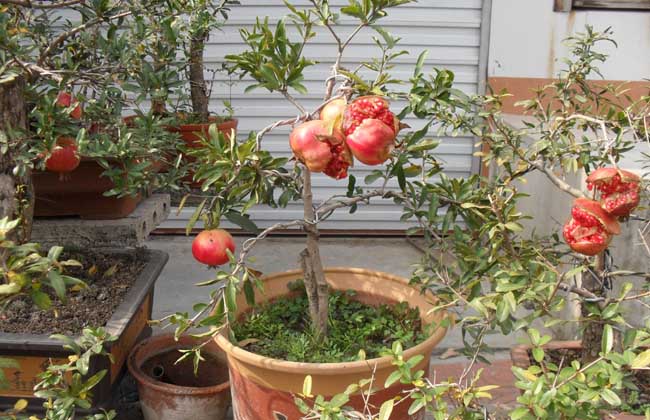
Pomegranate trees have strong sprouting ability, producing new branches several times within a year, so pruning is very important. If not pruned in time, it will affect flowering and fruiting. Usually, after new branches grow out, overly dense, weak, and basal clustered branches should be removed in time to ensure the main branches have sufficient nutrients, which is conducive to flowering and fruiting. Let's take a look at pomegranate bonsai pruning techniques together!
How to prune a pomegranate bonsai?
Potted pomegranates should be pruned before spring sprouting by cutting off excess branches and uneven branches according to the shape envisioned in your mind. Pruning of small seedlings is mainly tip pinching, usually carried out when they reach a height of 10 cm or more. For dense parts of new lateral branches, they can be cut off from the base. For water sprouts, multiple pinching can be used to shape them, while also promoting the early formation of plump and full lateral buds in the leaf axils, building up nutrient reserves for the new fruiting mother branches that will sprout next year. Dense short needle-like branches can be cut off.
How to thin fruits on a pomegranate bonsai?
After the pomegranate fruits on the bonsai have set firmly, excessive fruits not needed for the design should be cut off. A medium-sized pomegranate bonsai only needs to keep 3-5 fruits. The fruits should be distributed with varied heights and staggered arrangement, some sparse and some dense, not evenly spaced. If there are too many fruits, besides looking messy and disordered, it will also affect fruiting next year.
Precautions for pomegranate tree pruning
1. In spring, pomegranate trees should have dead branches, diseased branches, weak branches, water sprouts, etc. from the wintering period cut off, retaining healthy branches and crown shape, which helps promote more new branches, more flowers, and more fruit. When seedlings reach 10 cm in height, begin multiple pinching to promote branching and achieve a full crown width.
2. When pruning pomegranate trees, pay attention to keeping outer branches and removing inner ones, keeping straight branches and removing horizontal ones, and the cut should face outward.
3. The focus of pomegranate tree pruning should be water sprouts and root suckers, because water sprouts germinate from latent buds in the cortex of the trunk or large lateral main branches, grow vigorously, and grow upright or diagonally upward, but are not easy to differentiate into flower buds and interfere with the tree shape. Root suckers germinate from the underground root zone, grow faster than the crown branches, but mostly only consume nutrients.