A Complete Analysis of the Key Points of Populus euphratica Cultivation Techniques
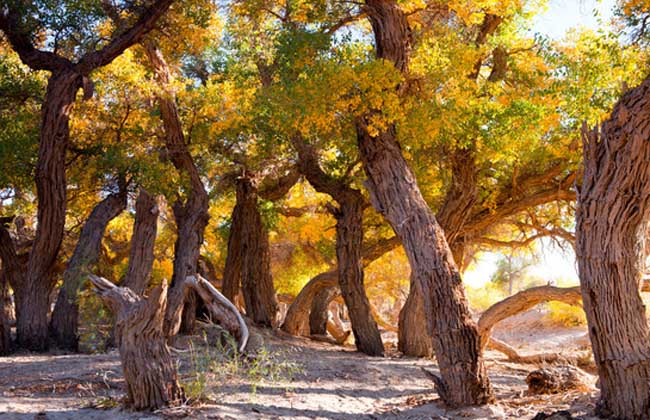
Populus euphratica, also known as Huyang, Hutong, Hero Tree, Heterophyllous Populus euphratica, Heterophyllous Poplar, Shuitong, Three-leaf Tree, etc., is a medium-sized natural arbor of the genus Populus in the family Salicaceae. Its tree age can reach 200 years, the trunk is straight, the diameter can reach 1.5 m, and the height is 10-15 m. It is a precious forest resource unique to desert regions and has very high cultivation value. Let us take a look together at Populus euphratica cultivation techniques below!
Growth Habits of Populus euphratica
Populus euphratica cultivation techniques: it is a tree species under arid continental climate conditions. It is light-loving, heat-resistant, resistant to atmospheric drought, resistant to salinity and alkalinity, and resistant to wind and sand, and grows poorly under hot and humid climate conditions and on heavy clay soil. Populus euphratica requires sandy soil. Wherever desert rivers flow, Populus euphratica follows. Since desert rivers change course quite frequently, Populus euphratica has left traces of its former presence everywhere in the desert. Relying on the protection of its root system, Populus euphratica can live quite comfortably when the groundwater level is not lower than 4 m, but after the groundwater level drops to 6-9 m it appears listless, and if the groundwater level drops further it will die.
Propagation Methods of Populus euphratica
Populus euphratica is mainly propagated by seeds, and cuttings are difficult to root. Populus euphratica seeds lose water very easily and lose germination ability. In July-August, after the fruit spikes turn from green to yellow and the tips of the capsules crack open to reveal white fluff, excellent mother trees should be selected in time to collect the fruit spikes, which are then dried in the shade to remove the seeds. A seedbed can be built on moist, fertile, well-drained fine sandy soil or sandy loam, and either a raised bed, ridge bed or low bed can be used. The seeds are mixed with fine sand and sown in drills or broadcast. Seedlings 2-4 years old can be used for afforestation. Both direct sowing afforestation and seedling planting afforestation can be used.
Seedling Raising Techniques for Populus euphratica
1. Nursery site selection: The seedling-raising site for Populus euphratica should be chosen in a place with good ventilation and convenient irrigation and drainage, and the soil should be fertile, loose sandy loam or lightly saline-alkaline land.
2. Irrigation and soil loosening: For 2-year-old seedlings, irrigation should be controlled, and irrigating twice a year can already meet physiological needs. Loosen the soil and weed 4 times, especially loosening the soil promptly after irrigation or rain. Apply topdressing 1-2 times, thin the seedlings 2 times, and maintain a reasonable density. Appropriately remove some of the leaves on the lower part of the seedlings. This helps light penetration and ventilation, lowers the surface temperature, and gives rust fungi no opportunity to act.
3. Rust disease control: The key to sowing and raising Populus euphratica seedlings is to control the harm of rust disease at the seedling stage. Once rust disease occurs, 15% triadimefon can be used. One-year-old Populus euphratica seedlings do not develop rust disease or develop it only mildly. Two-year-old seedlings are most susceptible, with seedling leaves turning yellow, withering, and dying. The disease occurs at the end of May, is severe in July and August, and basically stops in early September. Seedlings are infected from the bottom upward, and parts higher than 1.3 m are not infected or only slightly infected. In addition, excessive irrigation, poor drainage, and heavy summer rainfall can all promote the occurrence and spread of rust disease.