How to Grow Christmas Cactus? Detailed Guide to Cultivation Methods and Precautions
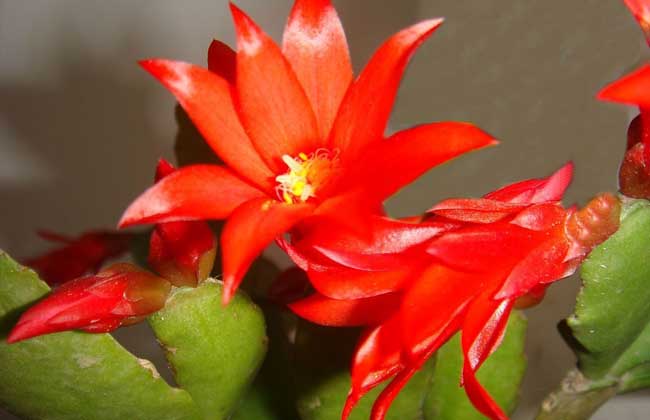
Christmas cactus, also known as crab claw cactus, Christmas cactus, fairy finger flower, and "icing on the cake," is an epiphytic succulent plant of the genus Schlumbergera in the cactus family. It is native to Brazil and is commonly cultivated as an ornamental plant in parks and flower gardens across China. It is often grafted onto dragon fruit (Hylocereus undatus) or other rootstocks to obtain vigorously growing plants. Let's take a look at the cultivation methods and precautions for Christmas cactus!
Growing Environment of Christmas Cactus
Christmas cactus is commonly cultivated in tropical and subtropical regions worldwide. It prefers cool and warm environments, is relatively drought-tolerant, fears high summer temperatures and heat, and is relatively shade-tolerant. The optimal growing temperature is 20-25°C, and the dormancy temperature is around 15°C. It prefers loose, organic-rich, well-draining and breathable substrate. Christmas cactus is a short-day plant. Under conditions of 8-10 hours of daily sunlight, it can bloom in 2-3 months. The flowering period can be regulated by controlling light exposure.
Grafting Techniques for Christmas Cactus
1. Grafting time: The suitable time for grafting Christmas cactus is from late March to mid-June and from mid-September to mid-October, but grafting in late spring and early summer is best. Grafting should be done on a sunny morning, as the rootstock and scion contain more sap at this time, which promotes graft union.
2. Rootstock selection: For grafting Christmas cactus, select a 1-year-old cactus branch as the rootstock that is elongated, not too thick and fleshy but vigorously growing, and free of pests and diseases, with a length of 8-12 cm. Remove it from the mother plant, cut the lower end flat, insert it into sandy loam, and cultivate for 2-3 months. Once it has taken root, it can be used as a grafting rootstock.
3. Scion selection: For grafting Christmas cactus, select a healthy mother plant of Christmas cactus and choose a current-year, relatively tender terminal branch with nodes as the scion, with a length of 3-4 cm (if the scion is too long, the growth vigor after sprouting will be weaker). Use an alcohol-sterilized blade to cut both sides of the lower part of the scion into a wedge shape, with a cut length of about 0.8-1.2 cm.
4. Grafting method: First, cut both sides of the basal segment of the scion diagonally into a duck-bill shape. The cut surface length should be 1.5-2.5 cm, and it is best to make the cut in one stroke to facilitate survival. Then make a vertical cut at the top of the rootstock, with the width and depth of the cut slightly larger than the scion's cut surface. Quickly insert the prepared scion into the rootstock cut and secure it. Finally, place the grafted pot in a wind-sheltered, cool, and ventilated place. It is expected to survive in about 20-30 days.
Cultivation Methods for Christmas Cactus
1. Pot selection: Christmas cactus can be grown in clay pots, plastic pots, porcelain pots, or ceramic pots, but clay pots are best. To coordinate with home decor, plastic pots in various colors can be used. It is best to choose a pot with a diameter that is 2/3 of the plant's crown diameter.
2. Soil mix: Christmas cactus prefers fertile, loose soil. For home use, you can use 3 parts garden soil, 4 parts leaf mold, and 3 parts sand; or 4 parts peat moss, 2 parts leaf mold, 2 parts sand, and 2 parts perlite (or volcanic rock). After mixing the soil, it is best to sterilize it with high temperature before use, or you can sun-expose it to kill bacteria.
3. Proper watering: Christmas cactus is an epiphytic cactus. In its natural environment, it often grows epiphytically on trees or in moist valleys, so the cultivation environment requires semi-shade and humidity, but the potting soil must not be too wet. Follow the principle of "water thoroughly when dry." In hot seasons, water once every 2 to 3 days, and avoid watering at noon. In winter when temperatures are lower, water once a week, and avoid watering in the evening.
4. Timely fertilization: Christmas cactus likes fertilizer. When fertilizer is sufficient, it has more branches and more flowers. Start topdressing after leaf buds emerge. During the growing season, apply a topdressing of diluted 10x liquid fertilizer mixed with an equal amount of 1000x potassium dihydrogen phosphate solution or 1000x "Huaduoduo" general fertilizer once every 15-20 days. In late autumn, reduce the frequency of fertilization. Stop fertilizing when the temperature is below 10°C. Do not fertilize during high summer temperatures or low winter temperatures.
5. Light control: Christmas cactus fears intense heat, and avoids direct sun exposure and rain. Therefore, in summer it should be placed in a ventilated indoor area or on a shaded balcony. After the Start of Autumn, Christmas cactus gradually recovers its growth vigor and should be placed in a location with 50% light, such as a shade shed or a sunny window, to receive light and promote flower bud differentiation. As the weather turns cooler, gradually increase light exposure. From late autumn to winter, provide sufficient light.
6. Flowering regulation: Christmas cactus is a short-day plant, and the flowering period can be controlled by regulating light duration. To force blooming, start short-day treatment 60 to 70 days before the desired flowering time, with 8 hours of natural light per day and shading for the rest of the time. Shading must be continuous and uninterrupted. Flower buds generally appear after about 20 days.
Precautions for Growing Christmas Cactus
1. After autumn turns cool, place Christmas cactus in a sunny indoor location. If it does not receive sufficient sunlight in autumn and winter, the formed flower buds will drop, and flowering will be reduced or absent.
2. When the Christmas cactus plant grows large, it tends to be top-heavy and requires a support frame and tying. Wire or similar materials can be used to build a support. After the flowers fade, cut off the spent flowers together with the terminal flowering stem segments, and pay attention to controlling water. After new buds grow, you can water to keep the potting soil moist.
3. For potting grafted Christmas cactus seedlings, the soil can be 3 parts leaf mold, 4 parts garden soil, and 3 parts river sand, plus a small amount of organic fertilizer or bone meal as base fertilizer. Generally, repot once every 1-2 years. Repotting should be done in spring after the flowers fade.
4. After the flowers fade in early spring, Christmas cactus has a dormancy period of about 40 days. During this time, control watering, but pay attention to loosening the soil and keeping the potting soil on the dry side. When new buds begin to sprout at the tips, start watering, aiming to keep the potting soil moist, but avoid water accumulation in the pot to prevent root rot.
5. When Christmas cactus enters the high-temperature summer season, it will be in a dormant or semi-dormant state. Water less to keep the potting soil semi-moist, and avoid rain exposure.
4. After autumn arrives, as the weather turns cooler, Christmas cactus gradually recovers its growth vigor and begins normal watering to keep the potting soil moist. During the bud stage, spray water mist frequently to keep the modified stems and flower buds moist. Watering should aim to keep the soil moist. After flowering, control watering to extend the flowering period.
Flowering Regulation of Christmas Cactus
Christmas cactus is a short-day plant. Under natural sunlight conditions, it generally blooms from winter to early spring. To make it bloom earlier, it must receive 8-10 hours of sunlight per day, complete darkness for the rest of the time, and appropriate water control treatment. After taking these measures, it generally blooms in 60-70 days. If you want it to bloom for National Day, you can start in mid-to-late July by using an opaque black cloth cover or black plastic cover to shade the Christmas cactus, allowing only 8 hours of light per day and covering it with the black cloth for the rest of the time. In this way, it can bloom by late September. During the shading treatment, water once a day to keep the potting soil slightly moist, and pay attention to ventilation. To extend the flowering period of Christmas cactus, after flowering, place it in an environment of around 15°C. To delay flowering, keep the potted plant at a low temperature of 5-8°C, or extend the daily light exposure to more than 14 hours.
Why Won't Christmas Cactus Bloom?
1. Too much light: Christmas cactus is a short-day plant. When daily light exposure exceeds 10-12 hours, it is difficult for flower buds to form. If there is sufficient light during the day and strong electric light at night, it will also affect bud formation and flowering.
2. Unsuitable room temperature: When the room temperature is too low, Christmas cactus that has already formed buds will have difficulty blooming. At this time, you can move the pot to a warm room and maintain a temperature above 15°C. After blooming, move it back to the original room for viewing.
3. Excessive temperature difference: When the day-night temperature difference is too large, already formed flower buds will be damaged or drop. For this reason, from mid-October to mid-November, before bringing it indoors, move it indoors in time to avoid sudden temperature changes. Usually, during the day, expose it to more sunlight outdoors to encourage more bud formation, and bring it indoors at night to prevent excessive temperature differences.
Four-Season Management of Christmas Cactus
1. Spring management: Repot Christmas cactus every year before early spring growth begins. Young plants should be repotted once a year, and mature plants once every 2-3 years. After repotting in spring and survival, place it on a windowsill with sufficient light. As the temperature rises, it begins to recover growth, and you can gradually increase the amount of watering to keep the potting soil moist. When watering, pay attention to alternating dry and wet periods. When the outdoor temperature stabilizes above 15°C, it can be placed on a balcony with light but no rain for cultivation. During the peak growing season, pay attention to water and fertilizer supply, but avoid overly wet soil; it is best to water after the soil has dried out. On rainy days, reduce watering frequency. In late spring when temperatures are higher, shade it from midday light or move it to a semi-lit location for cultivation.
2. Summer management: Christmas cactus is not tolerant of direct sunlight. In summer, it should be placed on a semi-shaded windowsill or balcony for cultivation, or placed in a brightly lit indoor area. Maintain a sufficient water supply. In late summer when temperatures are cool, gradually increase water supply and resume topdressing.
3. Autumn management: In autumn, Christmas cactus should be placed in a location with morning and evening light. Water when the soil dries. At the same time, pay attention to misting to supplement air humidity. After flower buds appear, pay attention to water and fertilizer supply. When the temperature drops to around 10°C, move it promptly to a closed balcony or room with light, and reduce fertilization frequency. Because flower buds drop very easily, be careful to prevent knocking off the buds during handling.
4. Winter management: Christmas cactus is not cold-tolerant. In winter, the indoor temperature should be kept above 10°C. Christmas cactus should be placed on a windowsill or balcony with sufficient light for cultivation. Watering should not be too frequent; water after the soil dries. Do not fertilize. After Christmas cactus blooms, if moved to an indoor location with scattered light at 5-8°C, the flowering period can be extended. Watering should not be excessive; it is best to water after the soil dries.
What to Do When Christmas Cactus Leaves Turn Yellow?
1. Fertilizer: Christmas cactus does not have a high demand for fertilizer during normal growing periods, but after entering the bud stage, it needs timely supplementation of some fertilizer so that the plant grows vigorously, flower bud differentiation is good, and flower buds develop normally and fully. If there is a lack of fertilizer, buy some potassium dihydrogen phosphate, dilute it with water, and then water with it to help alleviate the condition.
2. Watering: Watering must be somewhat controlled. Do not water too frequently. Do not water if the soil surface is not dry; when watering, water thoroughly. Especially in winter, it must be determined by whether the potting soil surface is dry. Of course, it is only drought-tolerant, not a plant that likes drought. Do not let the potting soil become too dry, otherwise the same problem will occur. Ensure both sufficient room temperature and no cold wind exposure.
3. Humidity: Do not place Christmas cactus on a radiator or at the air outlet of an air conditioner, otherwise the leaves will dehydrate faster, causing the plant's leaves to turn yellow.
4. Pests: Strictly guard against red spider mites and scale insects. When they occur, spray specific pesticides for control, such as Mite-Clean and Kefuman for red spider mites, and methidathion and Jiebisiding for killing scale insects.
5. Dormancy: Christmas cactus has two peak growth periods and two semi-dormant periods each year. Watering and fertilizing must be based on this growth pattern. Because it likes semi-shade, different placement locations must be chosen in different seasons.