Can Christmas Cactus Take Direct Sun? Master These Lighting Tips
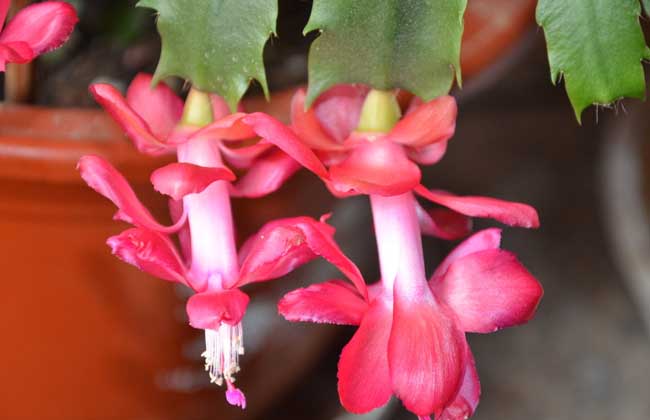
The Christmas Cactus (Schlumbergera) gets its name because the joints of its stem segments resemble crab claws. It is an epiphytic succulent plant of the genus Schlumbergera in the cactus family, widely cultivated in parks and flower gardens across the country. It is often grafted onto dragon fruit (Hylocereus undatus) or other rootstocks to obtain vigorous plants. Indoor-grown Christmas Cactus can have its flowering period regulated by controlling light. Let's take a look below at whether the Christmas Cactus can take direct sun!
Can Christmas Cactus Take Direct Sun?
Yes, the Christmas Cactus can take direct sun. In spring, autumn and winter, it should be placed in a spot with plenty of sunlight, but in summer it should be kept in a cool place and must not be exposed to direct sun. The Christmas Cactus is a short-day plant. Under short-day conditions (8 to 10 hours of sunlight per day), it can bloom in 2 to 3 months. If you want it to bloom in October, you can use a light-blocking cover to give the plant short-day treatment in July, exposing it to light for only 8 hours per day, and it will bloom in late September.
Can Christmas Cactus Be Placed in the Bedroom?
Yes, the Christmas Cactus can be placed in the bedroom. The Christmas Cactus is an excellent indoor decorative plant. Whether grown in pots or hanging baskets, it is suitable for decorating windowsills, doorway entrances and exhibition halls, instantly brightening the whole room and looking more beautiful than a brocade curtain. Moreover, the Christmas Cactus releases oxygen at night and absorbs carbon dioxide, which is extremely beneficial to human health. Its flower meaning is "great fortune arrives" and "turning one's luck around", and placing it by the bedroom window will bring good luck to its owner.
Cultivation and Care of Christmas Cactus
1. Choosing a pot: For the Christmas Cactus, you can use clay pots, plastic pots, porcelain pots or ceramic pots, but clay pots are the best. To coordinate with home decor, you can use plastic pots in varying colors. It is best to choose a pot whose diameter is 2/3 of the plant's crown diameter.
2. Soil mix: The Christmas Cactus likes fertile, loose soil. At home, you can use 3 parts garden soil, 4 parts leaf mold and 3 parts sand, or 4 parts peat soil, 2 parts leaf mold, 2 parts sand and 2 parts perlite (or volcanic rock). After mixing the soil, it is best to sterilize it with high temperature before use, or you can also sun-expose it to kill bacteria.
3. Proper watering: The Christmas Cactus is an epiphytic cactus. In its natural environment it often grows on trees or in moist valleys, so the growing environment should be semi-shaded and moist, but the potting soil must not be too wet. Follow the principle of "water thoroughly only after the soil has dried out". In hot seasons, water once every 2 to 3 days, and avoid watering at noon. In winter, when temperatures are lower, water once a week, and avoid watering in the evening.
4. Timely fertilizing: The Christmas Cactus likes fertilizer. With sufficient fertilizer, it will have more branches and more flowers. Start topdressing after the leaf buds emerge. During the growing season, apply once every 15 to 20 days a mix of well-rotted 10x liquid fertilizer with an equal amount of 1000x monopotassium phosphate solution or 1000x "Huaduoduo" general-purpose fertilizer. In late autumn, reduce the frequency of fertilizing, and stop fertilizing when the temperature drops below 10°C. Do not fertilize when summer temperatures are high or winter temperatures are low.
5. Light control: The Christmas Cactus fears intense heat and high temperatures, and dislikes exposure to blazing sun and rain, so in summer it should be placed in a ventilated indoor spot or on a balcony facing away from the sun. After the Start of Autumn, the Christmas Cactus gradually recovers its vigor and should be placed in a spot with 50% light, such as a shade shed or a sunny window, to receive light and promote flower bud differentiation. As the weather turns cooler, gradually increase the light, and from late autumn to winter it should be given plenty of light.
6. Flowering regulation: The Christmas Cactus is a short-day plant, and its flowering period can be controlled by regulating the light duration. To force blooming, begin short-day treatment 60 to 70 days before the desired flowering time, giving 8 hours of natural light per day and blocking light for the rest of the time. The light blocking must be continuous and must not be interrupted. Generally, flower buds can be seen after 20 days.