How to Water a Christmas Cactus? Detailed Guide to the Correct Watering Method
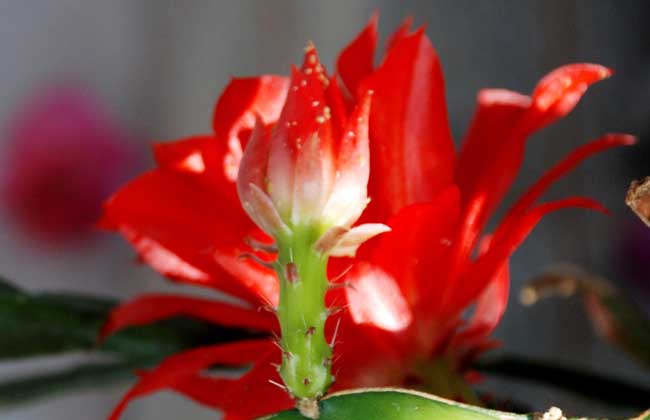
The Christmas cactus (Schlumbergera) is a plant of the genus Schlumbergera in the cactus family. It gets its name because the joints of its stem segments connect in a shape resembling a crab's claw. It has extremely high ornamental value and is often grown as an indoor ornamental plant. Moreover, indoor Christmas cacti can have their flowering period regulated by controlling light. Cultivated varieties include bright red, pink, apricot yellow and pure white, and so on. Now let's take a look at how to water a Christmas cactus!
The Growing Environment of the Christmas Cactus
The Christmas cactus is commonly cultivated in tropical and subtropical regions around the world. It likes a cool, warm environment, is fairly drought-tolerant, and fears the high heat of summer; it is also fairly shade-tolerant. The optimum growing temperature is 20-25°C, and the temperature during the dormant period is around 15°C. It prefers a loose substrate rich in organic matter with good drainage and aeration. The Christmas cactus is a short-day plant; under conditions of 8-10 hours of sunlight per day, it can bloom in 2-3 months, and its flowering period can be regulated by controlling light.
How to Water a Christmas Cactus?
Watering a Christmas cactus should vary with the seasons. Although winter is the growing season, watering should not be excessive due to low temperatures; it is enough to keep the potting soil moist, generally watering once every 4-5 days. In summer, temperatures are high, and although it is shaded, the potting soil still dries out easily, so water generally once every 1-2 days. In summer, you can often spray water on the leaves, which both prevents heatstroke and lowers the temperature and helps the plant grow well. In spring and autumn, water once every 2-3 days.
How to Grow a Christmas Cactus
1. Choosing a pot: For a Christmas cactus you can use a clay pot, plastic pot, porcelain pot or ceramic pot, but a clay pot is best. To coordinate with home decor, you can use plastic pots in varying colors for cultivation. It is best to choose a pot whose diameter is 2/3 of the plant's crown diameter.
2. Soil mix: The Christmas cactus likes fertile, loose soil. At home you can use 3 parts garden soil, 4 parts leaf mold, 3 parts sand, or 4 parts peat soil, 2 parts leaf mold, 2 parts sand, 2 parts perlite (or volcanic rock). After mixing the soil, it is best to sterilize it at high temperature before use, or you can also sterilize it by exposing it to the sun.
3. Timely fertilizing: The Christmas cactus likes fertilizer; when fertilizer is sufficient, it has more branches and more flowers. Start topdressing after the leaf buds emerge. During the growing season, apply once every 15-20 days a topdressing of thoroughly decomposed 10-fold liquid fertilizer mixed with an equal amount of 1000-fold monopotassium phosphate solution or 1000-fold “Huaduoduo” general-purpose fertilizer. In late autumn, the number of fertilizations should be reduced, and fertilizing should stop when the temperature is below 10°C. Do not fertilize when summer temperatures are high or winter temperatures are low.
4. Light control: The Christmas cactus fears hot, high temperatures, and dislikes exposure to the sun and rain, so in summer it should be placed in a ventilated spot indoors or on a balcony on the shady side. After the Start of Autumn, the Christmas cactus gradually recovers its growth, and it should be placed in a spot with 50% light, such as a shade shed or a sunny window, to receive light and promote flower bud differentiation. As the weather turns cooler, gradually increase the light, and from late autumn to winter it should be given sufficient light.
5. Flowering period regulation: The Christmas cactus is a short-day plant, and the purpose of controlling the flowering period can be achieved by regulating the length of light exposure. To force flowering, begin short-day treatment 60 to 70 days before the desired flowering time, with 8 hours of natural light per day, and shade treatment for the rest of the time. The shading must be continuous and must not be interrupted; generally, flower buds can be seen after 20 days.