How to propagate Christmas cactus? A detailed guide to common propagation methods
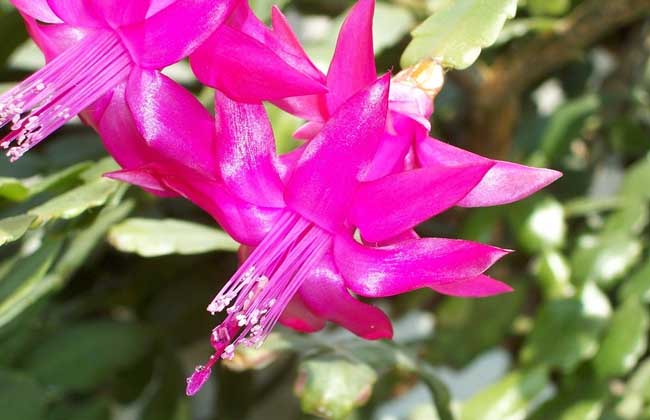
Christmas cactus is an epiphytic succulent plant of the genus Schlumbergera in the cactus family. It is a common ornamental plant and is cultivated in parks and flower nurseries throughout China. It is often grafted onto Hylocereus undatus or other rootstocks to obtain vigorously growing plants. Propagation methods include cutting propagation, seed propagation and grafting propagation, with grafting propagation being the main method in production. Let's take a look at the propagation methods for Christmas cactus below!
Cutting propagation of Christmas cactus
For cutting propagation of Christmas cactus, select robust, thick stem segments and cut off 1 to 2 segments, place them in a cool place for 2 to 3 days, and after the cut surface is slightly dry, insert them into a sand bed. The substrate is peat and sand at a ratio of 4:1, and the bed temperature is 15 to 20°C. The humidity of the bed should not be too high, so as to avoid the cut surface becoming too wet and rotting. Roots begin to form 2 to 3 weeks after insertion, and they can be potted 4 weeks later.
Seed propagation of Christmas cactus
Christmas cactus only produces fruit after artificial pollination. Indoor pot sowing is often used. The suitable germination temperature is 22 to 24°C. The sowing substrate is a mixed soil of peat, leaf mold and coarse sand, and it needs high-temperature sterilization before sowing. After sowing the seeds, cover the pot opening with glass to maintain soil moisture in the pot. They germinate 5 to 9 days after sowing. The seedlings grow slowly and should be managed carefully.
Grafting propagation of Christmas cactus
1. Grafting time: The grafting time can be in late spring and early summer, or late summer and early autumn, but grafting in late spring and early summer is best. In southern regions, mid-May is most suitable, as this is the peak growing season for both Christmas cactus and cactus, allowing ideal scions and rootstocks to be selected. In addition, the temperature is suitable at this time, the compatibility between scion and rootstock is strong, rot is unlikely, and the survival rate is relatively high.
2. Rootstock selection: For the Christmas cactus grafting rootstock, select a one-year-old cactus branch that is strip-shaped, not too thick and fleshy but vigorously growing, and free of pests and diseases, with a length of 8 to 12 cm. Remove it from the parent plant, cut the lower end into a flat opening, insert it into sandy loam, and cultivate it for 2 to 3 months. Once it has survived, it can be used as a grafting rootstock.
3. Scion selection: For the Christmas cactus grafting scion, select a robust mother Christmas cactus plant, and from it choose a relatively tender top branch of the current year that has segments as the scion, with a length of 3 to 4 cm (if the scion is too long, its growth vigor after sprouting will be weaker). Use a blade sterilized with alcohol to cut both sides of the lower part of the scion into a wedge shape, with a cut length of about 0.8 to 1.2 cm.
4. Grafting method: First cut both sides of the base segment of the scion diagonally into a duck-bill shape. The cut surface length is 1.5 to 2.5 cm, and it is best to make the cut in one stroke to help survival. Then make a vertical cut at the top of the rootstock, with the width and depth of the cut slightly larger than the cut surface of the scion, quickly insert the prepared scion into the rootstock cut and secure it. Finally, place the grafted pot in a cool, ventilated place sheltered from wind and rain, and survival can be expected in about 20 to 30 days.