What are the cultivation methods and precautions for the black prince rubber tree?
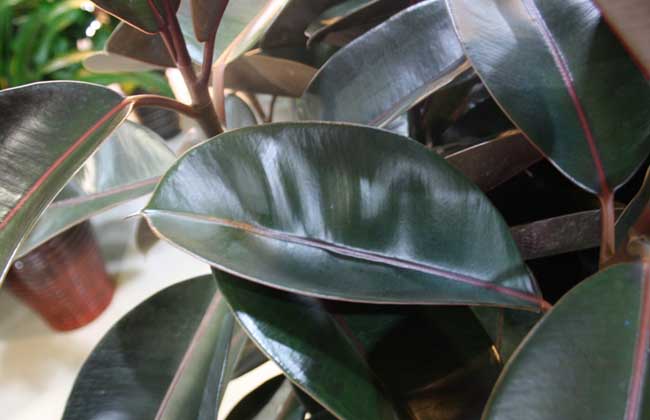
The black prince rubber tree is also known as the Indian rubber tree, rubber tree, and so on. It originated in India, Malaysia, and other places, and is now widely cultivated across our country. It is a common ornamental tree and street tree in gardens and is extremely well suited for indoor decorative arrangements. Small and medium-sized plants are often used to beautify living rooms and studies, while medium and large plants are suitable for placement on both sides of the entrance halls of large buildings and in the center of lobbies. Let's take a look below at how to care for a black prince rubber tree!
Growth habits of the black prince rubber tree
The black prince rubber tree likes a hot, humid environment with plenty of sunlight. The suitable growing temperature is 20-25°C. It dislikes direct sunlight. It can also tolerate shade but not cold, and the safe overwintering temperature is 5°C. It tolerates dry air. It dislikes clayey soil, does not tolerate poor, thin soil or drought, and prefers loose, fertile, well-drained, slightly acidic soil.
Propagation methods for the black prince rubber tree
1. Cutting method: The cutting time is in late spring and early summer, and it can be combined with pruning. For cuttings, one-year-old semi-lignified middle branches are mostly used, and the wounds should be sealed promptly with clay or plant ash. The standard for the length of the cutting is to retain 3 buds, cut off the lower leaf, bring the upper two leaves together, and tie them securely with thin plastic string. Then insert them into a cutting bed with plain sand or vermiculite as the medium. After inserting, keep the cutting bed fairly humid, but do not let it become waterlogged. The suitable temperature is 18-25°C. Frequently sprinkle water on the ground to increase air humidity, and do a good job of shading and ventilation. Roots will form in about 2-3 weeks.
2. Layering method: Choose two-year-old branches of appropriate size, good development, and firm tissue. At the part where soil is to be wrapped, make a light ring-shaped girdle about 1 cm wide, and apply 30-50 ppm naphthaleneacetic acid solution. Then use wet soil or a moss mixture or vermiculite that has absorbed enough water to wrap the girdled part, bind the outside with plastic film, tie the lower end tightly, and leave an opening at the upper end to allow ventilation and watering. Pay attention to care. If layered in June, roots will form in July-August. Once rooted, it can be cut off and potted.
Cultivation methods for the black prince rubber tree
1. Reasonable fertilization: Fertilization of the black prince rubber tree should be mainly nitrogen fertilizer, with a small amount of phosphorus and potassium fertilizer added. You can use diluted fermented soybean water or bean cake water to water the roots; a concentration of 20% is generally sufficient. Inorganic fertilizers such as urea can also be used, but they should be applied little and often, not in strong doses, to avoid burning the roots.
2. Soil mix: When potting the black prince rubber tree, it is best to use 1 part leaf mold, 1 part garden soil, and 1 part river sand, plus a small amount of base fertilizer, to make the growing medium. It grows very quickly in a hot, humid environment, producing one leaf every 5-10 days. During this period, sufficient fertilizer and water must be ensured.
3. Light management: The black prince rubber tree likes strong sunlight. From spring to autumn, throughout the entire growing season, it should be placed in sunlight for cultivation, and in winter it should also be placed in a brighter spot. However, it can also tolerate shade and grows fairly well indoors under low light.
4. Temperature control: The suitable growing temperature for the black prince rubber tree is between 20-30°C, and it grows most luxuriantly at 25-30°C. Below 10°C, growth is poor, and below 0°C, it is prone to cold damage. Indoors, if the black prince rubber tree is exposed to cold wind, yellowing leaves and leaf drop will occur.
5. Timely watering: The black prince rubber tree likes water, but it does not tolerate waterlogging. If waterlogging occurs, the roots cannot get oxygen, and yellowing leaves and leaf drop will appear. Watering should follow the principle of “water when dry, stop when wet”; do not water too frequently. In winter, it is best to overwinter it indoors, generally watering once a week. In summer, decide based on the weather and the moisture of the potting soil!
6. Reasonable pruning: To make the black prince rubber tree grow evenly and ensure a good plant shape, it should be pinched back when the seedling reaches a height of 50-80 cm, to encourage side branches to sprout. After the side branches grow out, choose 3-5 branches, and thereafter shorten the side branches once a year. After 2-3 years, a larger plant with a complete, rounded, and full shape can be obtained.
7. Pest and disease control
① Leaf spot disease: If leaf spot disease is found on the black prince rubber tree, you can spray the leaves with an 800-fold dilution of chlorothalonil or carbendazim, once a week, and it can basically be cured after 2-3 consecutive treatments.
② Anthracnose: Anthracnose is not easy to notice in the early stage. At first, there are only small brown spots on the leaves. If not treated in time, they will rapidly expand into patches, making the plant lose its ornamental value. Therefore, once this disease is found, immediately spray the leaves with a 400-fold dilution of thiophanate-methyl, once a week, for 3 consecutive treatments, and it can generally be cured.
③ Root rot: Root rot is generally caused by infection by Rhizoctonia or Pythium in the soil, or by physiological disease. For bacterial infection, you can drench the roots with a 500-fold dilution of dexon, dijunling, or quintozene. Physiological disease is mostly caused by soil that is too sticky and heavy or by watering too much and too often, so the roots cannot breathe. You can replace the soil with well-drained soil.