Rose Pruning Tips: You're Only a Pro Once You Can Tell Seedlings from Branches
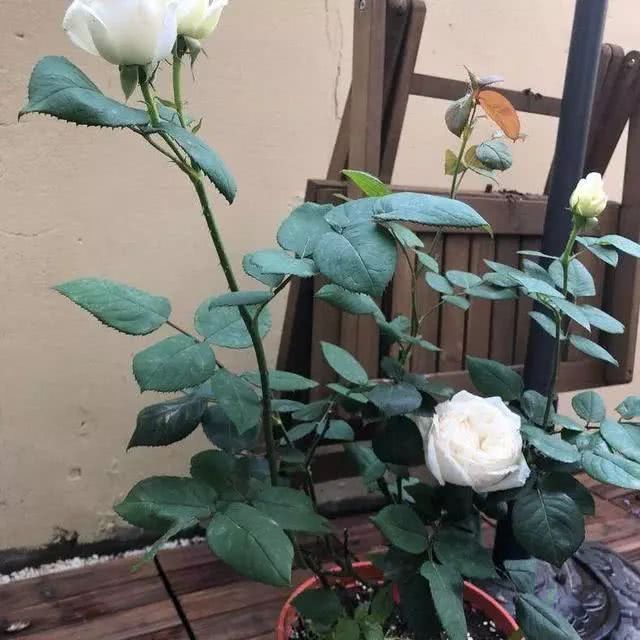
When growing roses, you'll always run into fellow gardeners asking how to prune. Although I've written about it before, many gardeners are still a bit unclear about pruning blind branches, and which ones exactly to cut is also a blur. So with rose pruning, if you learn to select branches, you can consider yourself a "pro."
The premise is that your rose isn't a bare-stemmed commander with no troops, but one with a fair number of branches. Once you have main stems and stalks, what grows from those main stems isn't just side branches, but also weak branches and blind branches, and what we need to clear away are the weak branches and blind branches.
1. Telling branches apart
For some of the sturdier side branches, there's no need to prune them, let them grow. But for some weak branches, they don't bloom easily and also steal nutrients, so they need to be pruned off, and that way nutrients go to the main stems and some strong side branches for blooming.
For some blind branches and weak branches that only grow leaves and never bloom, you need to know how to tell them apart. So here comes the question from beginners: do I need to prune a small seedling I just bought? No, you don't need to prune right away. You can wait until the seedling's condition stabilizes and it starts growing, then clear away these weak branches.
Some newly acquired seedlings may be rather thin and weak, so at this point you should first build up the seedling. After it settles in, use a rose-specific organic liquid fertilizer, dilute it 500 times and water the roots, once a week. Small seedlings grow fast and their stems become sturdy.
Then once it's growing, carry out the pruning step. A weak branch isn't necessarily a blind branch, but a blind branch is definitely very thin and weak, so as you prune, you'll gradually learn to tell them apart.
As for how to cut? Just cut right at the base of the branch. The base of the rose is best kept well ventilated and airy, so it's less prone to disease. You can also leave two leaves, as long as there's good airflow.
For cutting flowers, I generally first check whether there are bud points on the branch below the flower. I usually choose to cut 1-2 cm above a bud point. This is easy to tell. I have a habit: as I cut, when I see the flower has bloomed about enough, I choose to cut it off, because blooming consumes nutrients. Especially when there are still unopened buds, I'll choose to cut off the flowers that have already opened, so the other buds have nutrients to bloom.
2. Telling seedlings apart
Next, let me state clearly which ones need pruning. For a newly bought small seedling, some branches may be very thin. In this situation, don't prune. Wait until it grows sturdy and bigger, then you can cut off blind branches that already have black spots.
For seedlings you've been growing for over a year, proper pruning is needed. For those with few buds, check for blind branches and weak branches and prune them. Then there's shaping the plant. A rose's shape is best not lopsided with one side higher; branches being even in height is ideal. First, the shape won't look strange, and second, nutrients will be distributed evenly, which benefits flower growth.
What to do with the cut branches? I reckon quite a few gardeners feel it's a waste to throw them away, so let's make the most of them. Pick out the somewhat sturdier branches for cuttings. Throw away the ones that are too fresh and tender or too thin and short, or use them for composting. With so many cut branches, if you're a beginner it's a chance to practice, and also hone your technique. If you're already experienced, you can just add lots of small seedlings, and grafting after they grow bigger is also a good choice.
??????????
END??????????
Thanks everyone for reading, and thanks to my followers for your attention
If you think the article is good, share it with your friends too
Don't forget to give mea likeoh
Reply: plant name (such asMoney Tree): to see the growing method