How to Grow a Rubber Plant? Detailed Guide to Care Methods and Precautions
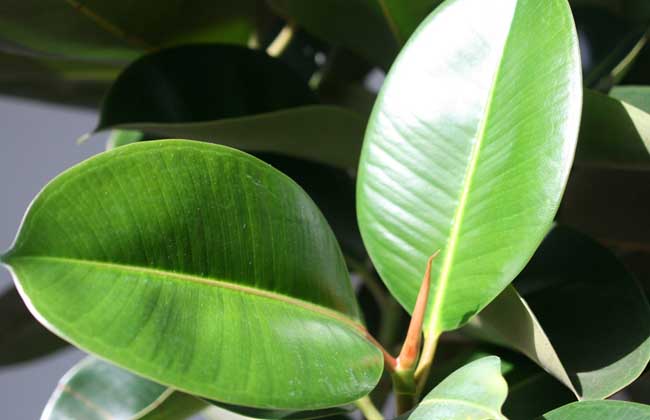
The rubber plant is a well-known potted foliage plant, also called rubber tree, Brazilian rubber tree, etc. It is a large tree of the genus Ficus in the mulberry family, with high ornamental value, and is extremely suitable for indoor beautification and decoration. Small and medium-sized plants are often used to beautify living rooms and studies, while medium and large plants are suitable for placing on both sides of the entrance halls of large buildings and in the center of lobbies. Now let us take a look at the rubber plant's care methods and precautions!
Growth Habits of the Rubber Plant
The rubber plant is native to Brazil and is now widely cultivated in the tropical regions of Asia. In China, it is cultivated in Taiwan, China, southern Fujian, Guangdong, Guangxi, Hainan and southern Yunnan, with more planting in Hainan and Yunnan. It likes a high-temperature, humid environment with plenty of sunlight. The suitable growth temperature is 20-25°C, and it dislikes direct sunlight. It can also tolerate shade but not cold, and the safe overwintering temperature is 5°C. It tolerates dry air. It dislikes clayey soil and cannot tolerate barrenness or drought. It prefers loose, fertile and well-drained slightly acidic soil.
Propagation Methods of the Rubber Plant
1. Cutting method: The cutting time is in late spring and early summer, and it can be done together with pruning. For cuttings, one-year-old semi-lignified middle branches are mostly used, and the wounds should be sealed promptly with clay or plant ash. The length of the cutting is based on retaining 3 buds, cut off the lower leaf, fold the upper two leaves together, and tie them with thin plastic rope. Then insert them into a cutting bed with plain sand or vermiculite as the substrate. After insertion, keep the cutting bed highly humid, but do not let water accumulate. The suitable temperature is 18-25°C. Frequently sprinkle water on the ground to increase air humidity, and do a good job of shading and ventilation. Roots can form in about 2-3 weeks.
2. Layering method: Select two-year-old branches of appropriate size, well developed and with solid tissue. Make a light ring-shaped cut about 1 cm wide at the part where soil is to be wrapped, and apply 30-50 ppm naphthalene acetic acid solution. Then use wet soil or a moss mixture or fully water-absorbed vermiculite to wrap the ring-cut part, tie it on the outside with plastic film, tie the lower end tightly, and leave an opening at the upper end to facilitate ventilation and watering. Pay attention to care. Layering in June will root in July-August. After rooting, it can be cut off and potted.
Rubber Plant Care Methods
1. Temperature: The best temperature for the rubber plant is 20-25°C. Even above 30°C it can still grow well, but in winter, if the temperature is too low, the rubber plant will drop a large number of leaves, and its cold resistance is very poor. In northern China, it needs to overwinter in a greenhouse.
2. Light: It is indeed true that sunlight is the food of plants. In rubber plant care methods, sunlight is also a treasure. Giving it sufficient sunlight will let it grow vigorously. From May to September, provide appropriate shading.
3. Fertilization: The presence of fertilizer is like calcium supplementation, which can strengthen its “physical health.” Fertilization is also one of the key points in rubber plant care methods. It can reduce the occurrence of spots and make the leaves brighter. Simply using nitrogen fertilizer is enough. Remember to stop fertilizing in winter.
4. Pruning: When spring arrives, it is time to prune the rubber plant. Cut off the forked branches inside the crown, inward-growing branches and thin weak branches to maintain internal ventilation, good light transmission and the overall shape. Usually, in rubber plant care methods, the pot must be changed once every 2 years, adding leaf mold and other materials for reconfiguration. It prefers loose and well-drained loam.
5. Soil: The rubber plant likes fertile, loose, slightly acidic soil. The potting soil should preferably be prepared with 4 parts leaf mold, grass ash soil, about 1 part river sand and a small amount of base fertilizer.
6. Watering: In the high-temperature summer season, the rubber plant grows relatively fast and should be given plenty of fertilizer and water, but avoid water accumulation in the pot. After autumn begins, gradually reduce watering to promote solid plant growth and help it overwinter.
Precautions for Rubber Plant Care
1. The suitable growth temperature for the rubber plant is 25-30°C. In winter, if it is below 3°C, the leaves will turn yellow and fall off. Therefore, in winter it should be placed indoors in a sunny place, maintaining a room temperature above 10°C. When it exceeds 35°C in summer, the plant should be moved to a cool and ventilated place for care, and water should be sprayed in a timely manner to lower the temperature.
2. The rubber plant is a plant of the mulberry family, and the whole plant contains latex. Therefore, after each pruning, immediately block the cut with clay or apply charcoal powder to prevent excessive sap flow from causing dehydration and death.
3. During the seedling stage, the rubber plant needs to have the direction of the pot changed regularly to avoid the plant growing leaning to one side, which would make the plant shape small and improper and affect its appearance.
4. Generally, after the rubber plant becomes a mature seedling, because the roots grow larger and larger, the soil becomes compacted, hindering soil aeration and causing the rubber plant to turn yellow, and in severe cases it may die. It is advisable to change the pot once every spring before new buds grow. Loosen the soil once every 15-20 days until it returns to normal growth.
Ornamental Value of the Rubber Plant
1. Ornamental value: The rubber plant has large, glossy leaves and remains evergreen all year round. It is a large shade-tolerant foliage plant. Whether placed in ordinary homes in halls and corridors, or used to decorate lobbies in hotels and restaurants, potted rubber plants are excellent decorative materials, and they have strong growth ability and do not require much care.
2. Air purification: In places with sufficient sunlight, the rubber plant can carry out vigorous photosynthesis and transpiration, regulating air humidity and oxygen content. In addition, the rubber plant has a unique function of purifying dust, and can also absorb formaldehyde among volatile organic compounds and harmful gases in the air such as carbon monoxide, carbon dioxide and hydrogen fluoride, purifying stale indoor air.
3. Feng shui effect: In home feng shui, the rubber plant is related to family harmony and the cultivation of interpersonal connections. The placement of the rubber plant will affect the family's fortune and prospects. Placing the rubber plant in an appropriate indoor position has the effect of inviting good fortune and promoting prosperity, and dissolving indoor yin energy and negative energy.
What to Do If the Rubber Plant Drops Leaves?
1. Insufficient light: Insufficient light is one of the reasons the rubber plant drops leaves. The rubber plant is a sun-loving and shade-tolerant plant. Placing the rubber plant in a dark place for a long time where it cannot receive sunlight can easily cause it to drop leaves. Place the rubber plant in a sunny place and maintain good light. In winter, it is best if it can receive sunlight all day.
2. Too low temperature: Too low temperature is also a cause of leaf drop in the rubber plant. The rubber plant likes high temperature, high humidity and sunny places, and the suitable growth temperature is 20-25°C. Especially in winter, generally when the temperature is below 10°C, the rubber plant will begin to drop leaves. At this time, the rubber plant needs to be moved indoors or to another place with a higher temperature for care, but note that it should have sunlight.
3. Improper watering: Watering the rubber plant too frequently or not watering for a long time can both cause leaf drop. During the growth period, the rubber plant must be watered frequently, especially in the hot midsummer season. Because evaporation is high, it is necessary not only to water from the roots, but also to spray the leaves frequently. However, if the potting soil of the rubber plant is too wet, the roots are prone to rot, so it must be watered only when the potting soil is dry.
4. Pest infestation: The rubber plant sometimes also has pest problems. Red spider mites on the leaves and scale insects on the branches and leaves can all cause leaf drop in the rubber plant. When the rubber plant drops leaves, check whether it is a pest problem and deal with it in a timely manner.
Pruning Methods for the Rubber Plant
1. Pruning season: Pruning the rubber plant should pay attention to “prune branches in winter, control side branches in summer.” That is, in winter, heavily prune strong trees and lightly prune weak trees, with the focus on removing upright and strong competing branches from the base. In summer pruning of the rubber plant, strongly control vigorous branches, control the strong and retain the weak, adjust the tree vigor in a balanced way, and master the principles of cutting back strong side branches, heavily pruning strong branches, lightly pruning weak branches and retaining more small branches, so as to highlight the main trunk and promote faster tree growth.
2. Pruning height: The pruning cut of the rubber plant should be smooth, and cracking must be strictly prevented. The stubble height should preferably be 1-2 cm. Too high or too low will affect wound healing and tree growth. The best pruning seasons for the rubber plant are early spring, late autumn and winter. In early spring, it is best before sap flow. If pruning is done when the tree is sprouting, the tree body will transpire quickly, lose water and consume more nutrients, which is not good for tree growth. If pruning the rubber plant in summer, be careful not to prune branches on rainy days, so as to avoid wound soaking and disease infection.
3. Pruning techniques: In the shaping and pruning of the rubber plant, sometimes it is also necessary to highlight the growth of the main trunk or main branches and remove overly dense branches or branches that affect the shape. The commonly used shaping and pruning methods to highlight the main trunk and main branches include bud removal and branch thinning. That is, remove the buds that have just begun to sprout, so as to inhibit the growth of side branches. The principle is to eliminate the growth of side branches in the budding state so that nutrients are concentrated for the growth of the main branches. That is, use pruning shears to cut off branches from the base. This is often used to thin overly dense branches. Branch thinning is a remedial measure for bud removal, that is, because bud removal was not timely, side branches have already formed, and in order to strengthen the growth of the main trunk or meet shaping needs, some excess side branches are removed.
4. Pruning and care: After pruning the rubber plant, in order to prevent excessive latex loss from the cut and affect survival, the wound should be coated with plant ash in a timely manner. Insert the treated cuttings into a cutting bed with river sand or vermiculite as the substrate. After insertion, keep the cutting bed highly humid, and frequently sprinkle water on the ground (but do not let water accumulate) to increase air humidity. At 18-25°C and under semi-shade conditions, roots can form in about 2-3 weeks.
Four-Season Management of the Rubber Plant
1. Spring management: When the temperature stabilizes at around 15°C each spring, change the pot, and prune appropriately before changing the pot. In spring, it should be placed in a place with light, keep the potting soil moist, and frequently sprinkle and spray water around it to increase air humidity. Young plants can begin to be fertilized after new leaves emerge. When the temperature is relatively high in late spring, move it to a semi-lit location or an indoor place with scattered light for placement and cultivation.
2. Summer management: The rubber plant tolerates high temperature and strong sun, but when the light is too strong, the leaf color easily loses its luster, which is not good for viewing. The rubber plant can be placed in a bright indoor place. Indoor places with weaker light are not good for its growth. Because the rubber plant has many and large leaves, it consumes a lot of water. It should be watered in a timely manner to keep the potting soil moist, and at the same time spray its leaves and surroundings more to meet its air humidity requirements.
3. Autumn management: In autumn, the potted plant should be moved to a sunny windowsill or balcony for cultivation, keep the potting soil moist, and when the temperature is relatively high at noon, sprinkle and spray water around it and on the leaves to increase air humidity. In autumn, in order to enhance its cold resistance, it can be left outdoors for a period of hardening at low temperature, but it must not be exposed to frost. Before frost, it should be moved indoors to a sunny place in a timely manner.
4. Winter management: The rubber plant is not cold-resistant and can tolerate short-term low temperatures of 0°C. But the indoor temperature should be kept at around 5°C. At this time, the rubber plant's growth is in a stagnant state, and sufficient light should be ensured, with the potting soil kept moist and slightly dry. Too wet potting soil easily causes root rot. When the temperature is relatively high at noon, sprinkle and spray water around it and on the leaves several times. When the indoor temperature is kept above 15°C, the rubber plant can grow normally, and care can refer to spring.