How to Grow and Care for the Indian Rubber Tree
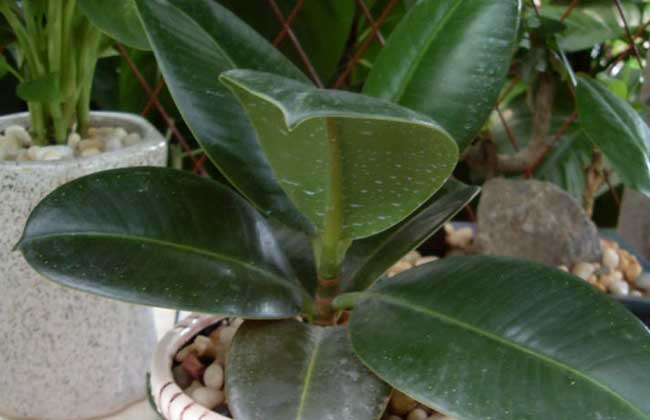
The Indian rubber tree (Ficus elastica) is an evergreen tree in the mulberry family (Moraceae), genus Ficus, native to India and widely cultivated across China. Its leaves are large and glossy, and it stays lush green in all four seasons, making it a common foliage plant. Grown in pots, it can be placed in the living room or bedroom as a decorative accent, and it is often used to beautify the environment in hotels and restaurants. In warm regions it can be grown outdoors as a street tree or landscape tree. Let us take a look at how to grow the Indian rubber tree!
Growing Habits of the Indian Rubber Tree
The Indian rubber tree is a tropical tree species, native to India, Myanmar, Sri Lanka and other places. It likes to grow in warm, humid environments with plenty of sunlight and is not cold-hardy; in relatively cold environments the Indian rubber tree struggles to survive. In addition, the Indian rubber tree quite likes fertilizer, so when growing it, it is best to choose fertile soil for planting.
Propagation Methods for the Indian Rubber Tree
The Indian rubber tree is mainly propagated by cuttings, and layering can also be used. For cutting propagation of the Indian rubber tree, May to September is suitable. When taking cuttings, select 1- to 2-year-old Indian rubber tree branches and cut them into sections of 3 to 4 nodes each. Note that when taking cuttings, you should immediately apply slaked lime powder or plant ash to the cut surface of the severed branch and press firmly with your thumb for three to five minutes to prevent the loss of sap. Each branch section should keep one to two leaves to allow for better rooting. In addition, the cutting temperature is best kept above 15°C.
How to Grow the Indian Rubber Tree
1. Temperature: The best temperature for the Indian rubber tree is 20-25°C, and it can even grow well above 30°C. However, in winter, if the temperature is too low, the rubber tree will drop a large number of leaves, and its cold tolerance is very poor. In the northern regions of China, it needs to overwinter in a greenhouse.
2. Light: It is true that sunlight is the food of plants. In the care of the Indian rubber tree, sunlight is also a treasure; giving it plenty of sunlight will let it grow strong and healthy. From May to September, provide appropriate shade.
3. Fertilizing: Fertilizer is like calcium supplements, strengthening its “health”. Fertilizing is also one of the key points in growing the Indian rubber tree; it can reduce the occurrence of mottling and make the leaves more lustrous. Using nitrogen fertilizer alone is fine, but remember to stop fertilizing in winter.
4. Pruning: When spring arrives, it is time to prune the Indian rubber tree. Cut away the forked branches inside the canopy, inward-growing branches and thin, weak branches to keep the interior ventilated, with good light penetration and an overall good shape. In the usual care of the Indian rubber tree, it must be repotted once every 2 years, with materials such as leaf mold added and the mix prepared anew; it prefers loose, well-drained loam.
5. Soil: The Indian rubber tree likes fertile, loose, slightly acidic soil. The potting soil should preferably be prepared with 4 parts leaf mold, leaf ash soil plus about 1 part river sand and a small amount of base fertilizer.
6. Watering: In the hot summer season, the Indian rubber tree grows quickly and should be given plenty of fertilizer and water, but avoid waterlogging in the pot. After autumn begins, gradually reduce watering to promote solid plant growth and help it overwinter.