How to grow climbing roses? A detailed guide to cultivation methods
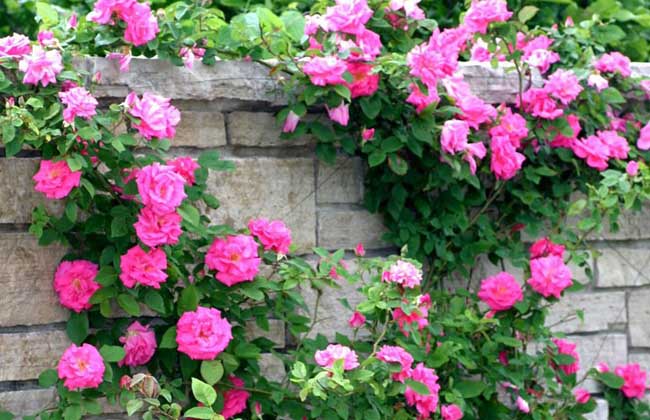
Climbing roses are also known as vine roses, climbing roses, rambling roses, Climbing Peace, and so on. They are deciduous climbing shrubs of the genus Rosa in the family Rosaceae, distinguished from common shrub roses by their elongated climbing branches and densely clustered blooms. They are world-famous ornamental plants with high cultivation value. Let us take a look at climbing rose cultivation methods below!
Growth habits of climbing roses
Climbing roses are highly adaptable and relatively cold-tolerant. They enter dormancy when winter temperatures fall below 5°C. If summer heat persists above 30°C, most varieties bloom less and decline in quality, entering a semi-dormant state. Generally, varieties can tolerate low temperatures of -15°C. Cultivation requires fertile, loose, slightly acidic soil rich in organic matter, but they tolerate a wide range of soil conditions. The ideal relative air humidity for cultivation is 75-80%, though slightly drier or slightly more humid conditions are also acceptable. They have a characteristic of continuous blooming and require good air circulation and a pollution-free environment.
Propagation techniques for climbing roses
Climbing roses are difficult to propagate from cuttings, so asexual propagation methods such as grafting are commonly used. For grafting propagation, it is best to use thornless roses as rootstock, because wild roses can adapt to harsh environments and take root easily. Stem, bud, and root grafting are all possible. For stem grafting, the rootstock should first be stored in sand. Bud grafting can be done in all four seasons, taking buds and grafting them at any time, commonly using the U-shaped grafting method.
Climbing rose cultivation methods
1. Soil conditions: When planting climbing roses, choose fertile, loose soil with good drainage. The pot for growing roses should have holes in the bottom, with some crushed stone placed inside to maximize drainage capacity. Climbing roses are not strict about soil requirements, but slightly acidic soil rich in humus is best.
2. Light requirements: Climbing roses prefer a sunny environment with good air circulation. Never place climbing roses in a dark and damp spot for cultivation. To avoid direct strong light, they can be temporarily placed in a shaded area. Pay special attention to shading during the flowering period, otherwise the flowers are prone to drying out.
3. Temperature conditions: Climbing roses like to grow in warm environments but fear intense heat. Therefore, when cultivating climbing roses in summer, appropriate shading is needed, and during extreme heat they can be moved indoors. The most suitable temperature is 22-25°C.
4. Water requirements: Climbing roses prefer warm and humid environments, and an air humidity of 75-80% is most suitable for cultivation. At the same time, climbing roses can tolerate mild drought. Therefore, during cultivation, basically follow the principle of not watering until dry, and watering thoroughly when you do. The timing and amount of watering need to be carried out according to the specific dryness of the soil in the rose pot.
5. Reasonable fertilizing: Fertilizing is also an important part of the climbing rose cultivation process. After May comes the peak growing season for roses. Every 10 days, topdressing should be applied once. There is no need to specially purchase fertilizer; decomposed and fermented fish juice, vegetable leaf juice, etc. can be used, with a fertilizer-to-water ratio of about 3:7. Fertilizing continues until November.
6. Timely pruning: Climbing roses have long vines. Letting them grow freely not only results in no shape but also affects growth and blooming, so they need to grow attached to a pre-made support frame. Therefore, one of the tasks of shaping and pruning is to let them grow well on a pre-arranged support frame according to the needs of garden landscaping, so as to form a unique ornamental shape and achieve the ideal landscape effect.
7. Flowering period control: Climbing roses are suitable for planting in both northern and southern regions of China. In North China, they generally begin to sprout in mid-March, unfold leaves in late March, first bloom in mid-May, and multi-flowered varieties can bloom repeatedly until mid-November, gradually losing leaves after frost. Multi-flowered varieties set fruit after the first bloom, and the fruit turns orange or red by November.