Do Cacti Have Leaves? Read This and You'll Understand
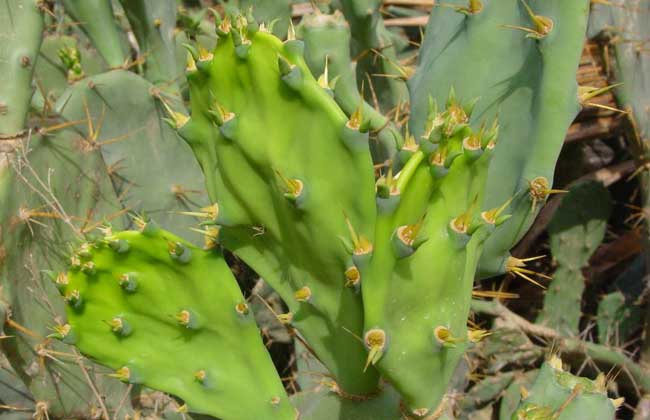
Cactus is also known by other names such as Xianbazhang, Guanyinzhang, Bawang, and Huozhang. It is native to the tropical regions of North and South America, the tropical mainland of Asia, and some nearby islands, with some growing in forests. It loves strong light, tolerates heat, drought, and poor soil, has tenacious vitality, requires minimal care, and is very suitable for cultivation on home balconies. Now let's take a look at whether cacti have leaves!
Do cacti have leaves?
Cacti do have leaves. Although cacti have leaves, in order to adapt to the dry, rain-scarce desert environment, they have continuously changed their form over the long ages, and the leaves gradually disappeared, turning into fleshy spines or dense fine hairs, minimizing water transpiration to the greatest extent. The leaves of the cactus have degenerated, and it relies on its stem to produce nutrients. The stem is green and performs the function of leaves, carrying out photosynthesis in sunlight. So the spines of a cactus evolved from leaves, and the spines of a cactus can absorb nutrients from the air.
Do cacti bloom?
Cacti do bloom. All cactus plants can bloom, and many species can bloom quickly as long as they are cultivated properly. The flowers usually grow on the areoles, generally blooming in spring. Cacti have a characteristic when blooming, namely that they generally bloom on mature flattened stems that have been fully exposed to sunlight. Except for true blue and black, flowers come in every color, and they are endlessly varied. The edible cactus of Mexico generally produces white, yellow, or orange-yellow flowers. Many kinds of cacti can bloom in large numbers at one time, creating a very spectacular scene.
Do cacti bear fruit?
Cacti do bear fruit. The fruit of the cactus is called cactus fruit, which is the fruit of plants in the Opuntia genus. The flesh contains abundant trace elements, protein, amino acids, vitamins, polysaccharides, flavonoids, pectin, and more. The ancient book "Dictionary of Traditional Chinese Medicine" records that cactus fruit has effects such as promoting qi and blood circulation, eliminating dampness and reducing heat, and promoting tissue regeneration. Native Americans and Mexicans use cactus fruit as both food and medicine.
Are cacti poisonous?
Cacti are not poisonous, but wild cacti are poisonous. Some species of wild cacti contain toxic alkaloids, which can cause poisoning in those who eat them, and in severe cases can even endanger human life. Some species in the genera Lophophora, Ariocarpus, Ancistrocactus, Mammillaria, Trichocereus, and Stetsonia contain toxic components such as mescaline and anhalonine, which have hallucinogenic and anesthetic effects on human nerves. Edible cacti are non-toxic and are a super healthy vegetable; they can be cut from the ground and go straight to the dining table.