Are Cacti Poisonous? Understanding Cactus Toxicity Correctly
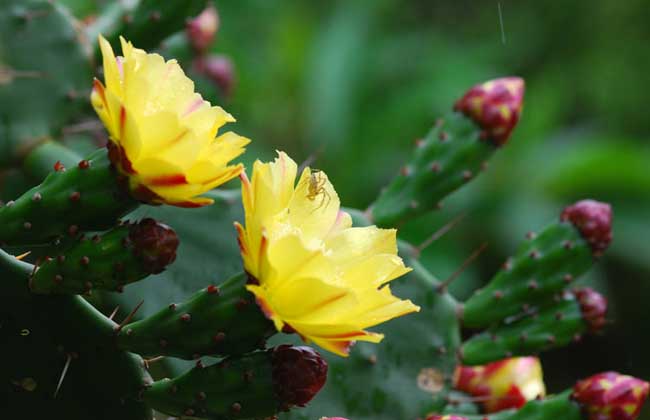
The cactus is a plant of the genus Opuntia, also known as xianbazhang, Guanyin palm, bawang, huozhang, and more. It is mainly distributed in the southern and southeastern coastal regions of the United States, the West Indies, Bermuda, northern South America, southern China, and Southeast Asia, in the arid regions of tropical and subtropical zones. Let us take a look below at whether cacti are poisonous!
Are Cacti Poisonous?
Cacti are not poisonous, but wild cacti are. Some species of wild cacti contain toxic alkaloids that can poison those who eat them, and in severe cases can even endanger human life. Some species in the genera Lophophora, Ariocarpus, Obregonia, Mammillaria, Trichocereus, and Neobuxbaumia contain toxic components such as mescaline and anhaline, which have hallucinogenic and narcotic effects on the human nervous system. Edible cacti are non-toxic and are a super healthy vegetable; they can be cut from the ground and go straight to the table.
Can Cacti Be Eaten?
Cacti can be eaten, but not all varieties. In Mexican markets, the tender stems of some flat-padded cacti are commonly sold as vegetables. Edible cacti are high in potassium, low in sodium, and low in sugar, with a sugar content even lower than that of lettuce and cucumber. They have long been a traditional food in the Americas and are an indispensable specialty vegetable and fruit in people's daily lives. People wash and chop cacti and boil them in soup, roast them over a fire, make them into pie filling, pickle fresh cacti directly, and some even use cacti to brew alcohol.
Types of Cacti
1. Prickly Pear (Opuntia): The prickly pear is a clumping succulent shrub, with the upper branches broadly obovate, obovate-elliptic, or nearly round. The flowers are radial, and the receptacle is obovate. The berry is obovoid-globose, with numerous seeds that are flat and round, slightly irregular at the edges, hairless, and pale yellowish-brown. It likes strong light, tolerates heat, drought, and poor soil, and has tenacious vitality. The optimal growth temperature is 20-30°C. The flowering period is from June to October.
2. Cochineal Cactus (Opuntia cochenillifera): The cochineal cactus grows 2-4 m tall, with numerous branches, scattered small areoles, awl-shaped leaves, nearly cylindrical flowers, an obovate receptacle, scale-like sepaloid perianth segments, red filaments, pink anthers, a pink style, and ellipsoid berries with nearly round seeds. The flowering period is from July to February of the following year. It is native to Mexico and widely cultivated in tropical regions worldwide, and has naturalized in India, Hawaii, Australia, and other places.
3. Bunny Ears Cactus (Opuntia microdasys): The bunny ears cactus, also known as golden bear's cap, is a plant of the genus Opuntia in the family Cactaceae. It is native to northern Mexico and has been introduced and cultivated in China. The plant is upright and much branched, shrub-like, 60 cm to 1 m tall. The stem segments are relatively broad elliptical or broadly elliptical, yellow-green. The areoles are densely covered with golden-yellow glochids. It blooms in summer, with pale yellow, short funnel-shaped flowers. The berry is round, red, with white flesh.
4. White Bunny Ears Cactus (Opuntia microdasys var. albispina): The white bunny ears cactus is a variety of the bunny ears cactus. The plant is shorter than the bunny ears cactus, the areoles are sparser, the glochids are white, the flower buds are red, and the flowers open pale yellow-white. The plant height is 0.5-2 m. The stems are upright, slightly woody at the base, cylindrical, and the rest are flat and paddle-shaped, with each segment obovate to elliptical and green. The flowers are solitary on the areoles, bright yellow. The berry is pear-shaped, spineless, and purplish-red.
5. Indian Fig (Opuntia ficus-indica): The Indian fig is shrubby to tree-like, with stem segments oblong to spatulate, thick and flat, blue-pink. The small areoles on the stem segments of wild plants bear 1-5 white or pale yellow spreading spines. Spines on greenhouse-cultivated plants are often reduced, absent, or replaced by white hair-like spines, and the barbed bristles fall off early. The flowers are yellow to orange-yellow. The receptacle is obovate, and the petals are oblong. The berry is obovoid-elliptic, red, purple, yellow, or white depending on the variety. It is an edible fleshy shrub or small tree.
6. Single-spined Prickly Pear (Opuntia monacantha): The single-spined prickly pear grows 1.3-7 m tall. Old plants often have a cylindrical trunk, with numerous branches that gradually narrow at the base to a stalk-like form, sparsely bearing small areoles. The areoles are round, with needle-like spines, grayish-brown short woolly hairs, and yellowish-brown to brown barbed bristles, sometimes hidden among the short woolly hairs. The leaves are awl-shaped, the flowers are radial, and the receptacle is obovate. The sepaloid perianth segments are deep yellow, the petaloid perianth segments are deep yellow, the anthers are pale yellow, and the style is pale green to yellowish-white. The berry is pear-shaped or obovoid-globose, and the numerous seeds are kidney-shaped and elliptical. The flowering period is from April to August.
7. Crab Claw Cactus (Schlumbergera): The crab claw cactus, also known as Christmas cactus or crab orchid, is 30-50 cm tall, much branched, spreading outward and drooping. The stem segments are flat, obovate, green to purplish-green, with pincer-like sharp serrations on the stem segments, and the segments connect in a chain resembling crab claws. It blooms around New Year's Day, with flower colors varying by variety, including red, orange-yellow, white, pink, and more. The petals curl backward after opening.