Key Points and Detailed Methods of Cinnamomum camphora Seedling Cultivation Techniques
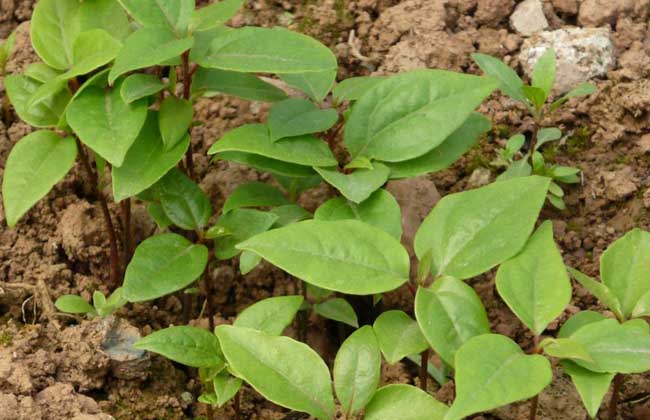
Cinnamomum camphora is an evergreen large tree of the genus Cinnamomum in the family Lauraceae, produced in the southern and southwestern provinces and regions of China, and also distributed in Vietnam, Korea and Japan. The entire plant has a camphor aroma and is resistant to harmful gases such as chlorine, sulfur dioxide, ozone and fluorine gas. It can be used to produce camphor and extract camphor oil, and its wood is a good material for making furniture. Let us take a look at Cinnamomum camphora seedling cultivation techniques below!
Growth Habits of Cinnamomum camphora
Cinnamomum camphora is mostly light-loving, slightly shade-tolerant, fond of warm and humid climates, and not strongly cold-resistant. It is suitable for growing in sandy loam and is relatively tolerant of water and moisture, but when transplanting, care must be taken to maintain soil moisture, as waterlogging easily leads to root rot and death from lack of oxygen. However, it is not tolerant of drought, barren soil or saline-alkali soil. The main root is well developed and deep-rooted, and it can resist wind. It has strong sprouting ability and tolerates pruning. Its growth rate is medium, and the tree shape is huge like an umbrella, able to provide shade and coolness.
Cuttage Propagation of Cinnamomum camphora
1. Selection of cuttings: For Cinnamomum camphora, using sprout shoots after felling, root sprout shoots from robust camphor trees, or current-year branches 20-60 cm from the ground on 2-year-old seedling-grown plants, the survival rate of cuttage propagation can reach 70-90%. Before cutting the cuttings, ring barking or ringing and softening treatment should be carried out.
2. Treatment of cuttings: After the Cinnamomum camphora cuttings are cut back, cut them into cuttings about 4-5 cm long, leaving 1 leaf at the upper part; if the leaf is relatively large, half of it may be removed. Insert obliquely on the seedbed, with a depth of half the cutting. The cutting bed is an earth bed, and the bed surface is covered with about 5 cm of well-aerated subsoil. The shade density on the seedling bed is 90%. After insertion, carry out general management, watering once daily at 11-12 o'clock.
3. Cutting time: Cuttage of Cinnamomum camphora is best carried out when the temperature is 24-26°C and the humidity is above 80%. From the perspective of growth and development, February to April is the beginning period of flowering, sprouting and shoot growth and the leaf-changing period of Cinnamomum camphora; the new leaves are tender, making it difficult to select branches, so it is not suitable for cuttage. May to October is the period of rapid new shoot growth, when current-year branches are easy to obtain, making it most suitable for cuttage. November to December has low temperatures and is not suitable.
4. Cuttage management: During the healing and rooting period of Cinnamomum camphora, the cutting bed temperature is generally controlled at 15-28°C, and the relative humidity is maintained at 80-90%. Spray once a week with 0.2% borax solution or 3% Bordeaux mixture to promote healing and rooting and prevent pests and diseases. After insertion, cover with nylon film in the early stage, and begin removing it when callus tissue forms. Depending on the cutting season, the time for turning the bed is 10-15 days, and the number of times is 2-3. When turning the bed, if cuttings with roots 3-4 cm long are found, they are immediately moved into nutrient bags for seedling cultivation.
Seed Propagation of Cinnamomum camphora
1. Seed collection. The fruit of Cinnamomum camphora falls off by itself when mature, and birds peck at it. Every year from October to December, collect the mature seeds, then store them mixed with sand, and by early March they can be germinated and sown. Each kilogram contains 7200-8000 seeds, with a germination rate of 70-80%, and the sowing rate per mu is 10-15 kg.
2. Land preparation and fertilization: Carry out the first plowing and harrowing in early winter, carry out the second plowing and harrowing before sowing, and apply sufficient base fertilizer. The base fertilizer is generally 1500-2000 kg of decomposed barnyard manure per mu, or 50 kg of ammonium bicarbonate, 50 kg of phosphate fertilizer and 150 kg of rapeseed cake, then build raised beds, generally 35-50 cm high and 1.2 m wide.
3. Germination and sowing: Camphor seeds need to be germinated before sowing. They can be soaked in warm water at 50°C. After the warm water cools, replace it with 50°C water and repeat the soaking 3-4 times, which can make the seeds germinate 10-15 days earlier. Drill sowing with a row spacing of about 20 cm, sowing rate per mu of 10-15 kg. After sowing, cover with soil and then straw or plastic film, keeping the surface soil of the seedling bed moist to facilitate seed germination.
4. Tending management: After the seedlings emerge, promptly remove the straw or plastic film. Once the seedlings grow several true leaves, thinning can begin. When the seedlings are about 10 cm tall, final thinning can be carried out. Leave about 20,000 seedlings per mu for camphor. After July, strengthen fertilizer and water management, and frequently loosen the soil and weed. Stop topdressing and irrigation in late autumn. Generally topdress 2-3 times; for the first two times, 7-10 jin of urea may be used, and for the last time, 10 kg of urea and 7.5 kg of phosphate fertilizer may be used.
5. Timely transplanting: The transplanting time is more suitable from mid-to-late March to early-to-mid April, with a transplanting density of about 1500 plants per mu. Lift and transplant immediately. After transplanting, cut the stem about 10 cm above the ground. When the buds grow to about 10 cm, the main trunk can be determined, excess branches and buds removed, and one relatively thick and strong branch retained. In winter, apply 2000 kg of barnyard manure on the bed surface. In this way, the diameter at breast height of 3-year-old seedlings can reach more than 3 cm.