Can camphor trees repel mosquitoes? One article explains the mosquito-repelling effect clearly
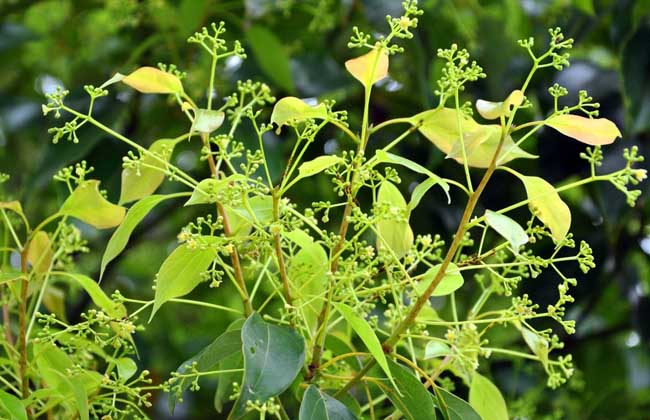
The camphor tree is an excellent landscaping tree, street tree and shade tree. It is an evergreen large tree of the genus Cinnamomum in the family Lauraceae. In China it is produced in the southern and southwestern provinces and regions, and it is also distributed in Vietnam, Korea and Japan. It is often introduced and cultivated in other countries. The whole plant has a camphor aroma, and camphor and camphor oil can be extracted from it. It has extremely high cultivation value. Let us take a look below at whether camphor trees can repel mosquitoes!
Can camphor trees repel mosquitoes?
Camphor trees can repel mosquitoes. The leaves, branches and fruits of the camphor tree can all give off this fresh “camphor odor”, and this fresh fragrance is retained permanently. It has the functions of repelling insects, preventing insects and sterilizing, so garden plantings almost never need gardeners to spray pesticides. Camphor wood also has an insect-repelling effect. The trunk of the camphor tree can be cut down to make wooden chests, and if clothes are placed inside, they will not be bitten through by insects.
What uses do camphor trees have?
1. Economic value: The roots, wood, branches and leaves of the camphor tree can all be used to extract camphor and camphor oil. Camphor is used for medicine, plastics, explosives, preservation, insecticide and so on, and camphor oil can be used as a raw material for pesticides, ore dressing, soap making, varnish and essences. The wood is of good quality, resistant to insect pests and tolerant of water and moisture, and is used for construction, shipbuilding, furniture, chests and cabinets, boards, carving and so on.
2. Landscape value: The camphor tree has dense branches and leaves, a large crown and deep shade, and a majestic tree form. It can absorb smoke and detain dust, conserve water, fix soil and prevent sand, and beautify the environment. It is an excellent tree species for urban greening and is widely used as a shade tree, street tree, shelterbelt and scenic forest, and is often used for garden ornament. When planted in clumps, groups or singly in lawns, or used as a background tree, it is majestic and spectacular. Because it also has strong resistance to a variety of toxic gases, a strong ability to absorb and detain dust, and can absorb harmful gases, it is often used in cities and industrial and mining areas.
3. Medicinal value: The bark of the camphor tree has the effect of promoting qi flow and treats lower limb ulcers. The fruit of the camphor tree has the effect of relieving exterior syndrome and reducing fever, and treats high fever and colds, measles, whooping cough, dysentery and other conditions. The root of the camphor tree has the effects of regulating qi and activating blood circulation and removing rheumatism, and treats vomiting and diarrhea, abdominal distension and pain, rheumatic arthralgia, traumatic injuries and other conditions. Camphor wood has the effects of dispelling rheumatism, promoting qi and blood circulation and benefiting the joints, and treats abdominal distension and pain, athlete's foot, gout, scabies, traumatic injuries and other conditions.
What plants repel mosquitoes?
1. Night-blooming jessamine: There are many kinds of night-blooming jessamine, and the one that can repel mosquitoes is this herbaceous night-blooming jessamine, while the fragrance of other night-blooming jessamines is only used to attract pollinators to spread pollen
2. Lavender: Lavender itself has an insecticidal effect. After being touched by mosquitoes and insects, it produces a fragrance that drives them away. Made into sachets, the fragrance becomes stronger and can prevent mosquitoes and insects.
3. Pitcher plants and insect-eating plants: Pitcher plants and insect-eating plants can prey on insects, but the disadvantage is that they are too passive and not highly efficient.
4. Geranium: Geranium itself has a fragrance, but it is not strong, and generally it does not achieve a mosquito-repelling effect.
5. Orange jessamine: Orange jessamine itself does not have a very strong fragrance, but if its leaves are crushed, it gives off a very strong rich fragrance, and the mosquito-repelling effect is very good.
6. Mosquito-repelling plant: It needs to be touched on the leaf surface to release the fragrance used to repel insects. Most of the mosquito-repelling plants bought on the market are just an ordinary scented geranium.
7. Marigold: Marigold is an annual herbaceous plant and is an ideal raw material for extracting pure natural yellow pigment. In Africa it is called Kaki Bush. It is commonly seen hanging under the thatched huts of indigenous people to drive away swarms of flies. It has a pungent odor, and mosquitoes and insects dare not approach it.