When Does Camphor Tree Bloom? A Detailed Guide to Its Flowering Period
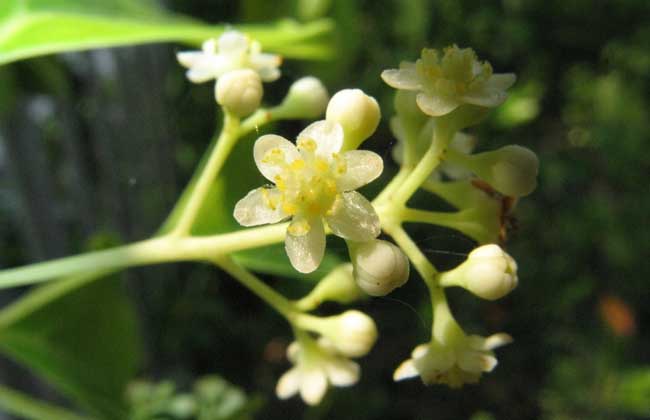
The camphor tree is an excellent landscaping tree, street tree, and shade tree. It is a large evergreen tree of the genus Cinnamomum in the Lauraceae family, reaching up to 30 m in height and up to 3 m in diameter. The entire plant has the fragrance of camphor, and it is resistant to harmful gases such as chlorine, sulfur dioxide, ozone, and fluorine. Camphor and camphor oil can be extracted from it, and its wood is a good material for making furniture. Let us take a look below at when the camphor tree blooms!
When does the camphor tree bloom?
The flowering period of the camphor tree is from April to May, and the fruiting period is from August to November. The camphor tree is native to the southern and southwestern provinces and regions of China, and is also distributed in Vietnam, Korea, and Japan; it is often introduced and cultivated in other countries. It adapts to altitudes below 1800 m, and in the growth regions south of the Yangtze River and in the southwest it can reach an altitude of 1000 m. It mainly grows on fertile, sunny slopes, valleys, and flat riverside land in the subtropics.
Growth Habits of the Camphor Tree
The camphor tree is mostly light-loving and slightly shade-tolerant. It prefers a warm and humid climate and is not very cold-hardy. It is suitable for growing in sandy loam and is relatively tolerant of water and moisture, but when transplanting, care must be taken to maintain soil moisture, as waterlogging can easily cause root rot and death from lack of oxygen. However, it is not tolerant of drought, barren soil, or saline-alkali soil. The camphor tree has a well-developed taproot and a deep root system, can resist wind, has strong sprouting ability, tolerates pruning, and grows at a moderate rate. Its tree form is huge like an umbrella and can provide shade and coolness. It has a long lifespan and can grow into a towering ancient tree hundreds or thousands of years old, with a strong ability to absorb smoke and retain dust, conserve water, fix soil and prevent sand, and beautify the environment.
Cultivation Value of the Camphor Tree
1. Economic value: Camphor and camphor oil can be extracted from the roots, wood, branches, and leaves of the camphor tree. Camphor is used for medicine, plastics, explosives, preservation, insecticide, and more, while camphor oil can be used as a raw material for pesticides, ore dressing, soap making, varnish, and essences. The wood is of high quality, resistant to insect damage and water moisture, and is used for construction, shipbuilding, furniture, boxes and cabinets, boards, carving, and more.
2. Landscape value: The camphor tree has dense branches and leaves, a large crown with deep shade, and a majestic tree posture. It can absorb smoke and retain dust, conserve water, fix soil and prevent sand, and beautify the environment. It is an excellent tree species for urban greening and is widely used as a shade tree, street tree, shelterbelt, and scenic forest, and is often used for garden ornamentation. When planted in clumps, groups, or singly in lawns, or used as a background tree, it is majestic and spectacular. Because of its strong resistance to various toxic gases and its strong ability to absorb and retain dust, and because it can absorb harmful gases, it is often used in cities and industrial and mining areas.
3. Medicinal value: The bark of the camphor tree has the effect of promoting qi flow and is used to treat lower limb ulcers. The fruit of the camphor tree has the effect of releasing the exterior and reducing fever, and is used to treat high fever and colds, measles, whooping cough, dysentery, and other conditions. The root of the camphor tree has the effect of regulating qi and activating blood and removing rheumatism, and is used to treat vomiting and diarrhea, heart and abdominal distension and pain, rheumatic arthralgia, traumatic injuries, and other conditions. Camphor wood has the effect of dispelling rheumatism, promoting qi and blood flow, and benefiting the joints, and is used to treat heart and abdominal distension and pain, athlete's foot, gout, scabies, traumatic injuries, and other conditions.