A Detailed Guide to Camphor Tree Planting Techniques and Management Methods
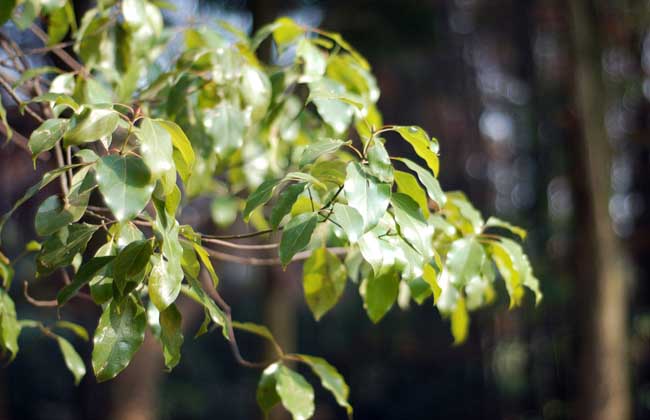
The camphor tree (Cinnamomum camphora) is an evergreen large tree of the genus Cinnamomum in the family Lauraceae. In China it is produced in the southern and southwestern provinces and regions, adapting to altitudes below 1800 m; in the growth areas south of the Yangtze River and in the southwest, it can reach altitudes of 1000 m. It grows on fertile, sunny slopes, valleys and flat riverside land in subtropical zones, and has extremely high cultivation value. Let us now take a look at camphor tree planting techniques!
Camphor Tree Growth Habits
The camphor tree is mostly light-loving, slightly shade-tolerant, and prefers a warm and humid climate; its cold tolerance is not strong. It is suited to growing in sandy loam and is relatively tolerant of water and moisture, but when transplanting, care must be taken to maintain soil moisture, as waterlogging easily leads to root rot and death from lack of oxygen. However, it is not tolerant of drought, barren soil or saline-alkali soil. The main root is well developed and deep-rooted, so it can resist wind. It has strong sprouting ability and tolerates pruning. Its growth speed is medium, and the tree shape is huge like an umbrella, able to provide shade and coolness.
Camphor Tree Seed Collection
Camphor tree fruits fall off on their own when ripe, and birds peck at them. Each year from October to December, collect the ripe seeds, then store them mixed with sand, and by early March they can be sprouted and sown. Seeds should be selected from mother trees 40-60 years old that grow rapidly, are robust, have obvious, straight trunks, high branching, well-developed crowns, no pests or diseases, and bear many seeds. Each kilogram contains 7200-8000 seeds, with a germination rate of 70-80%, and the sowing rate is 10-15 kg per mu.
Seedbed Preparation and Fertilization
The camphor tree seedling bed is plowed and harrowed for the first time in early winter, and for the second time before sowing, with sufficient base fertilizer applied. The base fertilizer generally uses 1500-2000 kg of decomposed barnyard manure per mu, or 50 kg of ammonium bicarbonate, 50 kg of phosphate fertilizer, and 150 kg of rapeseed cake, after which raised beds are built, generally 35-50 cm high and 1.2 m wide.
Seed Sprouting and Sowing
Camphor tree seeds need to be sprouted before sowing. They can be soaked in warm water at 50°C; after the warm water cools, replace it with 50°C water and repeat the soaking 3-4 times, which can make the seeds germinate 10-15 days earlier. Drill sowing with a row spacing of about 20 cm, with a sowing rate of 10-15 kg per mu. After sowing, cover with soil and then straw or plastic film, keeping the surface soil of the seedbed moist to facilitate seed germination.
Camphor Tree Tending Management
After camphor tree seedlings emerge, the straw or plastic film should be removed promptly. Once the seedlings grow several true leaves, thinning can begin, and when the seedlings are about 10 cm tall, final spacing can be carried out. About 20,000 seedlings are retained per mu for camphor trees. After July, fertilizer and water management should be strengthened, with regular loosening of the soil and weeding. In late autumn, stop topdressing and irrigation. Topdressing is generally applied 2-3 times; the first two times can use 7-10 jin of urea, and the last time can use 10 kg of urea and 7.5 kg of phosphate fertilizer.
Timely Transplanting of Camphor Seedlings
The suitable transplanting time for camphor trees is from mid-to-late March to early-to-mid April, with a transplanting density of about 1500 plants per mu. Transplant immediately after lifting, and after transplanting, cut the stem about 10 cm above the ground. When the buds grow to about 10 cm, the main stem can be determined, excess branches and buds removed, and one relatively thick branch retained. In winter, apply 2000 kg of barnyard manure to the bed surface. In this way, 3-year-old seedlings can reach a diameter at breast height of more than 3 cm.
Camphor Tree Planting Techniques
The depth, length and width of the camphor tree planting hole must all reach 50-60 cm. The planting depth should be such that the ground surface is level with the root collar of the camphor seedling. When planting, the soil protecting the roots must be closely connected with the soil in the hole; if the backfilled soil is not firm or solid, hollow spaces will form. Whether planting camphor trees on cloudy or sunny days, water thoroughly once with settling water in a timely manner. In dry, sun-exposed weather, irrigate thoroughly about every 7 days, for 3-4 consecutive times.
Camphor Tree Pest and Disease Control
1. Powdery mildew: Powdery mildew mostly occurs on seedlings in nursery land, and is most likely to occur under conditions of high temperature, high humidity, overly dense seedlings and poor ventilation. The nursery should always pay attention to environmental sanitation and appropriately thin the seedlings, or if a small number of diseased plants are found, they should be immediately pulled up or burned. When it occurs, use 0.3-0.5 degrees Baumé lime sulfur mixture, spraying once every 10 days, for three or four consecutive times.
2. Black spot: This disease is prone to occur when camphor tree seeds germinate and emerge and grow 1-4 leaves. When sowing, do a good job of disinfecting seeds, soil and covering materials. When the disease occurs, first pull up and burn the diseased seedlings, and spray with 0.5% potassium permanganate or formalin two or three times to prevent spread.
3. Camphor leaf wasp: The camphor leaf wasp has many generations per year and a long damage period. One-year-old seedlings suffer severe damage and die, causing withering and death; after afforestation, the tender leaves on the upper part of tree crowns are often eaten completely, and in severe cases tree growth is affected. Use 0.5 kg of yellow azalea or Tripterygium wilfordii powder plus 75-100 kg of clean water to make a medicinal solution and spray the seedlings, or use 90% trichlorfon or 50% malathion emulsion each at 2000 times dilution for spraying to kill them.
4. Leaf roller: The camphor shoot leaf roller has several generations per year. After new camphor shoots emerge in March, when the first-generation larvae hatch, spray with 90% trichlorfon, 50% dichlorvos emulsion, or 50% malathion emulsion at 10000 times dilution, once every 5 days, for two or three consecutive times, which can kill the larvae. If the larvae have already bored into the new shoots, 40% dimethoate emulsion at 200-300 times dilution can also be sprayed. In nurseries or small-area forest land, dead branches and fallen leaves can be collected and burned in winter to eliminate overwintering pupae.
5. Camphor nest moth: It generally damages camphor seedlings and young trees under 20 years old, with two generations per year. When the larvae have just begun activity and have not yet formed web nests, spray with 90% trichlorfon at 4000-50000 times dilution to kill them. If the larvae have already formed web nests, it is best to remove and burn them.
6. Camphor longhorn beetle: During the adult egg-laying period (early May to early June), use a wire brush to brush the egg-laying scars, and pierce the eggs or newly hatched larvae. Manually cut off damaged branches, then inject agents such as dichlorvos through the excretion holes to kill the larvae inside.