What are the characteristics of the camphor tree? A complete guide to the camphor tree
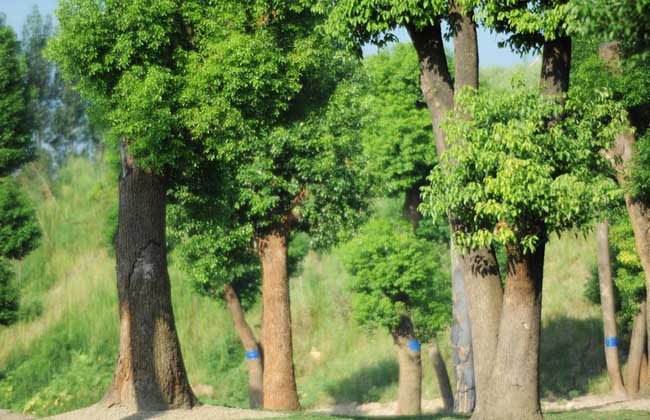
The camphor tree is an evergreen large tree of the genus Cinnamomum in the family Lauraceae, also known as camphor, camphor wood, stinking camphor, black camphor, and so on. It is mainly produced in the southern and southwestern provinces and regions of China, and is also distributed in Vietnam, Korea, and Japan; it is often introduced and cultivated in other countries. The entire plant has a camphor aroma, and camphor and camphor oil can be extracted from it. Let us take a look below at what characteristics the camphor tree has!
Strong vitality
The camphor tree has a well-developed taproot and a deep root system, and can resist wind. It has strong sprouting ability and tolerates pruning. Its growth rate is moderate, and its tree form is huge like an umbrella, able to provide shade and coolness. It has a long lifespan and can grow into a towering ancient tree hundreds or thousands of years old. It adapts to altitudes below 1800 m, and in the growth areas south of the Yangtze River and in the southwest the altitude can reach 1000; it mainly grows on fertile sunny slopes, valleys, and flat riverside land in subtropical zones.
Strong purifying ability
The camphor tree is a tree species relatively able to adapt to the urban environment, with a strong ability to absorb smoke and dust, conserve water, fix soil and prevent sand, and beautify the environment. In addition, it resists sea tide winds, tolerates smoke and dust, and resists toxic gases, and it can absorb many kinds of toxic gases and also repel mosquitoes and flies. According to scientists' research, the chemical substances emitted by the camphor tree, such as pinene bicyclic hydrocarbon, camphene, limonene, and eugenol, have the ability to purify toxic air, as well as anti-cancer and insect-preventing effects, filtering out fresh and clean air that refreshes the heart and mind.
Tall tree form
The camphor tree is very distinctive. It is an evergreen large tree of the genus Cinnamomum in the family Lauraceae, reaching up to 30 m in height and up to 3 m in diameter, with a broad ovate crown. The bark is rough, yet its texture is very uniform. The branches and trunk divide into two, then two into four, and keep growing that way, neither cutting corners nor adding unnecessary flourishes. The shape of the crown is spherical, drawing a graceful curve in the sky.
Wide range of uses
The camphor tree is an important timber and special economic tree species in subtropical regions. Camphor and camphor oil can be extracted from its roots, wood, branches, and leaves. The main components of the oil are camphor, pinene bicyclic hydrocarbon, camphene, limonene, eugenol, and so on. Camphor is used for medicine, plastics, explosives, preservation, insecticide, and so on, while camphor oil can be used as a raw material for pesticides, ore dressing, soap making, varnish, and essences. The wood is of high quality, resistant to insect pests and water moisture, and is used for construction, shipbuilding, furniture, boxes and cabinets, boards, carving, and so on. The seeds can also be made into pillow cores and have very good medicinal effects.
Landscape value
The camphor tree is an excellent tree species for urban greening. Its branches and leaves are dense, its crown is large and its shade is thick, and its tree posture is majestic. It can absorb smoke and dust, conserve water, fix soil and prevent sand, and beautify the environment, and is widely used as a shade tree, street tree, shelterbelt, and scenic forest. Planted in clumps, groups, or alone in lawns, or used as a background tree, it is majestic and spectacular. Because of its relatively strong resistance to many kinds of toxic gases, its relatively strong ability to absorb and retain dust, and its ability to absorb harmful gases, it is often used in cities and industrial and mining areas.
Unique fragrance
The camphor tree has a special fragrance and can repel insects, so it almost does not need gardeners to spray pesticides. Camphor tree seeds are rich in oils and fats, with a capric acid content as high as more than 40%, belonging to medium- and short-carbon-chain fatty acids, with special physiological and nutritional effects. The use of camphor tree seeds to develop new oil products is currently under research.