What are the cultivation methods for variegated pothos?
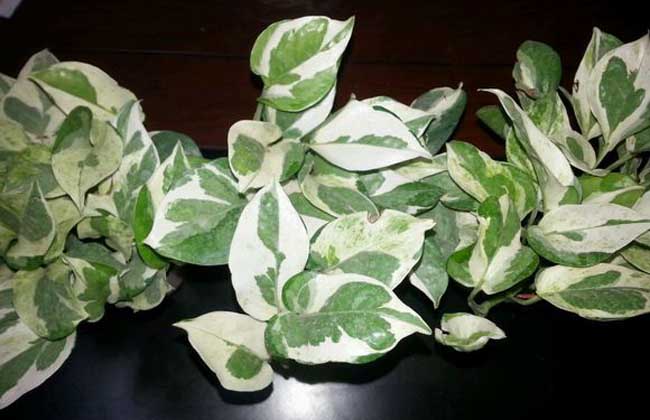
Variegated pothos is a perennial evergreen climbing herbaceous plant in the Araceae family, genus Scindapsus, native to the Solomon Islands and now widely cultivated around the world. It prefers a cool, semi-shaded environment with high air humidity, and should be kept out of direct sunlight in summer. It is relatively drought-tolerant, tolerant of poor soil, and relatively cold-tolerant. The optimal growth temperature is 20-28°C. Let's take a look at the cultivation methods for variegated pothos below!
Propagation methods for variegated pothos
Variegated pothos has wide adaptability, grows quickly, and requires minimal cultivation management. It is mainly propagated by cuttings. Select healthy upper stem vines with leaves, 25-30 cm in length, and insert them into a sand bed or directly into pots. Maintain 85-90% humidity. For column cultivation, it is best to use terminal buds, 3-4 per column.
Cultivation methods for variegated pothos
1. Watering: Variegated pothos likes to live in a moist environment, so watering more is best. In summer, the weather is hot and water evaporates quickly, so in addition to watering more, you should also spray water on the leaves. The amount of watering depends on the potting soil; larger variegated pothos plants should be watered more.
2. Sunlight: Variegated pothos prefers a cool, semi-shaded environment with high air humidity. It cannot be exposed to direct sunlight, otherwise newly sprouted leaves will lose water and become smaller, with dull colors, and the leaf edges are easily scorched. In autumn and winter, variegated pothos can be placed in a sunny spot indoors to receive photosynthesis.
3. Temperature: Although variegated pothos does not like intense sunlight, it is still quite sensitive to temperature. If the temperature is too low, it is easily frostbitten. A room temperature of around 20°C is sufficient. If heating equipment is used, the leaves of variegated pothos should not be too close to it. Keeping the indoor temperature above 10°C allows variegated pothos to safely pass through winter.
4. Fertilizing: Since indoor variegated pothos does not absorb nutrients as abundantly as outdoor plants, it is recommended to apply fertilizer once every half month. You can buy fertilizer specifically for pothos on the market. Or ask the flower shop owner to help choose fertilizer.
5. Humidity: Variegated pothos grows faster in environments with higher air humidity. It is recommended to maintain indoor humidity, and a humidifier can be used to increase air humidity. A transparent plastic bag can be placed over the plant to create a mini greenhouse effect, but it should not exceed two hours.
What to do if variegated pothos leaves turn yellow?
1. Insufficient water: If there is not enough water in the soil of variegated pothos, the leaf edges will become dry, withered, and yellow, and leaves will also fall off. At this time, water the pothos with enough water promptly.
2. Too much water: If there is too much water in the soil or container of variegated pothos, it will also cause yellow leaves. The leaf surface will appear dull yellow and lusterless, and the roots may even rot. At this time, stop watering and loosen the soil appropriately.
3. Direct sunlight: Variegated pothos grows in cool, shaded environments, so placing it under strong light for a long time can easily cause the leaves to wilt and wither, then turn yellow and fall off. At this time, place the pothos in a cool place with light and water it appropriately.
4. Too little light: If variegated pothos is placed in a dark, unventilated place for a long time, the green leaves will turn yellow due to lack of chlorophyll, especially newly grown leaves. At this time, place the pothos in a cool place with sufficient light.
5. Too much fertilizer: If variegated pothos is fertilized too much, old leaves will accumulate excess nutrients and then turn yellow, eventually falling off. At this time, reduce the frequency of fertilizing and water with clean water to dilute the fertilizer in the soil.
6. Insufficient fertilizer: When variegated pothos lacks nutrients and is not fertilized enough, the leaf color will gradually fade and turn yellow, especially the leaves near the roots, which will turn yellow first and fall off. At this time, more fertilizing is needed.
7. Poor ventilation: The growing environment for variegated pothos requires ventilation and coolness. In winter, the indoor temperature should not be too hot, and attention should be paid to ventilation; otherwise, dry heat can also cause green leaves to turn yellow. At this time, open windows for ventilation and water more to ensure nutrition.
8. Normal yellowing: Variegated pothos needs to adapt to a new environment, which generally takes about 30 days. During this period, some old leaves will show signs of yellowing. This is normal and part of the adjustment period. At this time, do not be too anxious to take measures. Once it returns to normal, the pothos will grow vigorously.