Detailed Explanation of Key Points on Alfalfa Planting Technology
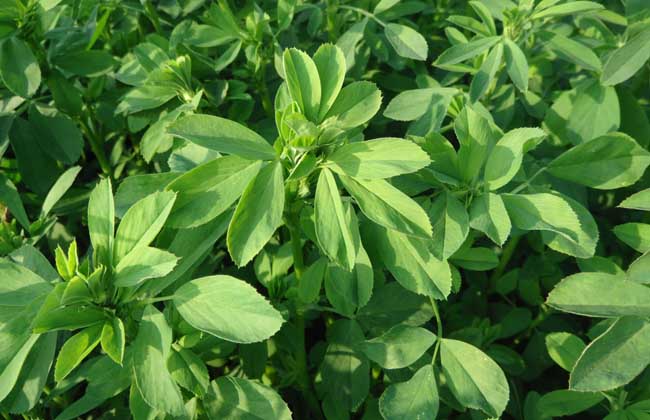
Alfalfa is widely cultivated as forage and pasture grass across Eurasia and around the world. Its stems and leaves are tender and delicious, and whether used for green feeding, silage, making hay, processing grass powder, or for compound feed or mixed feed, all types of livestock and poultry prefer it most. It is also the preferred green feed for the pig and poultry industries. Let us take a look at alfalfa planting technology below!
Alfalfa Planting Time
1. Sowing period: The sowing period of alfalfa is generally divided into spring sowing, summer sowing, and autumn sowing. The determination of the sowing period mainly depends on temperature, moisture, degree of weed damage, purpose of use, existing conditions, and so on. Among these many factors, moisture is the decisive condition. In places with irrigation conditions, spring sowing, summer sowing, and autumn sowing are all acceptable.
2. Northern regions: In the northern regions of China, spring is dry with little rain and high evaporation, so sowing in this season is not conducive to seedling emergence and seedling retention, and during spring sowing weeds can easily harm alfalfa seedlings. In summer, however, there is more rainfall, and temperatures rise at this time, with rain and heat in the same season, which is very favorable for seed germination and seedling growth. That is to say, from mid-June to the end of July is the best sowing period for alfalfa in northern regions.
3. Cold regions: In cold regions, in order to ensure that alfalfa can safely overwinter in the year of sowing, the sowing time generally must not be later than 40 days before the first frost.
4. Saline-alkali land: When planting alfalfa on saline-alkali land without irrigation conditions, even more attention must be paid to mastering the sowing time. The distribution pattern of salt in the soil of saline-alkali land changes with the seasons. Generally in spring, salt in the soil is mostly distributed in the upper shallow soil layer, while in autumn it moves to deeper soil layers. If spring sowing is followed by rain and then exposure to strong sunlight, a hard crust is very easily formed on the soil surface, making it difficult for alfalfa to emerge. Therefore, the best time to sow alfalfa on saline-alkali land is late summer and early autumn. At this time the rainy season has just passed, the salt in the soil has been leached downward, and the soil moisture content is also relatively sufficient, which is very favorable for emergence, and the seedling survival rate is also relatively high.
Alfalfa Planting Technology
1. Sowing: In most areas, drilling is the main method, with a row spacing of 30 cm, which facilitates ventilation and light transmission and field management. The sowing rate is generally about 1 kg per mu; seed-production fields should use less, and saline-alkali land may appropriately use more. If the sowing rate is too large, the seedlings will be thin and weak. Sowing depth is the key to affecting emergence quality. Generally, sowing too deep is a problem, and the optimal depth is 0.5-1 cm.
2. Weeding: Clearing weeds is one of the main contents of alfalfa field management, first during the seedling stage, and second after summer harvest. Because alfalfa growth vigor is relatively weak during these two periods, it is more seriously harmed by weeds. Especially after summer harvest, water and heat occur together and weeds grow quickly. No matter what method is adopted, it must be done in a timely and standardized manner. The choice of herbicide must be made cautiously to avoid causing livestock poisoning.
3. Drainage and irrigation: Alfalfa consumes a large amount of water, requiring 800 liters of water for every 1 kg of dry matter produced. Watering is needed before winter, after green-up, and during drought. In coastal and low-lying areas, attention should be paid to drainage during the rainy season; alfalfa will die after being submerged for 24 hours.
4. Disease prevention: During the growth period of alfalfa, once pests and diseases occur, they must be controlled in a timely manner, otherwise yield and quality will be affected. Generally, fenitrothion, dimethoate, fenvalerate, and similar products are sprayed to control pests. If rust, brown spot, or downy mildew occurs, carbendazim, thiophanate, and similar agents are used for control.
5. Harvesting: Harvesting generally begins at the early flowering stage, that is, when flowering reaches 1/10, and at the latest must not exceed the full flowering stage. Regarding harvest frequency and stubble height, alfalfa is a perennial plant with strong regrowth ability and can be harvested 3-4 times per year. The last harvest should not be too late, otherwise it will affect nutrient accumulation and be unfavorable for safe overwintering. Generally, a growth period of 40-50 days should be left after harvest. The suitable stubble height is 5 cm.
Alfalfa Planting Value
1. High grass yield: The grass yield of alfalfa varies greatly depending on the number of growth years and natural conditions. From 2-5 years after sowing, fresh grass yield per mu is generally 2000-4000 kg, and hay yield is 500-800 kg. In areas with better water and heat conditions, hay yield per mu can reach 733-800 kg. In dry and low-temperature areas, hay yield per mu is 400-730 kg. In desert oasis irrigation districts, hay yield per mu is 800-1000 kg.
2. Long service life: Alfalfa can live as long as 30 years, and the period of field cultivation and utilization can be as much as about 7-10 years. However, after entering the high-yield period, its yield declines as age increases.
3. Strong regrowth ability: Alfalfa has very strong regrowth ability and can quickly recover vigor after mowing. Generally, it can be mowed 2-4 times per year, and in some cases 5-6 times.
4. Strong palatability: Alfalfa stems and leaves are tender and delicious. Whether used for green feeding, silage, making hay, processing grass powder, or for compound feed or mixed feed, all types of livestock and poultry prefer it most, and it is also the preferred green feed for the pig and poultry industries.
5. Rich nutrition: Alfalfa stems and leaves contain abundant protein, minerals, multiple vitamins, and carotene, especially with higher content in the leaves. When alfalfa is fresh and tender, leaves account for about 50% of the weight of the whole plant. The crude protein content in leaves is 1-1.5 times higher than that in stems, and the crude fiber content is less than half that of stems. On the same area of land, the digestible total nutrients of alfalfa are 2 times those of gramineous forage grass, digestible protein is 2.5 times, and minerals are 6 times.
6. Fertilizing the field and increasing yield: Alfalfa's well-developed root system can provide a large amount of organic matter to the soil, and can absorb calcium from deep soil layers, decompose phosphates, leave them in the plow layer, and through decomposition form organic colloids, which can cause the soil to form stable aggregates and improve soil physical and chemical properties. Root nodules can fix nitrogen from the atmosphere and increase soil fertility. In 2-4 year old alfalfa grassland, the fresh weight of roots per mu can reach 1335-2670 kg. The root stubble per mu contains about 15 kg of nitrogen, 2.3 kg of total phosphorus, and 6 kg of total potassium. Each mu can fix 18 kg of nitrogen from the air each year, equivalent to 55 kg of ammonium nitrate. Alfalfa stubble land can enable the following crop to achieve stable and high yield for three years without fertilization. The yield increase range is usually 30%-50%, and in high cases can reach more than 1 times. As the agricultural saying goes: “One mu of alfalfa is worth three mu of field, and after three consecutive years of planting its strength does not dissipate.”
7. Soil and water conservation: Alfalfa has luxuriant branches and leaves and a high degree of ground cover. Forty days after green-up, second-year alfalfa can reach 95% coverage. It is also perennial and deep-rooted, and has a very significant effect in improving soil physical and chemical properties, increasing water permeability, blocking runoff, preventing erosion, and maintaining slope surfaces to reduce soil and water loss. According to measurements: on sloping land, compared with alfalfa, ordinary crops lose 16 times more water and 9 times more soil per mu each year.
8. Honey-source plant: Alfalfa is a strictly cross-pollinated plant and often relies on external mechanical force and insects collecting nectar to pop open the tightly closed keel petals for pollination. Its flowering period lasts 40-60 days. Placing bees in the field during the flowering period can greatly increase honey yield and also increase alfalfa seed yield.